Liberalization of the energy market: How much will the prices of electricity and gas today increase, after eliminating the ceiling

Electricity consumption. Photo: Shutterstock
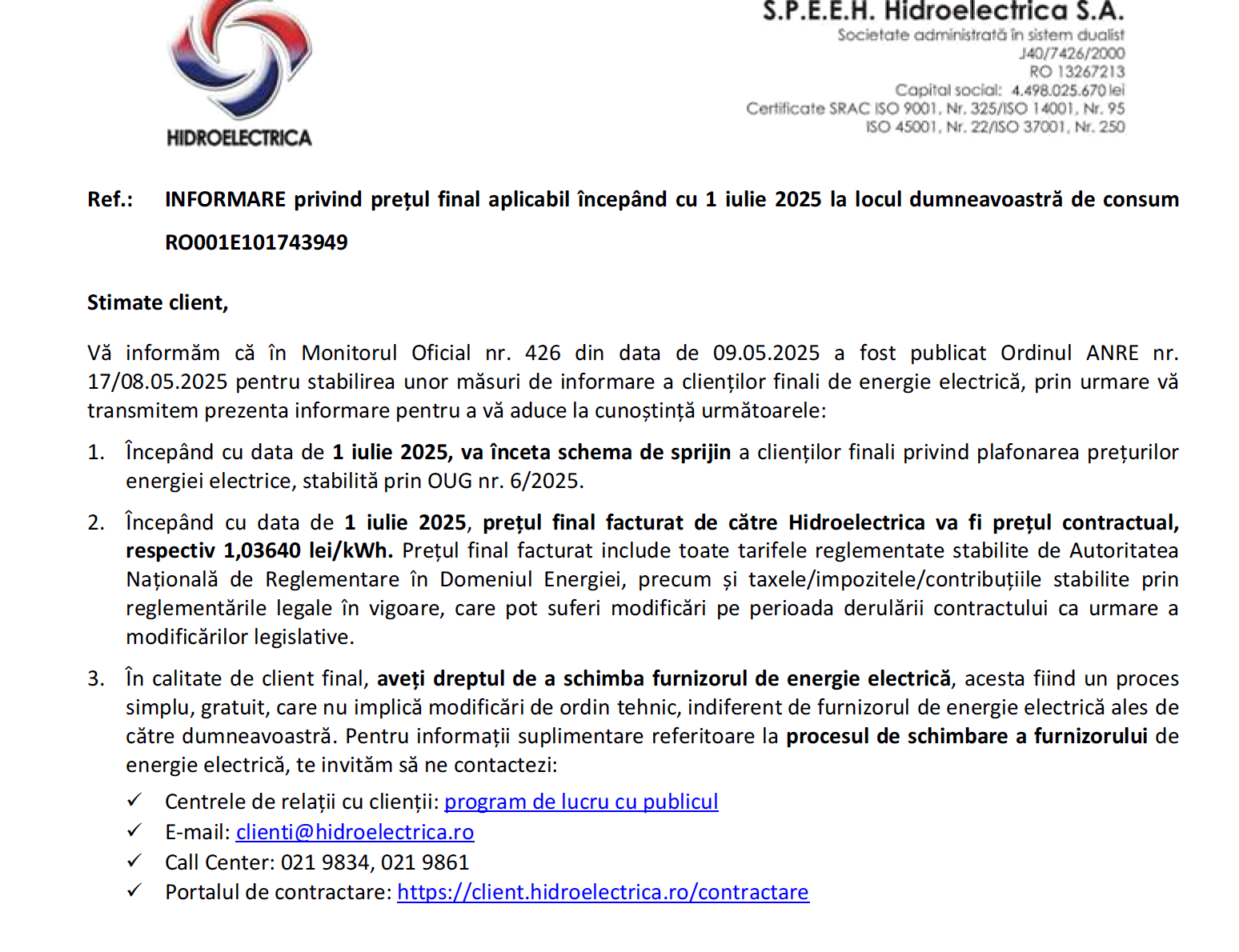
The scheme of capping on electricity and natural gas ceases from July 1, which will make the following invoices for electricity and gas. The ceiling has had positive effects in protecting consumers from high prices, but maintaining it is no longer sustainable, showing in a study by EPG, an independent think-tank of energy policies, which analyzed the impact of capping on consumers and economy.
Return to the competitive market will involve an increase in energy prices, in some cases, even a doubling of the current invoices, EPG shows.
Some companies have sent customers notifications in this regard, while others were less clear about the new prices.
The EPG study also shows that the elimination of the ceiling scheme will generate chain effects: inflation would accelerate, the purchasing power of the population would decrease, and the demand in the economy would diminish.
The price at electricity will increase the most
These negative effects would manifest in a very volatile economic context, marked by the need to urgently reduce the budget deficit, says EPG.
EPG estimates that:
- Electricity: In the absence of the ceiling scheme based on the new network tariffs, the invoices of the domestic consumers will exceed the value of 1.15 RON/KWh – estimated on the basis of the weighted average price of the active energy at the level of 2024, well above the current regulated prices, worth 0.68 RON/KWh and 0.80 RON/KW.
- Natural gas: The price for the domestic consumer will approach the value of 331 RON/MWh (0.33 RON/kWh) after applying the tariffs and taxation – estimated on the basis of the weighted average price of natural gas on the wholesale market at 2024. The value is slightly over the current ceiling of 310 RON/MW (0.31 RON/KWh).
EPG: In some cases, energy bills will double
In electricity it is expected that the tendency of growth will be maintained in the short term, reflecting the settlement of the market inefficiencies created by the ceiling mechanism and the delays in the compensation payments for the suppliers.
For a household with an average monthly consumption of 90 kWh/month, the increase of the electricity invoice will be from RON 61.20 to about 93.60-137 RON, respectively an increase between 53-100%, if we consider the variation from 0.68 RON/kWh to 1.04-1.53 RON/KWh.
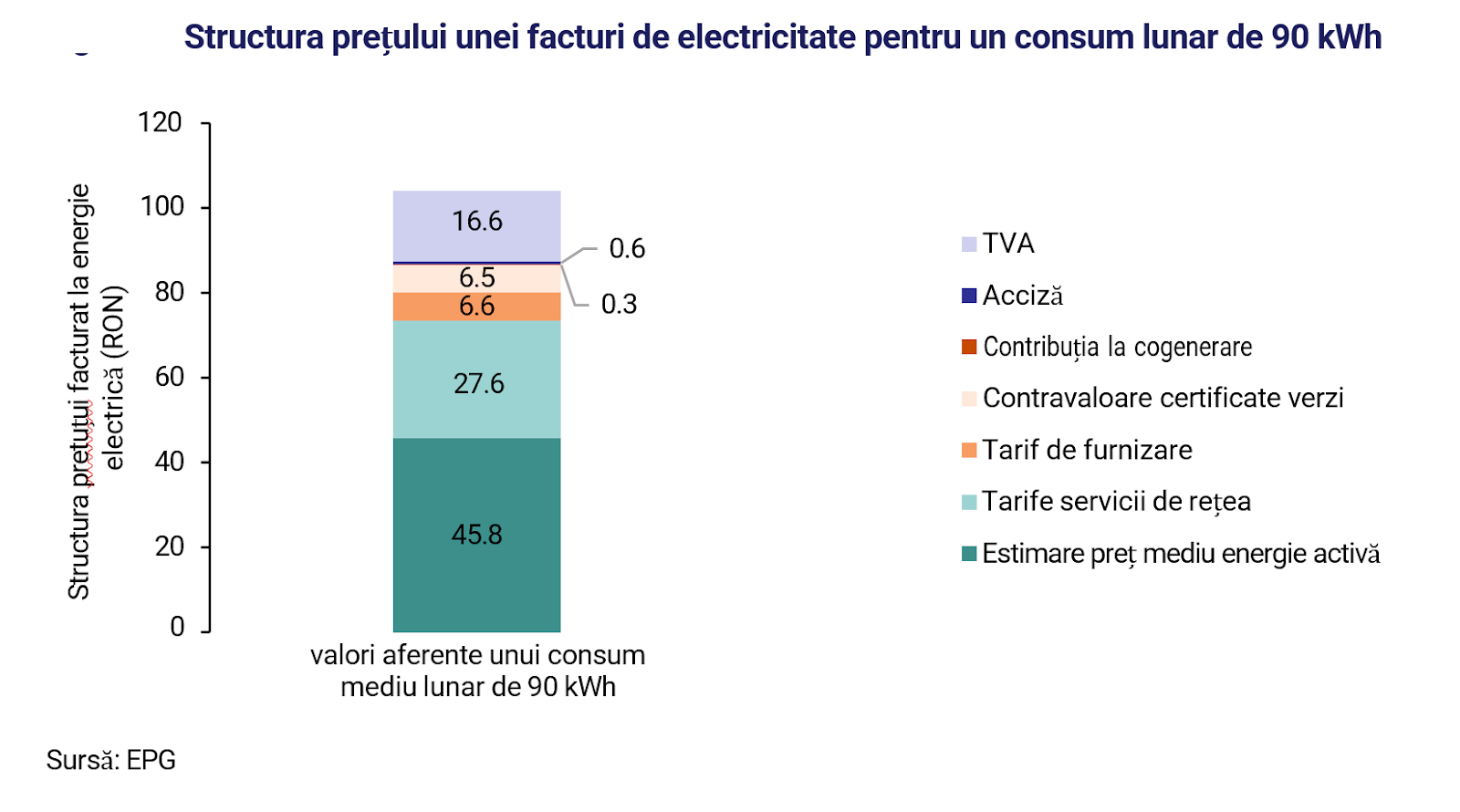
In a context of returning to the liberalized market, the price of active electricity would represent 44% of the invoice paid by the consumer, the remaining 56% returning to regulated tariffs for network services and fiscal components.
The increase of prices for domestic consumers is inevitable, being determined by both the cost of active energy and by the increase of the regulated tariffs, applied earlier this year. Given the structure of the price of energy, it can be observed that the active energy represents less than 50% of the total value paid by the consumer. The difference is generated by the regulated rates related to the network services, as well as by the fiscal component, states the EPG.
EPG also considers that it is necessary to encourage energy trading through bilateral contracts to obtain more competitive prices, by reducing the volume of energy traded on the spot market, characterized by high volatility.
The analysis of the EPG did not include the potential costs of the suppliers with the imbalances in the electricity market, although this element has an impact on the final invoice. Also, the costs of “profiling” the supply offer to the specific consumer pattern of the final consumer has a price impact. Cumulative, we estimate that these two components can add about 15% to average price estimates, depending on the area and the specific consumption behavior.