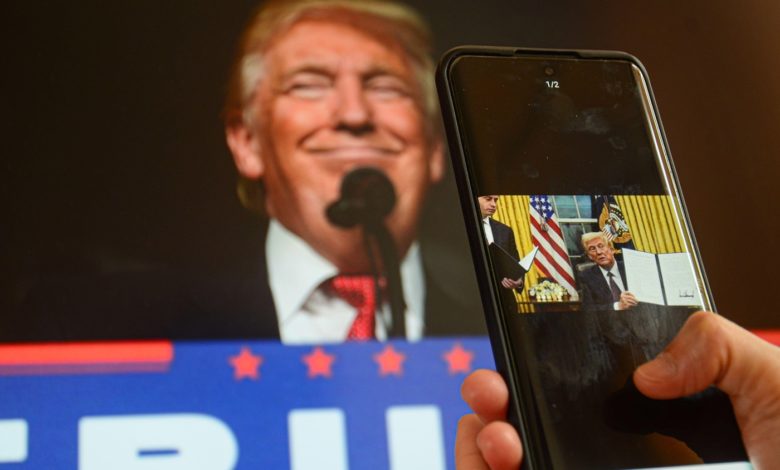
The Trump administration is planning a new fee. Photo source: Yurou Guan / Alamy / Profimedia
The Supreme Court of the USA has given the case to President Donald Trump, deciding that federal judges can no longer suspend the administration policies at national level. However, the court has not clarified if the president can limit the right to citizenship for children born in the United States, Reuters reports.
Trump welcomed the decision and said that his administration can go further with several initiatives, including the executive order aimed at restricting citizenship by birth – measures that, he argues, were “wrongly blocked.”
“We have a lot. I have a whole list,” Trump told journalists at the White House.
The Supreme Court has decided, with 6 votes at 3, that federal judges can no longer block, at national level, the president's policies. The decision was written by conservative judge Amy Coney Barrett. However, the court did not give the immediate green wave to Trump's order on restricting citizenship through birth, nor did he say whether it is legal or not.
The judges agreed that the measures taken by three courts – from Maryland, Massachusetts and the state of Washington – be revised. These courts had suspended Trump's order throughout the country, until the end of the trials. Now, the Court asks them to limit these decisions only to the cases within their competence, not at national level.
Donald Trump welcomed the decision, which he called “a monumental victory for the Constitution, for the separation of powers in the state and for the rule of law”.
On the first day after returning to the White House, Trump signed an executive order asking for federal agencies not to recognize the citizenship of children born to the US from parents who are neither American nation, nor legal permanent residents (Green Card owners).
According to those who challenged the measure-including Democratic General Prosecutors from 22 states, organizations for the rights of immigrants and pregnant women-, over 150,000 newborns would lose the right to citizenship on the basis of this order annually.
The case arrived in front of the Supreme Court in an unusual context: the administration did not ask the Court to decide whether the order is legal, but claimed that the federal courts should not have the right to block presidential policies at national level, regardless of their content.
An essential part of the decision says that the judges can offer “complete repairs” only to the applicants in front of them, not at national level. However, the Court did not exclude the possibility that, in some cases, a state will need a prohibition that applies beyond its borders to obtain effective protection.
“We refuse to say about these arguments at this stage,” wrote Judge Amy Coney Barrett.
The decision of the Supreme Court did not exclude the possibility that the applicants will obtain extended protection through collective actions, but this type of process is much more difficult to organize and won.
Judge Sonia Sotomayor recommended to the parents of children who could be affected by Trump's order “to submit collective actions as soon as possible and to request the temporary suspension of the order for the entire category concerned”.