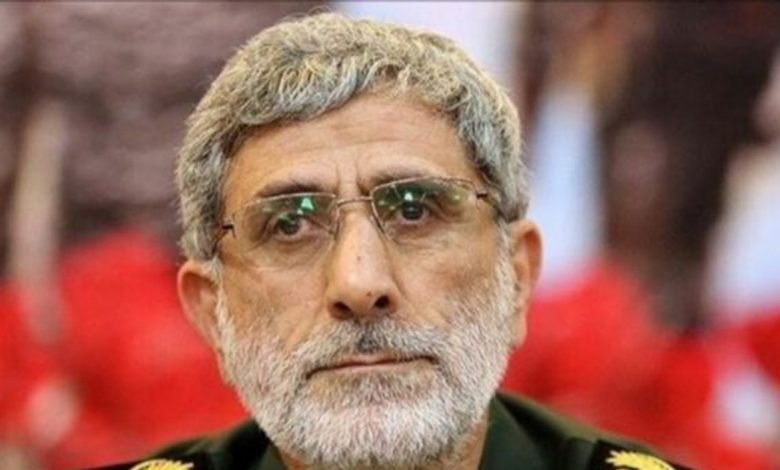
After days of speculation powered by anonymous sources and contradictory reports, General Esmail Qani, the chief of the fearful Quds forces within the Iranian revolution guards. Several video recordings distributed on social networks show him by participating on Tuesday, June 24, in a meeting organized in Tehran, in the context of celebrating Iran's missile attack on some American military assets in Qatar.
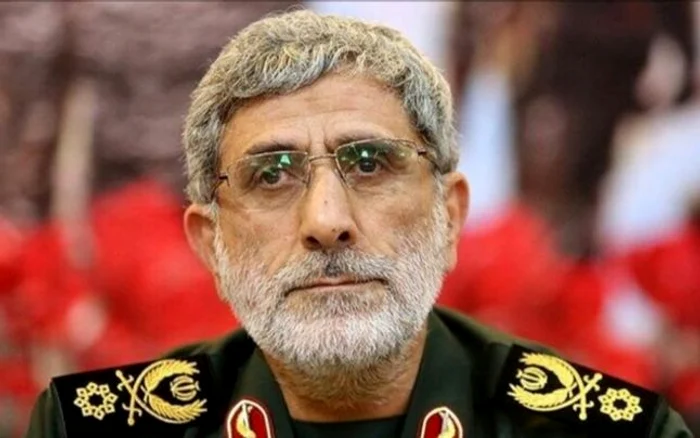
Esmail Qaani, the chief of the dreaded Quds/Photo: EPA/EFE
Qaani's appearance comes just a few days after The New York Times reported, citing an Iranian source, that he was killed in an Israeli air attack on Iran. The information, unverified independently and officially not assumed neither by the Israeli side nor by the Iranian authorities, was subsequently questioned by the emergence of recent images.
Soleimani's successor, disappeared from public space
Esmail Qaani took over the leadership of the Quds force in 2020, after the elimination of General Qasem Soleimani by American forces in a drone attack near Baghdad-an action that caused a wave of instability in the region and brought Iran and the US to the threshold of an open conflict.
The absence of Qaani in the public space since October 2024 has fueled numerous speculation. In the same month, an Israeli attack on Beirut killed Hashem Safieddine, considered the designated successor of leader Hezbollah, Hassan Nasrallah. The regional press speculated then that Qaani would have been in the area and had been injured or even killed.
Middle East Eye wrote in the autumn of last year that Qaani was alive, but that he and his team had been subjected to an internal investigation in Iran, in the context of alleged security breaches among the revolutionary guards, especially in the active branch on the Lebanese theater.
“There are serious suspicions that the Israelis have managed to infiltrate the body of the Islamic revolution, especially among those involved in operations on the Lebanese front. For this reason, all relevant people are currently investigated,” said an anonymous source for Middle East Eye.
Contradictory information, fed by official silence
In addition, the Israeli press quoted Sky News sources that suggested that Qanani had suffered a heart attack during alleged interrogators. This information was not confirmed by the Iranian authorities, but the lack of transparency of the Tehran and the opaque nature of the Quds force – the unit responsible for external and influence in the Middle East – leaves a wide space for speculation and interpretations.
If the public appearance on Tuesday is authentic-and the analysis of video images seems to indicate that yes-then the rumors about Qaani's death are in a pattern already known by contradictory information launched in the public space in an extremely tense geopolitical context.
In a region in which the information war is sometimes as intense as the conventional one, and the military leaders of the factions involved often become targets in the symbolic struggle of the narratives, every appearance or disappearance must be interpreted with caution. What seems, for now, certainly: Esmail Qaani is still alive – and, at least for now, at the command of one of the most dreaded forces in Iran's military architecture.