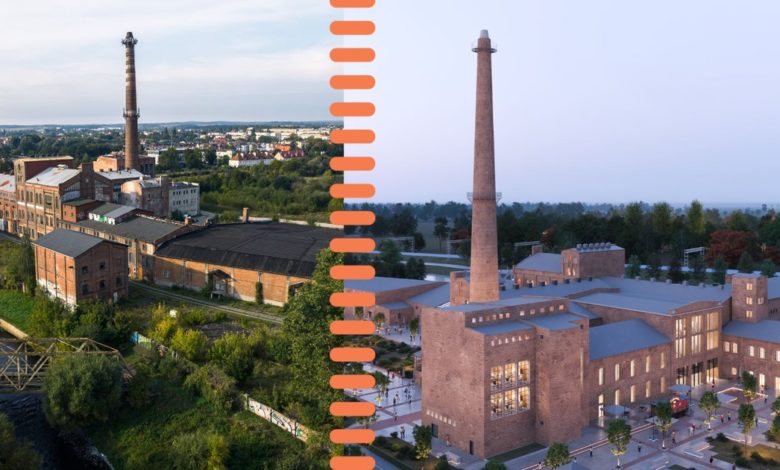
The sugar factory in Pruszcz Gdański was founded on the initiative of Dr. Hermann Wiedemann and until the 1930s was systematically expanded. Beet and reed sugar was produced there, and despite war damage, the factory quickly regained efficiency. The plant's activity lasted until 2004, after which the building systematically fell into ruin.
– We bought a sugar factory with full awareness of the weight of her heritage and the scale of the investment. We want to create a new urban tissue in which a well -thought -out and modern district will be created. Our ambition is to create a comfortable place to live, where the fullness of life and real relationships will dominate – says Jarosław Bator, president of the board of NDI Development.
Comprehensive urban transformation
A complex with a total usable area of 100,000 will be built in the area of 19.5 hectares. sq m. The vast majority of this area will be allocated to apartments, and the remaining part for trade and services. The project includes over 1,700 apartments in buildings of 3 to 5 floors and over 2,500 parking spaces. In addition, 2.4 hectares of green areas are planned.
The investment is to be not only modern, but also ecological. The developer has planned energy saving, retention and water recovery systems, as well as Smart Home solutions. An application is also prepared to facilitate the use of infrastructure and amenities for remotely working people.
NDI Development is preparing to start selling the first stage, the implementation of which will last two years. A four -storey residential building at ul. Fryderyk Chopin 17 with 100 residential premises with an area of 35 to 123 sq m and four service premises in the ground floor. Parking spaces will be found in the underground garage hall, and a patio with gardens and recreation places is designed between the buildings.
Architectural creation in the service of history
At the same time, work will be carried out on the adaptation of the historic part of the complex, which is planned for 2028. The historical part will include entertainment, recreational, commercial, gastronomic, cultural and educational functions. A hotel, office and medical spaces will also be built.
-Modernization of such unique places is a challenge for architects in which they can show considerable creativity-says Szymon Wojciechowski, president of the board, architect-partner at APA Wojciechowski Architekci. – in this case We will use our experience in the design of post -industrial facilitiesthat we have acquired by implementing such projects as the Warsaw Powiśle Power Plant or Unit.city in Kiev – he adds.
Kaja Kirilenko, an architect leading at APA Wojciechowski architects, emphasizes the unique values of the project: – The focal point of the project, which is even a landmark of the whole city, is a historic chimney, under which cafes and gastronomic points can be found. Another part of the historical buildings will be covered with a light conservator, which will contain restaurant summer gardensenabling users to contact the surrounding architecture.
Mixed-USE philosophy in practice
The sugar factory is to become an ideal example of the concept of a 15-minute city, where all necessary functions will be available at a short distance. Green areas will fill the spaces between quarters, parks and recreational areas on the River Radunia will be built and walking strings, including one designed in the line of former railway tracks.
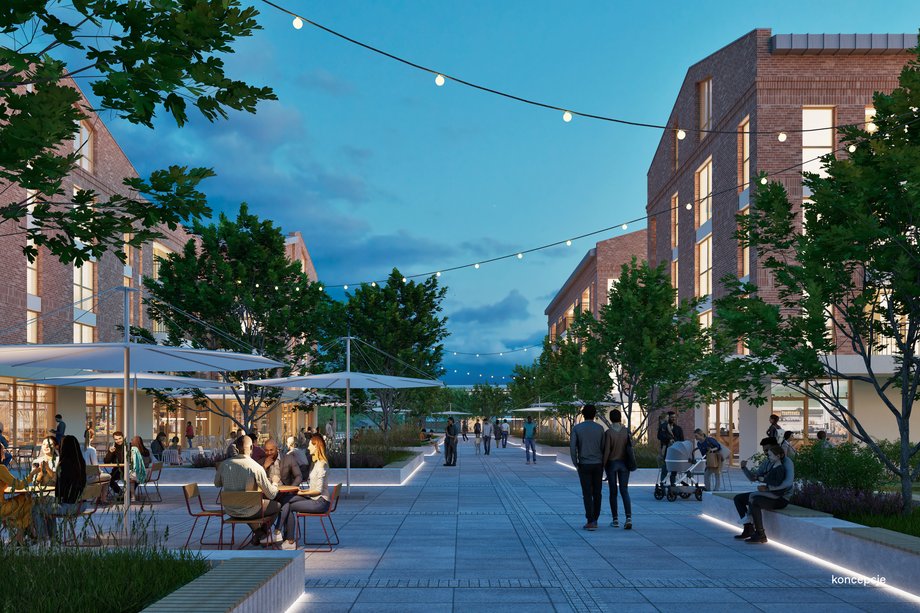
Visualization of the sugar factory in Pruszcz Gdański
|
NDI Development / NDI Development
-The sugar factory will be the essence of the Mixed-USE philosophy, where recreational, commercial, service and cultural elements will create a coherent space for residents. We want this place to meet all needs, from housing, through access to entertainment and culture, to relaxation and rest in the environment of nature – emphasizes Bartłomiej Oset, vice president of the board of NDI Development.
The entire investment will be implemented in eight stages for the next 10 years, constituting an example of a responsible approach to urban development, where historical industrial heritage becomes the foundation for a modern, sustainable urban space of the 21st century.