Where he hides and who guard Ayatollah Khamena. The supreme Iranian leader gives up electronic communications, against the background of Israeli infiltration fears

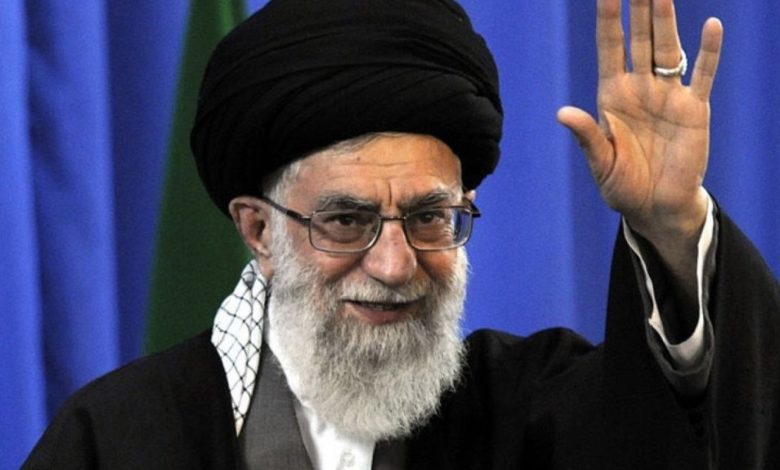
The supreme leader of Iran, Ayatollah Ali Khamenei, decided to suspend all personal electronic communications, communicating exclusively through a trust emission. The measure, revealed by The New York Times and confirmed by three Iranian officials, occurs in the context of fears about a possible assassination attempt from Israel becoming more pressing in the power circles in Tehran.
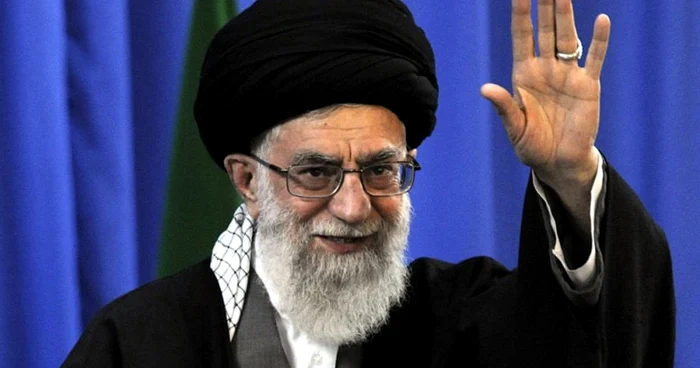
Ayahollahul Ali Khamenei/Photo: EPA/EFE
According to the quoted sources, which claim that they are familiar with the emergency plans of the Iranian regime, the decision of Ayatollah reflects an unprecedented concern regarding the vulnerability of security networks within their own country. The suspicions regarding the infiltration of Israeli services in the control structures of the revolutionary guards have led to a partial paralysis of the Iranian decision -making system and to the complete isolation of the supreme leader.
The digital war and the fears of Tehran
Khamene's decision to completely break any electronic contact is viewed by observers as a direct response to a series of recent eliminations of high -ranking Iranian officials, attributed to the Israeli Secret Service Mossad. The Iranian state press recently warned citizens about the use of mobile phones, claiming that they were used by Israel to locate and eliminate nuclear scientists and military commanders.
“It is an extreme measure, but not an unprecedented one in the Iranian security culture”states a Western diplomatic source under the protection of anonymity. “Iran learns from the lessons of the past – and from the cost of silence.”
Assumed isolation, strategic survival
According to the same source, Khamena entrusted the communication of an extremely restricted circle, composed of persons previously checked in loyalty programs directly by her office. Its contacts with the rest of the state apparatus – including with the leaders of IRGC – are mediated by this “reliable transmitter”, a figure that are known to have little details, but which has direct access to the religious leader.
This voluntary isolation comes at a time when Israeli officials have launched open hostile statements. Defense Minister Israel Katz, compared to Khamena with “a modern Hitler”, saying that “it should not be allowed to live.” On the other hand, US President Donald Trump has made a transparent allusion in a public speech: “We know exactly where it is. It is an easy target.”
Sources from Tehran confirm that the supreme Iranian leader, Ayatollah Ali Khamena, is in an extremely well-secured location, under the protection of a special unit that, until recently, nothing was known among the leadership of the revolutionary guard, writes The Guardian.
By entrusting the personal safety to a group selected with maximum care, consisting of individually controlled agents and subjected to a severe loyalty filter, Khamena reacts to the explicit assassination threats, launched in recent days by first-rate Israeli officials.
“It does not hide in a bunker and does not run away from death,” an Iranian official said under the protection of anonymity. “But his life is in danger, and the existence of this unit – hidden even by Irgc – is the only guarantee against a possible infiltration.”
In fact, Ayatollah Khamena has often made references to her own “martyrdom”, considering her a real possibility, in the context of an open confrontation with Israel. Recent events – the killing of at least 11 high -ranking officers and 14 scientists involved in the Iranian nuclear program – emphasized the feeling of vulnerability around the religious and political leader of Tehran.
Despite these threats, there are no signals that the Iranian leader would plan to leave the national territory. “It remains in Iran. It is the support point of the regime. If they were running away, the system would collapse,” said a high Iranian official for NYT.
A past that does not give him peace
Ayatollahul Khamena, 86, is not a stranger to threats. But, according to analysts, no previous moment found it so exposed. The killing of his strategic ally Hassan Nasrallah, the leader of Hezbollah, following an Israeli kick that targeted a bunker considered secret, raised the question for the first time: was he betrayed from the inside?
Since then, a wall of silence has risen around Khamena, and its mobility is kept secret. Some recent video recordings suggest that they no longer work from the official residence, but from a location, most likely, inside the revolutionary guards-a fortified building, with restricted, possibly underground access.
What follows? Between caution and war threshold
International military analysts warn that the exact location of the Supreme leader could become a strategic objective in the event of a coordinated operation between the US and Israel. But in the absence of electronic communications, the identification of Khamena's position becomes a major challenge. The use of artificial intelligence for predictive analysis is discussed, as well as human infiltration into the near entourage.
A direct attack on the supreme leader would be a major escalation-perhaps irreversible-in a conflict that, until now, has been worn with targeted strokes, but with obvious strategic retention.
In this climate, Khamene's silence is not a sign of weakness. It is a encrypted message transmitted to the West and its own elite: it will not fall easily, but it does not trust the system it built.