Just a few hours after American aircraft bombed three nuclear installations of Iran, the state television from Tehran sent an unequivocal message: “Mr. Trump, you have started and we will end.” The statement comes in a context of maximum regional tension, at a time when the fragile balance in the Middle East seems to have been permanently broken.
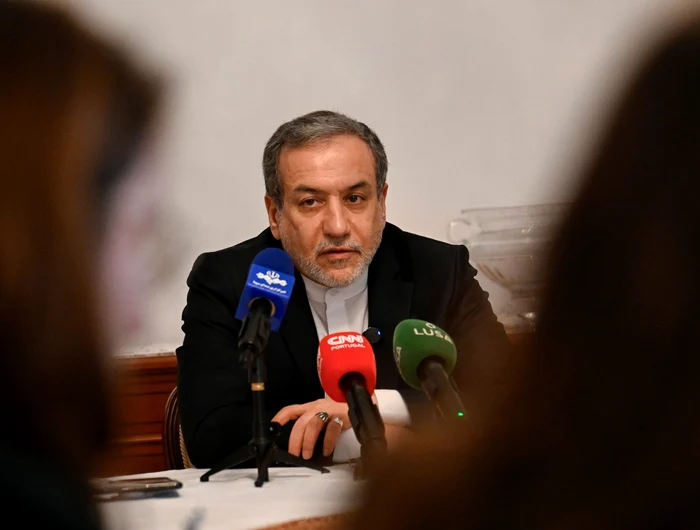
Abbas Araghchi, Iranian Foreign/Photo Minister: Getty Images
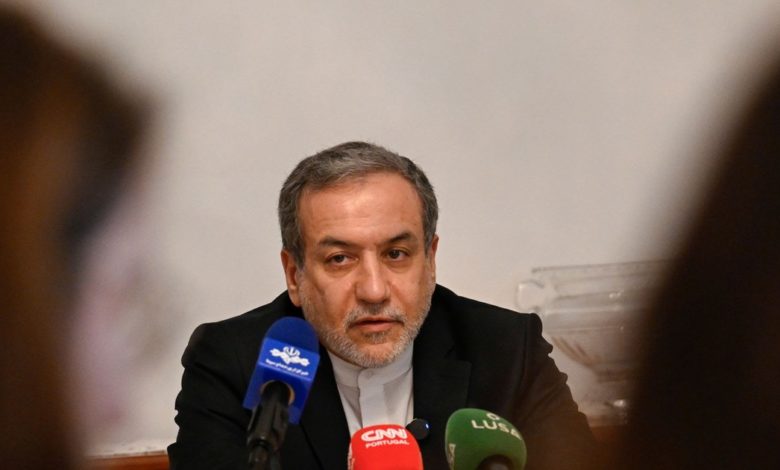
In an official message published on the X network (former Twitter), Iranian Foreign Minister Abbas Araghchi, accused the United States of a serious violation of the UN Charter and International Treaties, including the Treaty of Nuclear Polishment (TNP):
“The United States, a permanent member of the UN Security Council, committed a flagrant violation of international law by attacking peaceful nuclear installations. Each UN member state must be alarmed by this dangerous, illegitimate and criminal behavior.”
The diplomacy from Tehran claims that Iran reserves all its options to defend itself “in accordance with Article 51 of the UN Charter” and warns that the consequences will be lasting.
American operation, greeted by Trump, condemned by Tehran
President Donald Trump said in a discourse transmitted from the White House that the attacks were “a spectacular military success” and that the essential nuclear sites in Iran-Fortow, Natanz and Isfahan-were “completely and totally destroyed.”
“Iran, the aggressor of the Middle East, has to make peace now. Otherwise, the following attacks will be faster and more devastating. I targeted the hardest targets. What follows can be executed in just a few minutes.”Trump said, warning that he does not exclude other blows, if the Tehran regime does not give up.
Israeli and American sources claim that the attacks have been coordinated together, thus marking a direct involvement of Washington in the Israel Military Campaign against the Iranian nuclear program. Trump's statements suggest that the decision was made quickly, following consultations with the Allies, but without a prior consultation of the Congress – which has already caused reactions among the American political class.
Iran warns of a “dangerous war” and evokes reprisals in the region
The Iranian Foreign Ministry has transmitted a severe statement, accusing the US of “starting a dangerous war against Iran” and that it “completed the crime chain committed by the Zionist regime.” At the same time, the Iranian regime emphasizes that it will not remain passive and respond “with full strength” to defend its security and national interests.
Against the background of the climbing, it is anticipated that the American forces in the region – stationed in Iraq, Syria, Qatar, Kuwait or the United Arab Emirates – can become immediate reprisal targets. Al-Asad, the largest American base in Iraq, was targeted by Iran and in the past, after General Qassem Soleimani in 2020. Then Iranian missiles injured dozens of American soldiers.
In parallel, the leaders of the Pro-Iranian militia in Iraq, such as Kataib Hezbollah, threatened that “American bases in the region will become a hunting ground” and promised “surprises” for American aircraft.
Sensitive points and multiple threats
The US Army currently has tens of thousands of soldiers in the Middle East, in strategic bases such as Al-Dudeid (Qatar), Al-Dhafra (United Arab Emirates), Camp Buehring (Kuwait) or the Tanf base in Syria. The Pentagon announced the mobilization of “additional defense capabilities” in the region and stressed that “the protection of American troops remains absolute priority.”
American embassies and consulates in Iraq and Israel have been partially evacuated. Air France and KLM airlines canceled flights to Dubai, invoking the “uncertain security situation”.
The most likely scenarios
Although the Iranian arsenal does not include sufficient rays to reach the US continental territory, military analysts warn that Iran has sufficient means to cause serious damage: drones, cyber sabotages, destabilization of sea routes from the Persian Gulf and activation of some clandestine networks.
In the absence of a clear reaction from the Supreme Iranian leader, Ayatollah Ali Khamenei, whom the regional press writes that they would be in a bunker in the Lavizan neighborhood of Tehran, the messages transmitted by the state television and high-ranking officials prefigures a possible coordinated response.
The situation is fluid, but climbing seems inevitable. And peace – more and more distant.