Major Impact In Banking and Payments: Stablecoins law changes the rules for banks and cards


The American Senate adopted the law called Genius on Wednesday to regulate “Stablecoins”, The cryptoactive ones whose value is related to another financial asset, often a traditional currency.
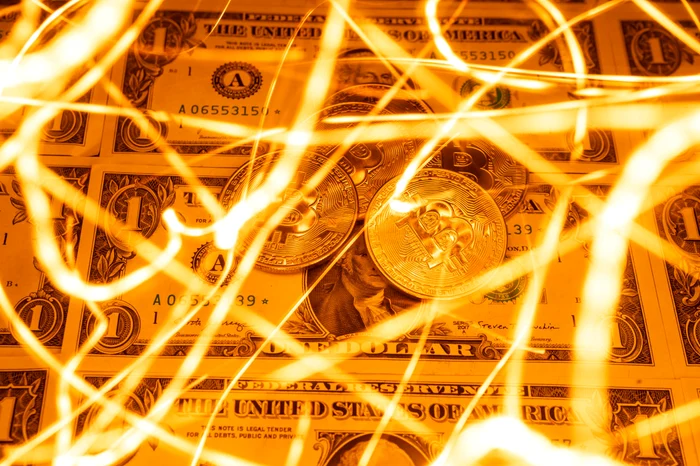
The US Senate adopted the law regulating Stablecoins. Photo shutterstock
Stablecoins or cryptocurrencies “stable“They have aroused an interest, with the favorable approach to the domain from the new US administration, the increasing opening of companies for the use of new tools and the general appetite of the public for cryptoactive, shows Claudiu Cazacu, XTB Romania strategy consultant.
Although until the implementation there are still stages, that is, the vote in the Chamber of Representatives and the promulgation by the president, the proposal will become a law, having a broad political support.
The project describes the conditions for issuing and operating cryptoactive related to other assets, the interest being especially for those related to US dollars. Rules for the protection of assets are established, such as segregation of accounts and monthly audits, and for the prevention of money laundering. Also, relevant surveillance authorities are defined more clearly. The adoption of the law will increase both the appetite of the general public and the issuers for such products.
The intention of the suppliers is to provide the advantages of digital assets, the ease and the low cost of use, without the volatility of the price, accustomed to other cryptocurrencies. Giants from different industries have taken note of this aspect.
In addition to the Tether, Circle and Paxos road openers, financial institutions and retailers have announced plans for their own stablecoins. For example, Societe Generale has a launch project, while Morgan Stanley and Bank of America are studying the possibility, as well as Santander. Paypal already has such a cryptoctive. In Retail, Walmart and Amazon have announced that they are considering creating their own “stable” cryptocurrencies, stresses the XTB Romania strategy consultant.
“We could assist, after the adoption of the law, at a period of rapid growth of the supply of projects, mirrored in use, a wide trend with extensive long -term consequences. The routes through which the financial resources in the economy circulate would gradually be changed to new entities that can take advantage of the changes.points out Claudiu Cazacu.
The secretary of the treasury, Scott Bessent, is enthusiastically shown to the new legislative project, as well as the US President. Bessent has discussed the “supremacy of the dollar” that would be supported by the adoption of a large number of stable cryptocurrencies, which – to comply with the rules of allocation of reserves – would become buyers of dollars and government securities. The US budget deficit has reached $ 1.35 trillion trillion after the first 5 months of the year and is a concern for observers and some bankers.
The US dollar was decreasing this year, losing 10.2% in front of Euro, while European officials spoke about a favorable situation to a more pronounced role of the unique currency in the structure of global reserves, points out Claudiu Cazacu.
Equally actions that have benefited from the approval of cryptocurrency law ”stable“They reacted with a volatility specific to the domain. Circle Internet titles, the technology that owns stablecoin called USDC, advanced 33.8% Wednesday, continuing the strong evolution from the perfectly timed listing two weeks ago.
The assets held in USDC exceed $ 61 billion, being below the value of $ 155 billion, provided by Tether, a company under multiple investigations from US authorities. The stocks of the Coinbase Stock Exchange advanced with 16.2% assisted by the use of USDC as a guarantee in trading futures contracts. The interpretation between the traditional financial system and the “new generation” system seems to be at the beginning, offering numerous possibilities of increasing the use and implicitly the profitability of the actors involved. RobinHood shares also jumped 4.5%.
What is the situation of traditional operators
However, not all actions had to win. “Who would have to lose from the law? A lower volume of transactions as a result of migration to other payment modes translates through lower revenues of traditional pay systems, Visa and Mastercard card giants. Visa shares lost 4.9% Wednesday or nearly $ 34 billion from capitalization.”says the analyst.
According to him, Mastercard titles decreased by 5.4%, which means $ 27.8 billion deleted from the stock exchange value. Investors anticipate high chances of passing the law through the American Congress, points out the XTB Romania strategy consultant.
However, he says, the initial reactions of the stock market seem to be driven by a high level of emotion, a pronounced enthusiasm especially in the Circle case. Although the transformations brought by the Genius law in the US financial architecture and not only can be major, they would run in a longer time, having slower effects than signaling the first market responses.