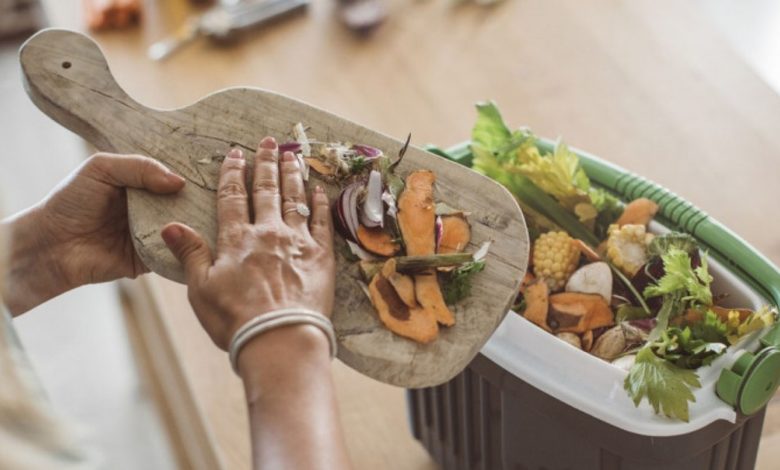
Romanians continue to throw huge amounts of food, and the causes are diverse: from historical traumas and habits of harmful consumption, to the lack of a shopping plan. Specialists warn that food waste does not only affect the personal budget, but generate huge hidden costs maintaining a vicious circle with economic, social and environmental effects.
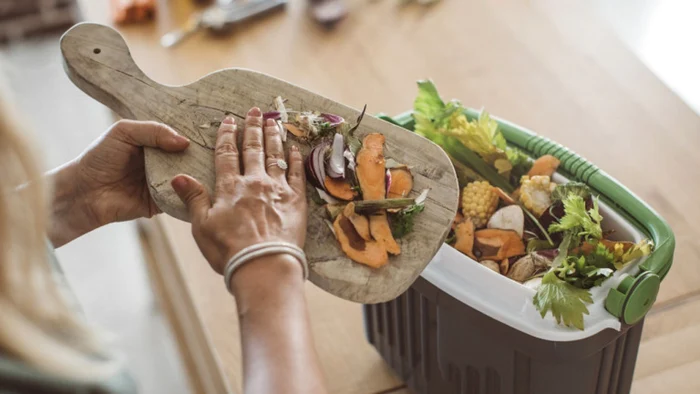
Food waste
Although Romania records one of the highest rates of poverty risk in the European Union, the food waste reaches difficult to ignore. Specifically, almost half of the Romanians throw cooked food, and the food waste costs a family over 200 lei per month, shows the last study conducted by UP Romania, in partnership with Reveal Marketing Research.
How much does it cost us to waste from the plate
“If we take into account an average of 200 lei per month, waste per household, at a total of about 7.5 million households in Romania, we are talking about over 18 billion lei annually, ie about 3.6 billion euros. It is a huge amount, equivalent to the cumulative annual budgets of several ministries, and this does not include the indirect costs”says Florin Maxim, founder Hospitality Culture Institute.
In his opinion, the food waste does not mean only “directly thrown” money, but they are translated by higher taxes for collecting household garbage, especially in the cities where the payment is made according to volume, and not only.
“According to the data of the European Commission, almost 60 million tonnes of food are dispelled in the European Union, at an estimated cost of 132 billion. Romania contributes over 2.5 million annually. From an ecological point of view, the food waste is responsible for 8-10% of the global gas with the greenhouse. Social, the food waste is all the more painful as we still have children and ages undernourished in Romania ”, Florin Maxim continues.
Local production, ignored solution?
For his part, Marius Tudosiei, founder of Băcănia Veche, says: “Everyone applauds anti-tissue ideas, but we waste resources like gods!.
According to it, the consumption of local and seasonal products could reduce food waste, especially waste from the end of the chain. “That is, in the field. At this moment, many harvests are no longer raised from the field, because there is no market for them. Import ingredients, once they reached us, only benefit from the already established distribution channels, while the producers can generate sales events that lead to the sold-out, so zero waste. In addition, when you supply close, on the short chain, you can order exactly as you get, with a higher frequency. This reduces waste to the place of production (kitchen). In addition, when new ingredients appear, the public can react very well, so the waste will be reduced too ”, draws attention to the entrepreneur who, confesses that he was born in the country, in a relatively isolated area.
“There it was equally necessary to have stocks/reserves for the whole winter, to make your plans so that you have nothing to throw, that it is a sin.”he remembers.
Marius Tudosiei is of the opinion that a national, long -term strategy is needed to combat food waste. “I know for sure that a lot of education is needed, starting from the small classes. It requires mechanisms of educating mature people, who do not think of these processes, they do not even consider that a problem that we waste this resource. It requires a real premie-pedess strategy for the big chains. I think somewhere between 5 and 10%. complete it.
“If the food waste would be a country, it would be the third largest coam transmitter in the world.”
In Horeca, the Estimations Up Romania show that 25-30% of the portions served in restaurants are not consumed in full. “This means that, at a payment note of 100 lei, 25-30 lei arrive in the garbage. We are talking about tens of millions of lei a month only in this sector. We have steps through which we set out to contribute to reducing food waste, starting from this awareness and education, which is the study together with Reveal Marketing” and partners to educate and reduce the waste.“Explains Elena Pap, director of Europa up Group.
It draws attention to the fact that the diet should be more and more concerned about us. “From an economic perspective, we are talking about 18 billion lei scattered annually, from a social point of view, over 1.5 million Romanians live in extreme poverty and I do not know when they will have the next meal. At the same time, tons of good food get to the trash and from an ecology point of view: according to FAO, if the diet would be a country, it would be the world. generates about 2 million tons of CO₂ annually.says Elena Pap.
What solutions exist to reduce food waste real
However, over 50% of the food waste occurs in our own room, continues Lăcrămioara Rediu, Director Fundraishing, Partnerships and events within the Food Bank, an organization founded by Gabriel Sescu, with the mission to fight poverty and food waste. “We, as people, must somehow recover respect for food and goods. Food, today is so precious to those who do not have it and, however, it is treated only as a good. As we treat everything we buy and tomorrow it has value … through the choices we make every day, it is not possible. Human effort, it is a lot of work.says Lăcrămioara Rediu. Specifically, he suggested to people an exercise through which, for a month, they put another container near the trash, so that when they threw something in the garbage, they would estimate the value of what they threw. “We often complain that we do not have money for holidays, when many of our funds go to the garbage including by throwing food. Somehow we talk about respect for the parent who cooked or brought the money to the house for purchase.”says Lăcrămioara Rediu.
Romania has a percentage of 32% of people at risk of poverty or social exclusion, the highest in the EU, where the average is 22%, according to Eurostat. “Almost 1 in 5 Romanians (19.8%) is affected by severe material and social deprivation. The highest incidence in 2023 was registered in households consisting of two adults with three or more children (68.6%), followed by single -parent households, which had an incidence of 45.3%.is shown in the most recent report released by the Federation of Food Banks in Romania (FBAR). In this context, a study by World Vision reveals that 22% of children in rural areas go to bed, according to the source.
According to FBAR, food waste causes 16% of total greenhouse gas emissions at the EU level, while, annually, the economic losses generated by it reach up to 132 billion euros. At the same time, 33 million people in Europe cannot afford a complete meal every two days.
“Day by day, we recover the surplus of foods donated by the partners in the agri -food chain (producers, processors, distributors and retailers), thus contributing to reducing the waste and offering food still for consumption a new life. After transporting to banks' deposits, foods are sorted, recorded and stored according to the necessary thermal regime, and are then distributed to the partner NGOs, which provide help to vulnerable persons. Among the foods we receive, for example, are the seasonal ones, which have an extensive validity term, but which are no longer purchased after the holidays, for example. This is why, two months later from Christmas, a little boy received a chocolate fan through the food bank. Do you know what he told us? That he is glad that he has not forgotten Santa! ”tells Lăcrămioara Rediu.
The cost of shortcomings and historical trauma
One of the reasons why we buy more foods than we need can be historical trauma, specialists say. “In the communist period, the shortcomings were a daily reality. This state of uncertainty and the fear of having enough left deep traces in the collective subconscious. To this, all the beliefs, messages and memories of the food are added. Another factor is marketing and advertising. The offers, “unique opportunities and only now” increase the number of impulsive shopping. If we use food as an emotional refuge, as a way we have control and safety, we will buy more than needed “considers Gabriela Răileanu, a psychotherapist.
The same opinion seems to be the founder of Hospitality Culture Institute. “We have an emotional relationship with the food, historically inherited. After decades of lack of abundance is a form of comfort. The main factors are the anxiety of not remaining without, decision -making, that is, we have to buy without an autopilot, the aggressive marketing, the type 2+1, and the requests, for free. The illusion of safety. he says.
Clinical psychologist Andra-Marina Ionescu adds: “Several psychological factors can be involved in the bearing behavior of the buyer. From the style of uncertain attachment, high perfectionism, fear of deficiency or lack of self -control. A historian of affective deficiencies can lead to excess buying as a form of consolation and coping with stress. This behavior can be an affective way”.
Therefore, in a country where over six million people are at risk of poverty, and 22% of children in the rural goals go to bed, the food waste reflects a systemic imbalance. The costs are visible: financial (over 18 billion lei annually), social (in contrast between excess and shortcomings), and ecological (in the impact on resources and CO2 emissions). From collective trauma to aggressive marketing, consumption behaviors can be understood and changed. But sustainable solutions begin with education, planning and a culture of responsible consumption, in which small changes can have real beneficial effects for the whole society.