After Macron's visit to Greenland, another head of state goes to a territory disputed in Arctic


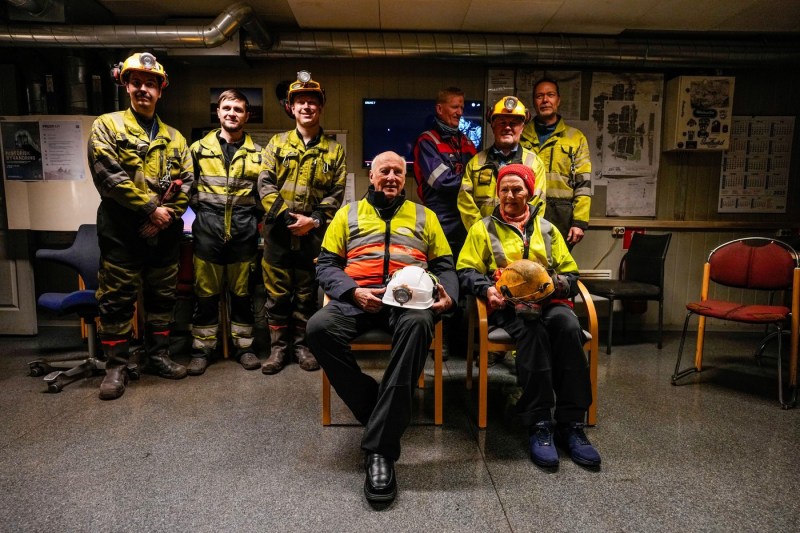
King Harald V and Queen Sonja Photo: NTB, NTB / Alamy / Profimedia
King Harald V of Norway and his wife, Queen Sonja, visited the main settlement in the Arctic Svalbard Archipelago on Monday, strategically located, in a time when the United States, Russia and China show an increased interest in this resource-rich polar region, informs Reuters, taken over by Agerpres.
The emphasis on the strategic importance of the archery for mining, maritime transport and security has increased suddenly because of the repeated statements of US President Donald Trump, who said he wants to take control of Greenland.
The Arctic also has fossil and mineral fuels under the ground and on the bottom of the sea, being an area of military and economic competition.
The visit of the Norwegian royal couple takes place one day after French President Emmanuel Macron visited Greenland as a sign of European solidarity.
The Svalbard Archipelago – which became part of Norway in 1925 – is about half the distance between the North Pole and the European continent. The visit of King Harald marks a century of Norwegian sovereignty. This territory is governed by virtue of a 1920 treaty, which also allows citizens of the signatory states to settle there without needing a visa.
The Svalbard Treaty restricts the military use of the archipelago, but its islands are not a demilitarized area. Russia has accused Norway in the past of militarizing the Svalbard archipelago, but the Oslo authorities have rejected those accusations.
Norway is the NATO monitor for an area of 2 million square kilometers in the North Atlantic, which also includes the waters between the Svalbard Archipelago and the European continent, used by the nuclear submarines of the Russian northern fleet.
In Svalbard there are two Russian settlements, Barentsburg and Pyramiden, with 297 inhabitants currently from a total population of 2,863 people, according to the Norway Statistics Office.
China, which is self -titled a “almost Arctic” state, wants to set up a “Polar Road of Silk”, an alternative maritime route to reduce its dependence on the Malacca Strait.