Trump and the US Congress are “slamming”. The explanation from Washington: who supports Romania in the American political battle


The US Congress adopted, on Wednesday, a different defense strategy than the one developed by President Trump's people. Researcher at the prestigious Georgetown University in Washington DC, Antonia Pup explains, for “The Truth”, what are the stakes and the ins and outs of this apparent distant confrontation between Congress and Trump.
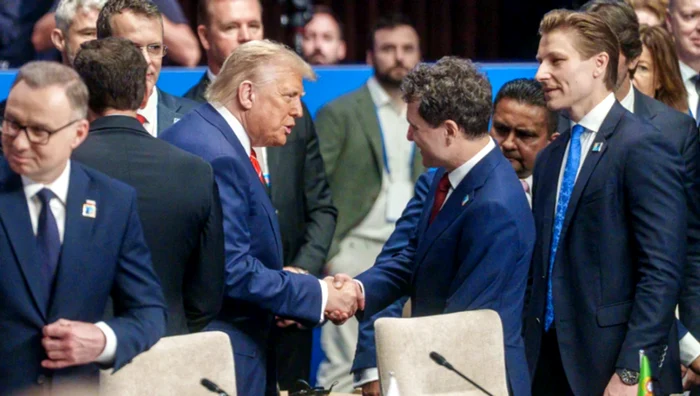
Nicusor Dan and Donald Trump in a short discussion. PHOTO: Presidency of Romania
The Congress of the United States of America has largely contradicted President Donald Trump in the defense strategy adopted for 2026. The strategy of the Congress is to a certain extent different from that of the White House.
The main difference, at least as far as Romania and the European Union are concerned, is that the Congressional project reaffirms support for US alliances in Europe, while the strategy of Trump's experts takes a different approach. Basically, the bill drafted by Congress provides that the United States of America will have a continuous presence in Europe. On the other hand, the strategy developed by congressmen prevents the Pentagon from reducing the number of American troops deployed in Europe below 76,000 soldiers without a justification. And the arguments must be brought before Congress, which would have the last word.
Donald Trump has veto power, but things are complicated
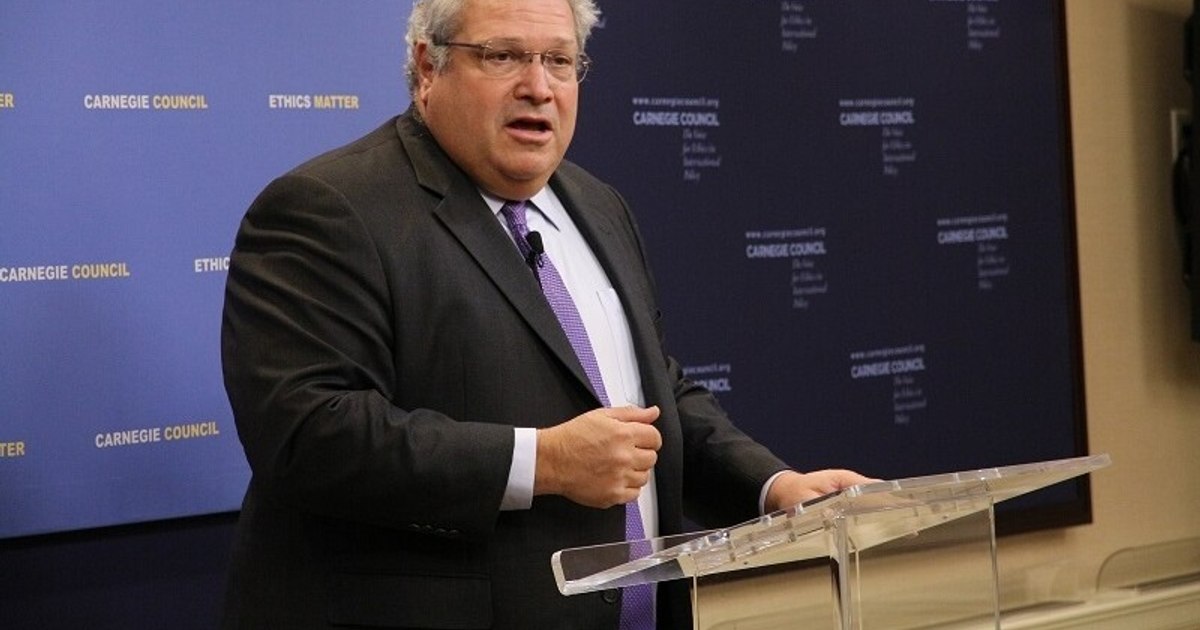
Antonia Pup is a researcher and lecturer at the prestigious Georgetown University in Washington DC and has been closely following the duel between the most powerful man in the world, President Donald Trump, and the most influential Parliament, the US Congress. In an analysis for “Adevărul”, Antonia Pup explains to what extent the two strategies conflict and to what extent this struggle for influence concerns Europe and Romania.
From the start, the Romanian reminds that Donald Trump has the right to veto the NDAA, according to the legislation of the United States. That means the leader of the White House can refuse to enact the law drafted by Congress. However, there is also a “but”, explained by Antonia Pup.
“The United States Congress passed the NDAA (National Defense Authorization Act), a law adopted annually by the legislative forum with the purpose of establishing the Pentagon's budget, policies and priority directions of action. It is important to keep in mind that the NDAA does not directly allocate money to the Pentagon for various activities (this process of allocating budget credits is carried out by separate laws, by a commission distinct from the defense one – «Appropriations Committee»), but authorizes how money can be spent for the defense of the United States. The NDAA is one of the most important pieces of legislation passed annually by Congress because it sets forth the strategic priorities of the U.S. as seen by the nation's elected officials. The President can veto the NDAA, but Congress can override it with a two-thirds vote. Once passed by Congress and enacted by the President, the NDAA becomes legally binding, and President Trump and Defense Secretary Pete Hegseth will have to abide by the limits and conditions set out in the act, such as how military money can be spent and what programs can be funded“, says Antonia Pup.
Good news for Ukraine and the European Union
The project adopted by the Senate came with some delay, for objective reasons. For the European Union, the NDAA has some good news, as well as for Ukraine.
“The 2026 NDAA was passed by the US Senate somewhat behind schedule, after a period when Congress was blocked by the shutdown. It includes some good news for Europe, such as the authorization of $800 million in military support for Ukraine, an important signal from Washington that shows us one thing: Ukraine's cause enjoys bipartisan support. The NDAA also requires that we continue to have an American general at the helm NATO's Supreme Allied Command Europe (SACEUR), as well as a new Baltic States Security Initiative, which requires the Pentagon to develop a strategy to ensure the security of the Baltic states, including strengthening regional planning and cooperation between the Baltic states' military forces and deterring Russian aggression against these states”, says Antonia Pup.
Romania was also ignored by Congress
If the Baltics are mentioned, the Congress makes no reference to Romania, which is also “forgotten” by the American senators. Antonia Pup's explanation is that, unlike the Romanians, the Baltics were more involved and influential.
“We recall that in the 2023 NDAA we found a similar proposal, but for a US strategy for the security of the Black Sea. The usefulness of this proposal was questionable: although it represented a strong political signal, it did not bring a big change in terms of capabilities to secure the Black Sea. The current NDAA does not provide any mentions regarding the Black Sea, nor mentions regarding Romania. The Baltic states have moved a lot better to ensure representation of their interests at the level of Congress; this activism was absent from the southern half of NATO's eastern flank”adds the Romanian.
However, even if neither Trump nor Congress have any concern for Romania, one of the provisions is inspired by our country itself. Antonia Pup details.
“Another important provision is inspired by Romania's experience. Romania's experience as a state in the vanguard of the resizing of the American military presence in Europe was a wake-up call for Congress, it led congressmen, including Republicans, to react strongly in order not to be taken by surprise by the Pentagon. The NDAA prohibits the Pentagon from reducing the number of troops stationed in Europe for more than 45 days without first obtaining the approval of Congress, introducing the obligation to consult NATO allies before such a decision is taken”claims Antonia Pup.
The Pentagon's strategy takes precedence
Even though the Congressional draft apparently overlaps with the Pentagon's strategy and more or less contradicts it, American diplomats will still continue to refer to the SSN, that is, the Pentagon's strategy, and not the NDAA when it comes to the strategic foreign policy priorities of the United States.
“Read in tandem with the National Security Strategy of the United States, the NDAA pledges to maintain support for the European theater of operations, for the NATO alliance, and provides a bipartisan political signal to maintain these priorities as vital to U.S. national security. It is also a signal that this Congress no longer wants to be taken by surprise by the Trump administration's foreign and security policy decisions and is prepared to seriously fulfill its role of monitoring the executive branch.” The federal bureaucracy, US diplomats, will continue to report to the SSN and not the NDAA when it comes to US strategic foreign policy priorities during this administration.The Baltic States Security Initiative is funded with $175 million through the NDAA“, explains the Romanian.
Trump vs. Congress and US relations with Romania
She also sought an answer to the question that is on many people's lips, from the perspective of Europeans eager to know who will prevail and who is “stronger” between Trump and Congress at this moment.
“It's a question with too many nuances to say whether X or Y. Trump can block the signing of the NDAA. So it would be like the chicken or the egg question. Theoretically, Trump now has a majority in Congress. Congress can with a massive mobilization block certain initiatives, but not all,” explains Antonia Pup. But there is also a trend, noticed by Antonia Pup: “I think as we get closer to the 2026 midterms, Congress is going to try to get more assertive with this administration.”.
Regarding Romanian-American relations, Antonia Pup commented on the joint declaration adopted on December 11 by the USA and Romania. It is a joint statement in which the two allies reaffirmed their support for NATO. However, the tone of the Americans was much colder this time than in previous similar documents. In the declaration there is absolutely nothing about the invasion of Russia, but not even a mention about Moldova.
Antonia Pup explains in what key this could be interpreted.
“We can interpret this statement as the key to a more limited role for the United States in Eastern Europe, in accordance with what is presented in the new national security strategy. The current administration supports the integrity of NATO, but nothing more for the states in the neighborhood of NATO (even if they are partners), whether it is Ukraine or the Republic of Moldova. This Republican administration organizes its foreign policy by opting for bilateralism instead of multilateralism, and I believe that this statement faithfully reflects this preference“, she points out.
And the Europeans ignored us
Antonia Pup also clarified the reason why Romania seems condemned to play in the “small group”, which is demonstrated by the fact that neither the president Nicușor Dan nor the prime minister Ilie Bolojan were invited to Berlin, to the summit attended by the NATO “heavies”, but to which Poland and Finland were invited instead.
“This is the consequence of the fact that even under the presidency of Nicușor Dan, Romania does not assume a role as a regional leader in the strategic conversation about what European security will look like at the end of the war in Ukraine. It is an element of continuity in relation to the Iohannis presidency, that of being docile spectators rather than entrepreneurial leaders on the Ukraine file. Another topical European debate this week in which Romania's voice was not heard is the one regarding the use of frozen assets of Romania to the Russian Federation to help Ukraine. President Dan did not express himself on how he will vote at the European Council on Thursday. It makes sense that we should not be invited to these meetings if we do not want to offer anything in shaping these high-stakes conversations – we are condemning ourselves to be left out of these negotiating frameworks.”concludes Antonia Pup.