“They did not even have a cross”: almost 800 dead children abandoned in a common pit in Ireland will be exhumant

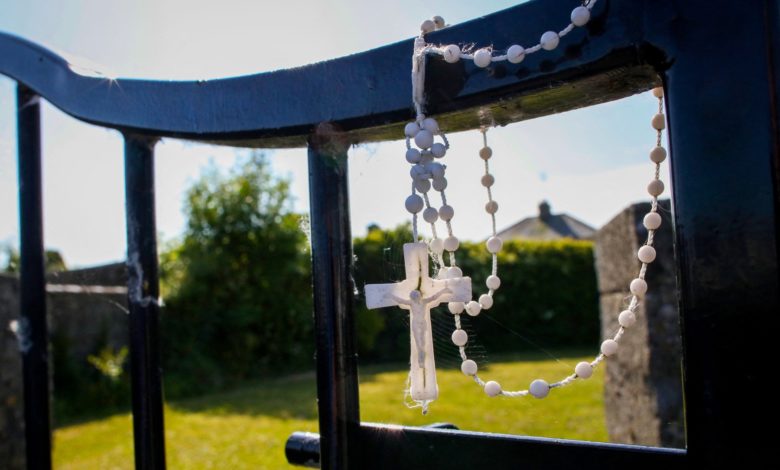
The place of the former home for m mothers and children, from Tuam, on the outskirts of Galway, western Ireland. Photo: Paul Faith / AFP / Profimedia
In 2014, they were discovered796 children secretly buried in a common pit in Ireland. These children, born outside the marriage, had been separated from their mothers and placed in a religious home. Catherine Corless, who made the discovery, fought for decades to reveal this scandal, and now, after more than a decade, they are about to start the first exhuminations, AFP reports, according to News.ro.
“It was a fierce struggle,” 71 -year -old Catherine Corless told AFP Corless.
On Monday, the experts will delimit the perimeter of the former septic fossa of the St Mary House of the Sisters of Bon Securs. The goal is to start searching in July.
It all started in 2014. That year, Catherine Corless discovered evidence of 796 children, from newborns to nine-year-olds, in this house located in a town at 220 kilometers from Dublin.
His research led to a macabre discovery: a common pit. “There is no funeral register, no cemetery, no statue, no cross, absolutely nothing,” she remembers.
Above all, “when I started, no one listened to me (…) I begged: Remove these children from these pits, give them the worthy Christian funeral that has been refused,” she says. But in vain.
When Catherine Corless's investigation was published, she produced a shock wave in Ireland, revealing the brutal treatment applied to children born out of marriage.
For decades, the society, the state and the Catholic Church, which has had an iron domination throughout history in Ireland, sent unmarried pregnant women in “houses for mothers and children.” After giving birth to these institutions, the children were separated from their mothers and often adopted.
Following the disclosures made by Catherine Corless, investigations were launched throughout the country. They established that 56,000 single women and 57,000 children went through 18 such houses between 1922 and 1998. About 9,000 of these children died.
Some of these homes were financed and administered by the local health authorities, others of Catholic religious orders. The home in Tuam was led by the bon sisters.
“All these children were baptized, but the church looked elsewhere. For them, they did not matter: they were illegitimate, point,” accuses Corless.
Despite the discovery of the first human remains in 2016 and 2017, only in 2022 a law officially authorized the excavations. In 2023, a team was finally designated to perform operations in Tuam. His mission: to find, identify and bury with dignity the remains that will be exhumed.
DNA samples will be taken from people who can attest a family connection with babies who have died in this house.
“I never thought I would see this day. So many obstacles have been overcome,” says Catherine Corless. But she is lucid and knows that the excavations will not provide all the answers. “Even if we manage to identify some remains, this will not bring peace for everyone,” she admits.