Shops “only for members”. Tired Americans are still fighting inflation

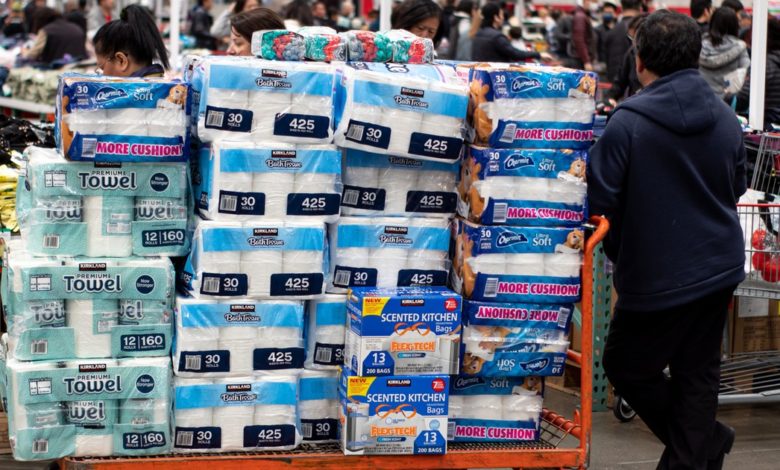
American consumers sweated by inflation tolerate long queues and pay in cash for the privilege of shopping in stores “only for members”, which are gaining more and more participation in the retail sector. Costco, Sam's Club and BJ's Wholesale Club attract more and more customers with a promise low prices at carefully selected products sold in large quantities.
Visiting these stores is often associated with wandering around the alleys created by towers of goods arranged on pallets. You can't count on help in navigation from sellers. Parking lots can be congested, and the vehicles are in queues for Costco gas. However, networks invest in varying degrees in improvement of purchases, exerting pressure on traditional retail sellers who rely on higher margins.
Boom for “club” hypermarkets is one of the effects of inflation that caused it to be Consumer prices in the US increased by 26 percent. compared to 2019.even before the Covid-19 pandemic. Consumer research shows that constant anxiety about inflation does not disappear because the United States impose duties on trade partners.
– In good times we are doing well, and in difficult times we are doing even better – said Chris Nicholas, general director of Sam's Club Us, who has sales worth $ 92.6 billion. [ok. 345 mld zł].
Sam's Club, belonging to the Walmart retail group, announced that sales in this store increased by 6.7 percent. in the first quarter, excluding fuel, exceeding the growth in the stores of the American home company.
Costco, from $ 254.5 billion [ok. 950 mld zł] annual income, was revealed on Thursday by a 7.9 % increase in sales in the US, also excluding fuel. BJ's, with revenues of $ 20.5 billion. [ok. 76,5 mld zł]he announced last week about a 3.9 % increase in sales, excluding the variable impact of gasoline prices.
For comparison – according to Visible Alpha estimates, sales in leading American supermarket chains Kroger and Albertsons increased by 2 percent. Sales have fallen in the chains of large -scale Target and Macy's.
– Currently, these companies are developing at a good pace and sometimes make their offer for consumers very attractive – said Robert Altun, an analyst at RetailStat.
“Join the club”
Three large networks enrich the US with millions of square feet of commercial space. Costco intends to open 15 stores this year. BJ's plans to open from 25 to 30 branches in the next two years. Sam's Club, which closed 63 locations in 2018, now intends to open 15 new club stores a year “in the predictable future”.
During the great opening of the new BJ's store at the New York Staten Island last month, customers went under the balloon arch to reach the customer service stand encouraging them to “join the club”. Denise Carrasquillo and her husband Ray said that they had already done it, pushing a stroller with foodstuffs, including milk, cooking oil and pastrales.
“When you have places like BJ's, Costco and Sam's Club, it helps,” said Denise, mother of three children. – Because in general, even if you pay a little more, when you break everything, your savings are much higher.
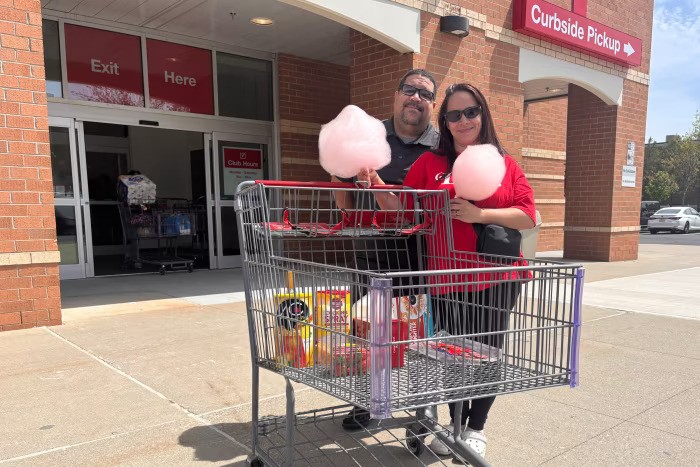
Ray and Denise Carrasquillo at the great opening of BJ's Wholesale Club in Staten Island
The pioneer of the club shops model was the Sol Price retail seller, which launched the Price Club network in southern California in the 70s of the last century. In 1993, Price Club merged with Costco. Walton himself, the founder of Walmart, confessed to the theft of Price's concept when in 1983 he created Sam's Club. BJ's based in Massachusetts was created a year later.
All three networks charge membership fees. Basic levels cost $ 50 [ok. 185 zł] Annually in Sam's Club, 60 dollars [ok. 220 zł] in BJ's and $ 65 [ok. 240 zł] in Costco – in exchange for access to stores. The last two networks raised fees last year, but the number of their members is still growing, and nine out of ten of them decide to renew membership. Todd Sears, financial director of Sam's Club, told investors last month that 80-90 percent profits come from revenues from membership.
In return, customers receive a stripped range of several thousand articles that, as they trust, will be the cheapest in the area – From a package of 36 rolls of toilet paper to the Bordeaux wines for customers who are slightly more wealthy than average.
“Basically, they enter the process of hunting for occasions, pay Costco or Sam's a fee and they transfer it to them,” said Bryan Gildenberg, managing director of Retail Cities, a consulting company.
Clubs exert pressure on sellers such as Procter & Gamble or Nestle to keep low prices, selling competitive own brands. Costco Kirkland signature brands and Sam's Club Member's Mark are worth tens of billions of dollars.
Cheaper but uncomfortable?
Customers are able to endure charges charged by clubs, but they are also confronted with less convenient purchasing experience. Shops are distant from them: the sum of the Costco, Sam's Club and BJ's location in the USA is still less than a third of 4,600 Walmart stores in the USA.
– It's a bit of a shop where you count time. You do not want to spend Saturday afternoon, wandering on a box with an area of 100,000. Square feet – said Bob Eddy, general director of BJ's, during WebCast in April.
In Costco, employees stop customers at the exit of the store, which slows down shopping. BJ's and Costco did not answer requests for comment.
Data on pedestrian traffic, developed by Advan Research, show that in the first quarter The buyers spent about 13 percent More time in Costco, Sam's Club and BJ's US stores than in traditional supermarkets.
All three large warehouse clubs also enter the area dominated by Amazon, performing online orders in stores or with home deliverysometimes via a third party, such as Instacart.
Shops try to fight what Nicholas calls “friction”. Sam's Club allows customers to scan and pay with phones, while cameras equipped with a computer vision check the content of baskets with digital receipts. This technology accelerated the time out of 23 percent, said Todd Garner, product director at Sam's Club, while showing a store in Grapevine, Texas. – They don't wait. They don't stand in line. They simply come out – said Garner.
© The Financial Times Limited 2025. All rights reserved. It is not allowed to spread, copy or modify in any way. Onet bears the sole responsibility for the translation, the Financial Times Limited does not bear any responsibility for its accuracy or quality.