2025-04-05 12:00
publication
2025-04-05 12:00
The German army is missing at least 100,000 soldiers. According to CDU/CSU, the situation matured to reactivate compulsory military service. SPD postulates a voluntary “new service”. As economist Timo Wochner points out in an interview with PAP, each option should also be considered in economic terms.
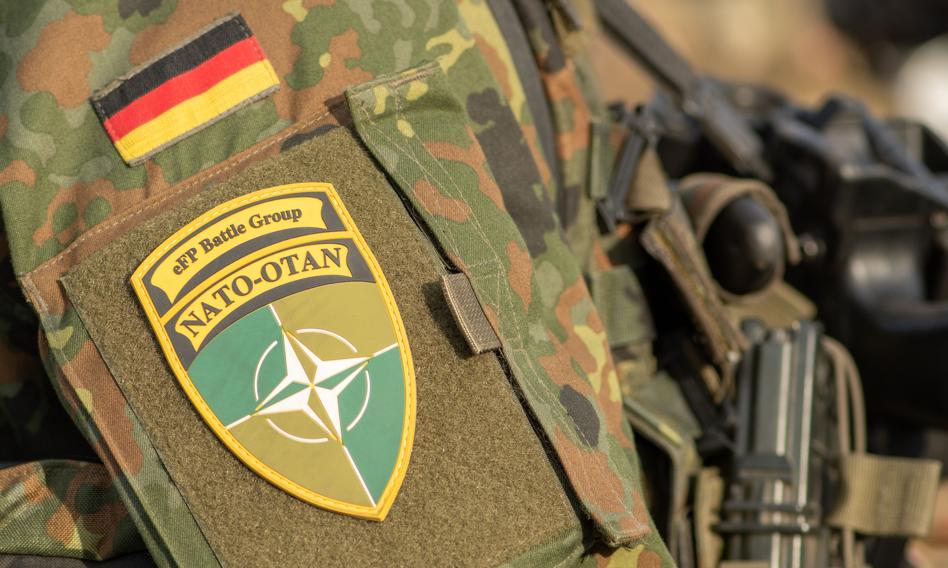
The fact that the German army is too small military experts have been alerting for years. After Russia's full -scale assault to Ukraine and the “Zeitenwene” program announced in response to it by Chancellor Olaf Scholz, the army was to be co -financed and modernized. Another hundreds of billions of euros from the new financial fund initiated by Christian Democrats will now reach the 100-millions of the 100-milliard fund announced in February 2022. There are therefore remedies. However, people are missing.
According to Timo Wochner, an expert of the Institute of Economic Research in Munich (IFO Institut), a debate on the future shape of the Bundeswehr, and especially on increasing its number, should also take into account the long -term effects of specific decisions for state finances. As he emphasized in an interview with PAP, depending on the adopted model of army building, i.e. whether it will be a conscript or professional army, these expenses will spread differently.
“In the case of the professional army, direct state expenses would increase more than in the case of restoration of consumption. This is because the state pays a much lower salary. In the case of the Bundeswehr professional army, it must be financially attractive enough for people to report themselves,” emphasized Timo Wochner.
The expert at the same time mentioned social implications, which may be a consequence of the introduction of conscription.
“Let's look at the matter from the perspective of general economic costs. Consumption to the army affects the decisions of the young generation and can have several negative effects. Because it means slower accumulation of property, delays in investments in human capital, i.e. starting studies or training,” said Wochner.
“These indirect costs lead to a decrease in private consumption consumption throughout the whole cycle of their life, but also to the decrease in their salary. The sum of these negative, indirect costs may be so high that at some point it will turn out that they exceed the expenses that you would have to incur due to remuneration for professional soldiers,” added PAP.
Wochner summed up that “from the point of view of the entire economy, consumption costs would be higher than in the case of the professional army.” However, he reserved that “from the point of view of security policy there are other arguments that could justify the introduction of consumption to the army, but one should think about what the price of such a decision would be.”
According to the Bundestag representative of defense, Ewa Högl (SPD) presented on March 11, the report on the situation of the German armed forces for 2024, at the end of the last year, the Bundeswehr had 181,174 active soldiers 181,174. Both Högl and most military experts find this number unsatisfactory. According to the Bundeswehr general inspector, Carstena Breuer, the army is missing today 100,000. soldiers. In addition, as she returned in the Eva Högl report, the army is also aging, the average age in the army is 34 years today. An additional factor negatively reflecting on the number of army is the interruption of military training by volunteers. In 2023, every fourth of them resigned during the trial period.
The topic of military service has naturally became one of the key points of coalition negotiations between Christian Democrats and Social Democrats. CDU/CSU is inclined to the reactivation of the obligatory military service and a gradual return to the conscription suspended in Germany in 2011. Chades also want to introduce the year of military service or the so -called Social year in social institutions for both men and women.
SPD is in favor of a more flexible military service based on voluntary principles and adapted to the needs of the Bundeswehr. At the beginning of March, the defense minister Boris Pistorius (SPD) in an interview with “tagesthemen” opposed immediate consumption arguing by arguing with the lack of enough places for conscripts in the barracks.
Tasting is in fact another problem of the German army. As Högl admitted in the report, both the dispersion and the necessary modernization of the barracks infrastructure will take. “Bundeswehr is a tanker, not a motor boat. And it takes time for the renewal and change of the tanker course,” the Bundestag proxy for the armed forces wrote in the document. Högl also gave several examples of “life” of the army illustrating the problem with accommodation of soldiers. It happens that the inability to accommodate all military people prompts them to rent apartments near the station of the unit, which in turn raises considerable additional costs. According to the description, the barracks are overcrowded and require a thorough renovation.
According to the YouGov survey from early March, 58 percent The Germans are at the army consumption, at the same time 61 percent. respondents aged 18-29 he is against him. (PAP)
Odh/ LM/