Reșița, the city of steel traversed by Via Transilvanica. The unique attractions of the “little Krupp of the Balkans”

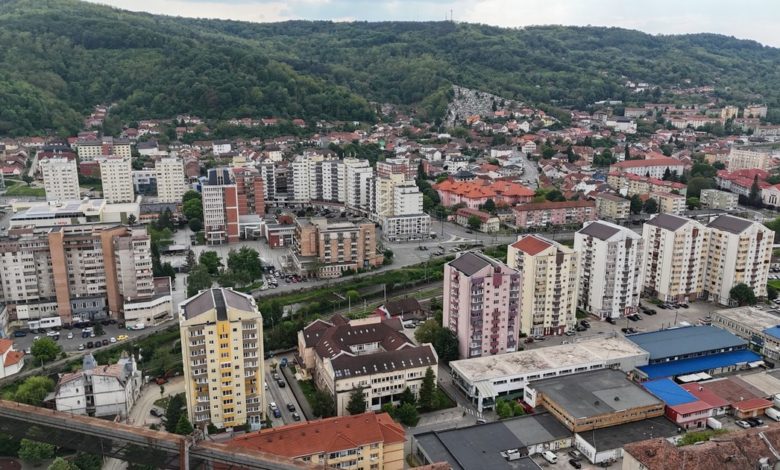
The structure of an old funicular, about 30 meters high, passes over Resita, a former city of steel. The capital of Banat Montan keeps some unique tourist attractions, which made it attractive for travelers on Via Transilvanica.
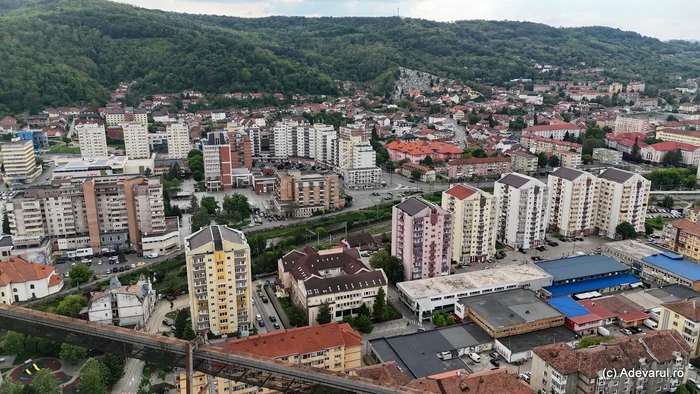
Resita. Photo: Daniel Guță. TRUTH
Less than 60,000 people live in Reșița, the capital of Banat Montan and Caraș-Severin county, a city of contrasts, with a metallurgical history that extends over two and a half centuries. Although the population of the city has declined accentuated in recent years, Reșița has become more and more attractive for travelers, being crossed, from 2024, by the tourist and cultural route via Transilvanica.
The kinetic fountain in the center of the resort
Some emblematic places in Reșița make the municipality of the Bârzavei Valley a completely unusual place. The best known landmark, for both locals and tourists, is the kinetic fountain in the Civic Center, made in 1984 by the sculptor Constantin Lucaci and recently rehabilitated. Constructed of stainless steel, this monumental sculpture combines art with engineering, reminding through its pieces the industrial tradition of the city.
Above the center is the old funicular installation, a steel suspended bridge that crosses the city over 30 meters high. Built in the 1960s for the transport of limestone from the careers in the Doman Valley to the industrial plants, the funicular is currently inaccessible, but there have been proposals for several years to turn into a pedestrian and cyclist route.
“The rehabilitation of the funicular puts into question an alternative mobility route, uniting the two hills for leisure, through spontaneously arranged routes or with minimal interventions, which allowed in time to develop alternative roads for sport and recreation,” It is shown in a project of rehabilitation of the metal structure.
Historical Furnace of Resita
Over 60 meters high, the furnace no. 2, also built in the 1960s, remained a symbol of the industrial city, even though it was decommissioned in the 1990s. Declared a historical monument to be saved from demolition, the furnace has become the subject of proposals for tourist reconversion in recent years. It is considered a living emblem of the more than 250 years of metallurgical tradition.
Reșița has developed over time around the old iron factories, whose ants have been put into operation starting with 1771, for cast iron and steel production.
In the factories of Reșiţa were made the rails of the first railways in Romania, as well as over 800 of the oldest steam locomotives that circulated on the country.
On the banks of the Bârzava river, at the entrance to the city, travelers can visit a museum of locomotives built in Reșița. The oldest of them, “Resicza”, made in 1872, is also the oldest steam locomotive in Romania.
Little Krupp of the Balkans
From the middle of the 19th century until 1919, the factories in Reșița have been managed by an Austrian railway company. Under its leadership, they included sections for the production of laminates, rails, iron bridges and various railway equipment. After the Great Union of 1918, the Industrial Center continued to develop within the Romanian society, under the name “Iron Plant and Reșița Domains”.
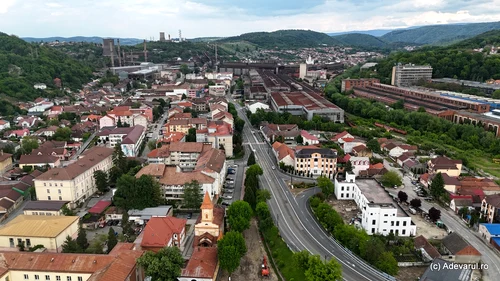
Image 1/18:
The city of Reșița, Aerial Pictures Photo Daniel Guță Adevărul (34) JPG
Here were made large locomotives, turbo -aggregates, compressors, infrastructure, military and oil equipment, as well as steel and laminated. During the interwar period, UFD Reșița were nicknamed the “little Krupp of the Balkans”, an honorable comparison with the German industrial giant Krupp. In the surroundings of Resita, numerous iron and coal mines, limestone careers and forestry provided the raw material for the industrial production of the Bârzavei Valley.
The factories in Reșița were nationalized in 1948, and for several years they were run by the Soviets, being part of the joint societal societies (metallurgical branch) and Sovrom oil (car construction branch). In the mid -1950s, they had over 20,000 employees, and their sections stretched over 450 hectares.
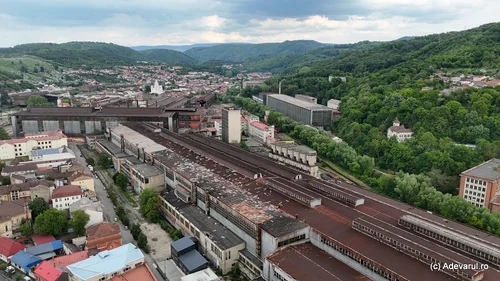
Image 1/17:
City Reșița, Aerial Pictures Photo Daniel Guță Adevărul (2) JPG
“About 166 kilometers of railway lines cross the factories, on which 32 locomotives and over 1,000 wagons circulate. The transport between the sections is mechanized (electric trucks, conveyor belts, etc.)”, inform a secret report of the Central Intelligence Agency (CIA) in the United States in 1955.
The Institute of Design of the Reșița plant had designed 20 different types of locomotives, various road and railway bridges for internal and export constructions (in the USSR, Hungary, Yugoslavia and Bulgaria); Various types of Pelton, Francis and Kaplan hydraulic turbines, steam turbine installations for household and export in communist China, pumps, large hydraulic presses, heavy transport cranes, generators and electric motors, completed the authors of the secret note kept in the CIA archives.
The industrial inheritance of the resort
Since the 1950s, the Romanian state continued to expand the old factories, which became a steel combined, of which, in 1962, the car construction plant (UCM) was detached. The city of the Bârzavei Valley has expanded with new working neighborhoods, for which, as in the case of the localities in the carboniferous region of the Jiu Valley, the designers have encountered difficulties in finding the right sites due to the relief.
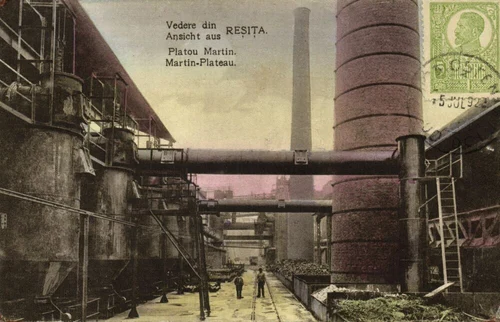
Image 1/12:
Illustrated by the time the factories in Reșița Source Delcampe (13) JPG
After 1990, both the Combined and the UCM entered the restructuring and privatization processes. Numerous sections have been decommissioned, and the number of employees has reduced to several hundred. In 2024, Hidroelectrica completed the acquisition of UCM Reșița, announcing the continuation of the manufacturing, rehabilitation and improvement of hydro -regrets and auxiliary equipment.
“This portfolio, unique in this part of Europe, is consolidated by the experience of approximately 450 employees, specialized in the production and maintenance of hydropower equipment”, inform the company.
An old section of the combination of Reșița, Otelăria, currently works as part of the Artrom Steel Tubes group, which continued the production of steel for pipes and blum.
The iron and coal mines in the localities close to Resita were closed after 1990, like most mining operations in Banat Montan and the Poiana Ruscă Mountains.
The population of Resita gradually decreased from over 80,000 inhabitants in the 1990s, to about 58,000 at present. The city remained a tourist landmark of Banat Montan, both through its industrial history, but also as a starting place on the routes in the Semenic National Park – Carașului Gorge.