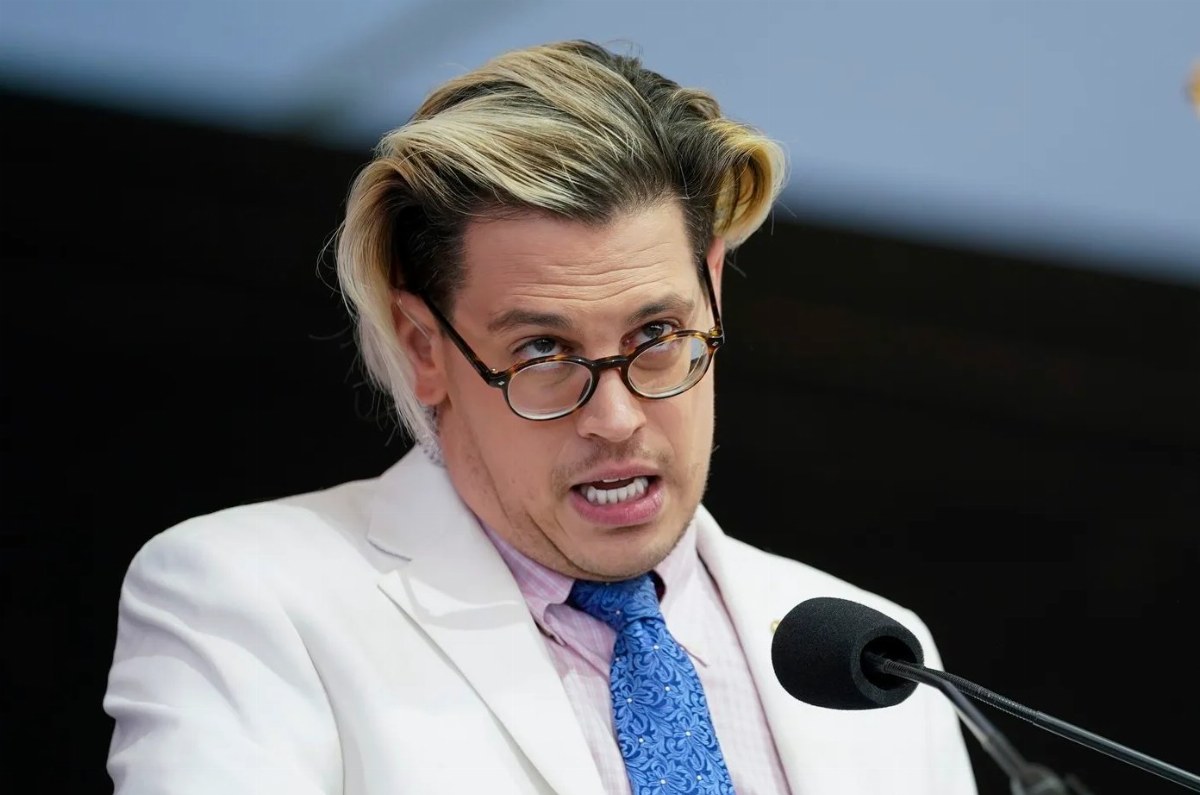
Milo Yiannopoulos, a far-right British political commentator known for his extreme views, was detained by U.S. Immigration and Customs Enforcement (ICE) on Thursday at Louis Armstrong International Airport in New Orleans. Authorities confirmed the arrest on Friday, stating that Yiannopoulos is subject to a final deportation order.
The Department of Homeland Security (DHS) announced that Yiannopoulos, 41, received the deportation order from an immigration judge on July 22 after failing to attend his immigration status hearing. According to DHS, he will remain in ICE custody until his expulsion.
Born in the UK, Yiannopoulos entered the U.S. legally in May 2019 but reportedly overstayed his visa, violating U.S. immigration laws. His actions have drawn significant attention due to his previous statements advocating for strict immigration controls, including the establishment of ICE checkpoints in supermarkets to immediately deport anyone unable to prove legal residency.
Background on Milo Yiannopoulos
Yiannopoulos gained notoriety as a far-right provocateur over the past decade. His contentious public appearances, including a college tour titled “Dangerous F*ggot,” aimed to promote free speech but often sparked outrage due to his derogatory comments about various groups, including Muslims and transgender individuals. His remarks have led to protests, with some events being canceled due to violence, notably at the University of California, Berkeley, in February 2017.
Even in recent years, he has maintained his support for strict immigration enforcement. In a post on X (formerly Twitter), he reiterated his call for on-the-spot deportations for individuals who cannot demonstrate their legal status in the U.S.
Yiannopoulos’s rise to prominence coincided with the election of Donald Trump, during which he became one of the president’s vocal supporters, occasionally referring to Trump as “daddy.” His controversial views continue to resonate with segments of the far-right in the U.S.