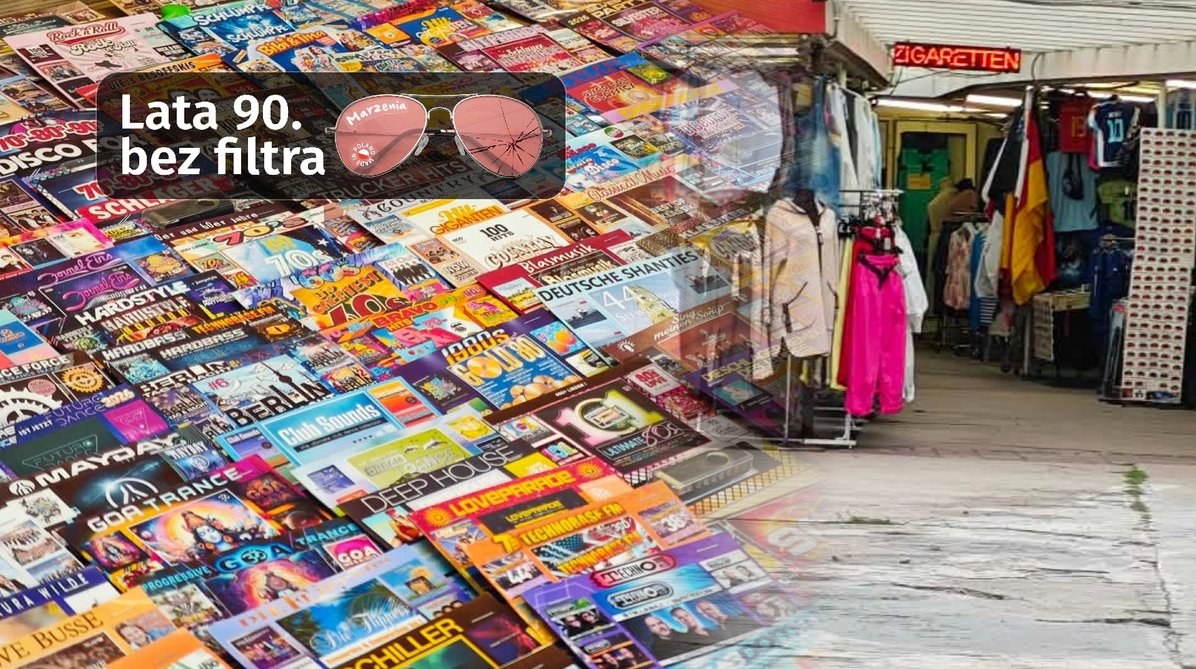
In Lubieszyn, a small town near the German border, modern trends seem to have bypassed this locale entirely. Here, shoppers can find CD albums from three decades ago, while the most popular items remain cigarettes and low-cost clothing. If there’s a place in Poland where time appears to have stopped in the 90s, it’s definitely Lubieszyn.
This article is part of the “90s Unfiltered” series, highlighting events and phenomena from that decade across various platforms. Without idealizing the past, we focus on the realities of that era.
In the early 90s, Polish capitalism began taking root, with bustling markets and bazaars cropping up along the borders. A visit to Lubieszyn reveals that little has changed in over thirty years, aside from a shift from cassette tapes to CDs, and now even to pendrives.
Major markets sprang up near every border crossing into Germany during this period. Locations like Osinów Dolny, Łęknica, and Lubieszyn may not resonate with most Poles, but they are well-known to residents of Berlin and Dresden.
We ventured to Lubieszyn to experience its nostalgic atmosphere firsthand. Growing up in that era, I felt a sense of déjà vu at the market stalls filled with cheap cigarettes, clothing—sometimes counterfeit—fireworks, gadgets, and yes, CDs. Once a hot commodity, CDs have become niche products in Poland, overshadowed first by illegal downloads and later by streaming services like Spotify.
Interestingly, German visitors still flock to Lubieszyn’s markets, eager to purchase music from the early 90s, popular techno tracks, and “schlager”—a genre akin to Poland’s disco polo. For just a few euros, they can take home albums from that nostalgic period. According to a vendor, Germans have a sentimental attachment to CDs and generally maintain a more relaxed attitude towards technology than Poles.
However, even Germans are slowly moving away from CDs, as more stalls display pendrives filled with music, attached to covers resembling traditional albums. Besides music, films are also popular, with DVDs taking center stage.
Fuel Up, Eat, and Shop for Curtains
The success of markets near the German border is hardly surprising; they emerged during a time of significant price disparities between Poland and Germany. Many Germans endured border checks to save money shopping in Poland.
While these price gaps have narrowed, Germans still make regular trips to Lubieszyn. Buses with visitors from across the Oder River can be spotted parked near the markets.
Vendors, however, are somewhat reluctant to engage. One shopkeeper acknowledges the nostalgic vibe of the markets, stating, “Maybe we are stuck in the 90s? That’s okay with me,” while efficiently tending to customers. Pointing to new clothing items, she calls out, “Zehn euro, zehn euro,” to passing German seniors, who smile and appear ready to shop.
Shoppers can find a wide array of goods, with unhealthy options like alcohol, candy, energy drinks, and notably, cigarettes being sold at much lower prices than in Germany. The selection goes beyond just food and drink; there are shops for curtains, garden gnomes, and even motorboats. Interestingly, I noticed a flag featuring the logo of the far-right AfD party. There are also bakeries, kebab stalls, and restaurants serving Polish cuisine. “We spend the entire day here, and it’s great,” one tourist exclaimed.
Lubieszyn is structured to cater to German visitors, featuring five gas stations in a town of about 100 residents. Tourists can fill up their tanks and pay in euros, visit a hairdresser, or drop their cars off for repairs.
While younger visitors are spotted occasionally, most market-goers are those who remember the 90s. For them, a trip to Lubieszyn often becomes a sentimental journey back to a time before Zalando or food delivery apps, when there weren’t many vegetarian, organic, or high-protein products available. This place also takes customers back to an era where cash was king, as not all vendors readily accept card payments.
Changes Are Coming to Lubieszyn
If someone asks me where to feel like the 90s are still alive, I would unhesitatingly say Lubieszyn. The products, the atmosphere, even the distinctive market smells evoke memories from that memorable decade. Even the advertising banners at the markets seem to be straight out of the late 20th century.
However, Lubieszyn is experiencing changes. Vendors complain that customer traffic has decreased significantly. Rising prices in Poland, along with the pandemic and border closures, have contributed to this trend. Additionally, the demographic of customers is aging, with younger Germans showing less interest in market shopping. Many shops that were open just a few years ago have now closed.
The influence of big business is also increasing in Lubieszyn. Alongside gas stations, major retail chains like Żabka, Biedronka, and Netto, as well as a McDonald’s, are drawing customers away from traditional markets. While this shift could attract younger shoppers, those who visit these chains may not venture to the stalls afterward.
Lubieszyn is also transforming in other ways. Once regarded as a poor region with struggling vendors reliant on German customers, it is now witnessing the construction of new homes and developments. The town is part of Dobra municipality, one of the wealthiest in Poland. Germans may still seek out inexpensive products, but they increasingly pass by brand new Mercedes vehicles with Polish plates. As one vendor at the market reflects, “Lubieszyn may have remained in the 90s, but its surroundings are undeniably in 2026.”