Free loan sanction. The Financial Ombudsman calls for dialogue between the sector and its clients

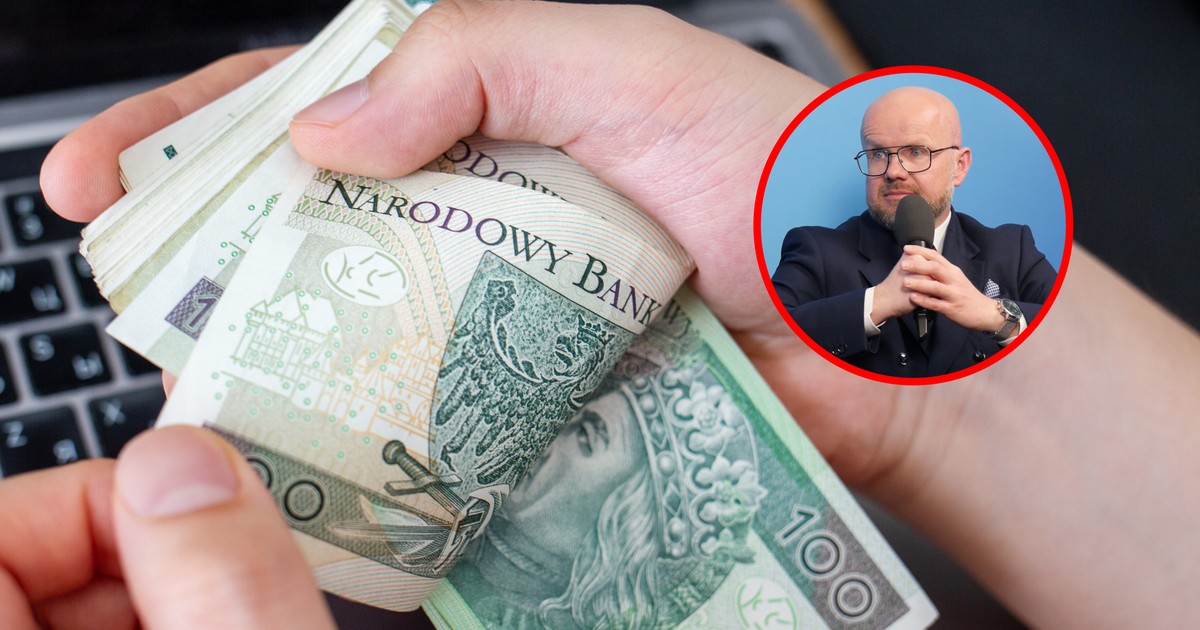
Topic free credit sanctions (SKD), i.e. the penalty imposed on banks by courts if irregularities are found when granting a loan, has recently become one of the most important problems of the Polish banking sector. But not only that, the Ministry of Justice is also concerned about the prospect of mass lawsuits that could burden the courts, which are already overwhelmed with Swiss franc cases. So much so that it is considering preparing a special act regulating banks' settlements with consumers.
There are approximately 100,000 complaints in Polish banks regarding consumer loan agreements, which may potentially result in the granting of a free loan (the customer only repays the principal, without interest). There may already be about 25,000 in courts. matters of this type.
“This is the moment to show that lessons have been learned from the Swiss franc problem.”
Do we really have a problem in Poland of consumers who are treated unfairly by banks? Will it end in the same way as with francs, when the courts were flooded with hundreds of thousands of cases and banks incurred a total of over PLN 100 billion in costs?
— I would really like for such a scenario not to come true. This would be a situation that would satisfy no one. At the moment, when it comes to the consumer credit market, the issue arising from the CJEU judgment in case C-744/24 from April this year is the most important. This is also the issue that most often appears in the statistics of the Office of the Financial Ombudsman in the context of the application of the provisions of free sanctions – said Michał Ziemiak, Financial Ombudsman, in an interview with Business Insider during the European Financial Congress in Sopot.
He was referring to the ruling of the Court of Justice of the European Union of April 23 (C-744/24), which stated that banks cannot charge interest on loan-related commissions or insurance (although they can maintain the economic equivalent by increasing the interest rate on the principal amount).
— Therefore, the most important thing from our perspective is to prevent the franc scenario from occurring, but this requires cooperation. Since the CJEU has identified the problem, the attitude of the banking sector itself will be very important. Banks are the “dispute administrator” from the very beginning after receiving a complaint. When a complaint is received by the bank, it has control over this process and is able to offer specific solutions to the consumer. The scope of these solutions and their characteristics depend, of course, on the bank's policy. If these solutions are beneficial and are presented to the client as a real alternative to quickly resolve the dispute, there is a good chance that the Swiss franc scenario will not come true – said Michał Ziemiak. He added that a repeat of the Swiss franc saga and long-standing disputes would not satisfy anyone, including the clients.
In the case of disputes over Swiss franc loans, banks initially defended themselves strongly in courts. The breakthrough came in 2018-2019, when the judgments of the Supreme Court and the European Court of Justice reversed the court jurisprudence in favor of clients. A wave of lawsuits began to flood banks and the justice system. At the end of 2020, the chairman of the Polish Financial Supervision Authority appealed to banks to amicably resolve this problem, but only after a year or two the banks started mass settlements. In the case of SKD, approximately 80-90 percent. lenders still win cases, although consumers' representatives argue that after the above-mentioned CJEU judgment, more and more judgments are favorable to them.
Does the case law need to be reversed in favor of consumers so that banks are more willing to come to terms with their customers? — It does not have to, and indeed we should not, wait for the case law to be reversed, because the voice we received from the CJEU is unambiguous. For banks to wait for a change in case law would be asking for trouble – said Michał Ziemiak.
See also: Free loan sanction. Banks are changing direction and looking for an agreement
He added that from the very beginning he has been trying to encourage banks, which can solve the problem themselves at the complaint stage, to use this time appropriately. – Of course, we cannot say with certainty that this will eliminate the legal risk, but in my opinion it is a method of mitigating this risk and avoiding the Swiss franc effect – he added.
Are banks open to dialogue? — Looking at individual intervention procedures, I do not see any systemic change. However, I see that the first signs of dialogue are emerging, which makes me very happy. For now, it is an “institutional dialogue”, which means we are trying to talk to banks and industry organizations. We hope that this dialogue will also reach the client-bank level, which is what the complaint procedure is for. That's why I think that this is a very good moment to show that the francs were a lesson from which we all drew conclusions, We have learned our lesson and we will not report unpreparedness again – emphasized Michał Ziemiak.
Banks are considering settlements, the ministry is working on a special act
During the EFC, we also asked Tadeusz Białek, president of the Polish Bank Association. He replied that he agreed with the Financial Ombudsman's position and that proactive behavior on the part of the sector would be advisable.
— Also to prevent cases from reaching the courts on a mass scale. We, as the banking sector, are working on appropriate solutions. Now, of course, I cannot go into details because they are the subject of our analyses. I believe this is the direction the banking sector should follow, said Tadeusz Białek in the Business Insider studio.
The Ministry of Justice is so concerned that the courts are overwhelmed with cases related to SKD that – as Business Insider Polska found out – it is working on another special act that is intended to protect the justice system in this area. Separate from the one on consumer credit, which was until recently worked on by the Office of Competition and Consumer Protection, headed by Tomasz Chróstny.
— Today we have a free loan sanction entering the courts with great impetus and enormous risks. These are mutual risks in my opinion, because these are not only risks of financial institutions. These are also consumer risks, because the collapse of the banking system will affect the economy and affect consumers. We must be aware of this, said Minister of Justice Waldemar Żurek at the European Film Festival during a round table on legal risks.
Important assistance from the Financial Ombudsman
In May, the government deprived the Office of Competition and Consumer Protection of work on the Consumer Credit Act, which implements the EU CCD2 directive. This happened despite the fact that time is short – this act is to enter into force by November 20, 2026. The project, which has been processed by the Office of Competition and Consumer Protection so far, was intended, among others, to: regulate SKD for the future and did not concern current disputes.
The Financial Ombudsman submitted his comments on the draft act. In terms of SKD, he indicated that he was against fragmenting this sanction, but also against narrowing it in relation to its current shape. – We would rather support clarification of what we have now than a revolution – said Michał Ziemiak.
See also: The CJEU changes the attitude of courts. Customers have a greater chance of getting free loans
According to the draft act, the Office of the Financial Ombudsman would become an important element of systemic assistance for people in debt. The EU directive on consumer credit indicates that it is to be legal, technical, but also psychological assistance.
— This would be a huge challenge for the Financial Ombudsman's office, but ultimately it would provide comprehensive support for people who experience or may experience debt problems. Moreover, it assumed a certain cooperation between the banking sector and the Financial Ombudsman, because the banks would actually indicate people who could not be granted a loan due to a negative credit assessment and then the banks would provide information that the Financial Ombudsman could help them – explained Michał Ziemiak.
He added that the Office of the Financial Ombudsman might not be able to handle such matters on its own. — That's why we proposed the possibility of cooperation with social organizations and local government because, in our opinion, this direct contact is very important, and it would make the indebted person feel that someone is there for them and will help them in some way. We hope that this vision will come true during this legislative process, emphasized the financial spokesman.
Author: Maciej Rudke, journalist of Business Insider Polska