A political earthquake in the British government. The resignation of the defense minister hits Starmer at a key moment

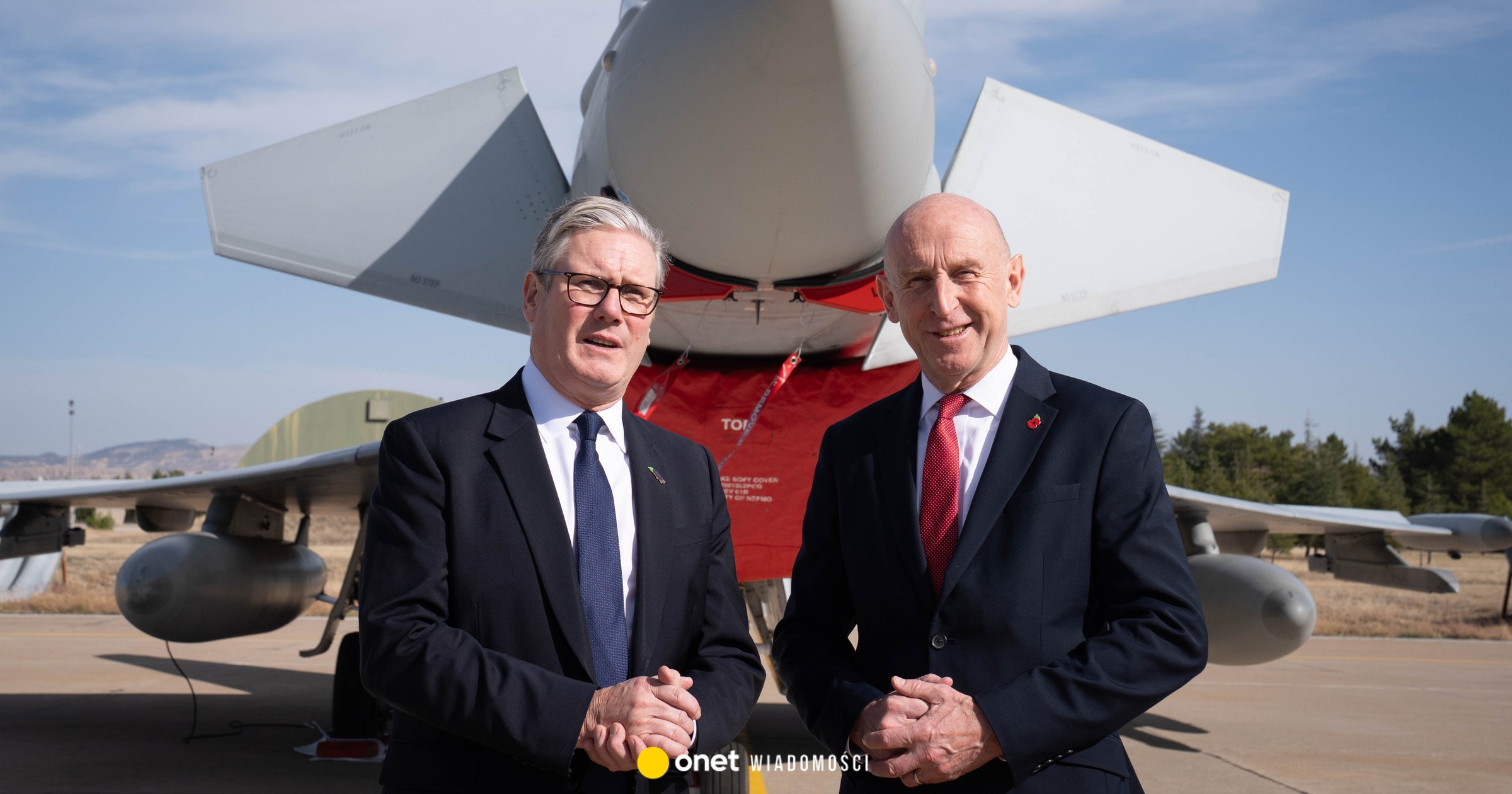
British Defense Secretary John Healey resigned on Thursday as the long-running dispute over the financing of the country's armed forces came to a head.
In a scathing letter to Starmer, Healey said it was with “great regret and reluctance” that he was leaving – and said the prime minister had been “unable, and unwilling, to commit the resources the nation needs to defend the country at a time of growing threats”.
The resignation of one of Starmer's most senior ministers over the repeatedly delayed Defense Investment Plan (DIP) comes just days before a key by-election in which Andy Burnham, Starmer's Labor rival, could return to parliament to take on the leadership.
In his resignation letter, Healey claimed that Starmer's proposed DIP deal – which aimed to deliver long-promised increases in defense spending – “falls far short of what defense and the country require in this dangerous time“.
“You know what the defense needs,” Healey wrote. He added: “Without a DIP that responds to the current situation, I am forced to make decisions that would reduce the readiness of our armed forces and increase the risk to personnel during operations, and could make the country less safe.”
“Having made it clear that I will be unable to accept an agreement that does not provide our armed forces with the resources they need, I have no choice but to resign as Defense Minister,” Healey continued.
One said Burnham's campaign co-ordinators, MPs Louise Haigh and Anneliese Midgley, were sitting with other campaigners having lunch at the campaign headquarters at Stubshaw Cross Community and Sports Club when the resignation notice appeared on news apps on their phones. — Everyone was just shocked – he added.
One of Burnham's advisers stated that there was no coordination between his team and Healey's, arguing that Healey was a man of principle who would have considered the decision at length. A Labor government official, a Starmer ally, said he did not believe Healey was coordinating his actions with anyone else.
A second government official said there were concerns shortly after the letter's publication that further resignations would follow – but that was not currently expected to happen and Healey was most likely acting “on his own”.
“The government must take this warning seriously.”
Labor MPs were quick to shower the outgoing Defense Secretary with praise – while defense industry representatives began to wonder exactly what the UK's defense budget would look like next.
One of Healey's allies argued that the former defense minister “was one of the most loyal members of the Labor Party for over 30 years. All he ever wanted was for a Labor government to succeed.”
A representative of the British defense industry said Healey understood that Britain is in a 'dangerous moment' and “he would only make this decision if he felt it was his only option.”
Wiktor Szymanowicz/Future Publishing via Getty Images / Getty Images
Defense Secretary John Healey leaves 10 Downing Street after a Cabinet meeting, June 9, 2026.
Luke Charters, a Labor MP who campaigns for defense funding, said that “it couldn't have been an easy decision, but the fact that [Healey] he put principles before position, says a lot about his character. “Politics needs more boldness, not less,” he added.
Tan Dhesi, Labor chairman of the House of Commons Defense Committee, warned that “it is a serious situation that a defense minister of such integrity and commitment felt compelled to resign in response to the inadequacy of the proposed defense agreement.” “The government must treat this warning with the utmost seriousness,” he stressed.
Divisions in the government
Healey's letter clearly shows the deep divisions between the UK's Ministry of Defense and policymakers at the powerful Treasury – and sparked a fierce response from Finance Minister Rachel Reeves' team.
Starmer has pledged to increase British defense spending to 3.5%. GDP, in line with NATO's spending target. However, last year the UK spent just 2.4% on defence. GDP, and the outgoing head of the Ministry of Defense argued that the plan presented by Starmer and the Treasury means only a 0.08% increase compared to the current trajectory.
“Additional support is deferred while operational pressures and the need to accelerate combat readiness occur in the first two years, and in 2030 it will only increase to 2.68% of GDP, while next year we will reach 2.6% thanks to the investments we are already making,” Healey wrote.
In his letter, Healey strongly emphasizes the argument that the British government must accelerate its defense spending commitments to prepare the UK for war, and quotes the last words of the Prime Minister himself, who warned of “a Russian attack on NATO as early as 2030”.
Healey's second ally accused the Treasury of “games until the last minute”. A military official supported Healey's departure, arguing that “it is unacceptable to perceive the threat of conflict as so high and then obtain such modest or even non-existent priority for defense spending.” He said Healey had been effectively “excluded” from funding talks and was instead asked to “just accept it”.
However, a Treasury official strongly pushed back against the arguments in Healey's letter, saying he had disregarded the necessary trade-offs involved in allocating defense funds.
“The Minister will always do what is right and necessary to keep this country safe, as evidenced by her actions – record increases in defense spending during the Spending Review, and then working with the Prime Minister to secure billions more to fully fund the Defense Investment Plan. And let's be clear what John is asking for: cuts to schools and hospitals,” he said.
Chaos surrounding the defense plan
Healey's departure raises new questions about when DIP will see the light of day. This was to take place before the July NATO summit, and the main data were to be known this Friday. “This indicates that the news on DIP is not good,” said a British government official.
A second defense industry insider stressed that “everyone has been waiting for over a year for the white smoke signaling the arrival of funding, and it looks like we'll have to wait a little longer.”
“But if a further wait is necessary to see a DIP that actually funds more than the Yeovil and Warton job retention schemes, providing our troops with the equipment they need to keep us safe, then it will be worth it. Unfortunately, I don't have much hope, she admitted.
A third industry insider warned that adopting DIP now poses political risks for whoever replaces Healey. “At a time when the defense industry is clamoring for the publication of the DIP to unlock contracts and spending, it is a bit strange to make the DIP a poisoned chalice for whoever becomes the next defense minister and will have to either ‘sell’ spending cuts or defense tax increases to everyone else,” she said.
Political opponents of the Labor Party They quickly took advantage of Healey's departure by attacking the Prime Minister and Finance Minister Rachel Reeves. “Bravo for Healey,” wrote Reform UK economic spokesman Robert Jenrick on X. “They should be ashamed of themselves. Reeves and Starmer should go too. And with them this miserable Labor Party,” he added.
Liberal Democrat leader Ed Davey said the Labor Party must “take seriously the issue of adequate funding for our armed forces.”