What they say and think about other countries causes surprise. “It's incomprehensible to Poles”

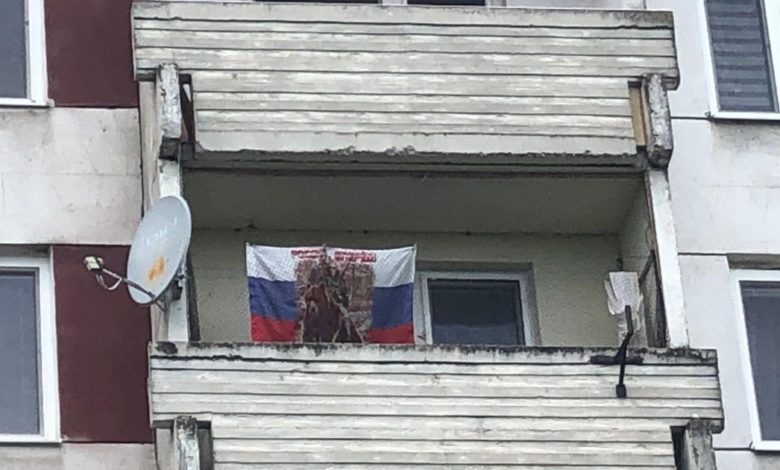
5.4 million people live in Slovakia. A lot of them have relatively controversial views. According to Onet's interlocutors, Slovaks have a different way of thinking than Poles or Czechs. This is due to the complicated history of this country. Slovaks rule themselves in a thousand -year history of this nation for only several dozen years.
Recently, they have a new “national hobby” that concerns Poland.
Poland has a nearly 1100-year history of its own statehood. We are boasted of getting up from every defeat and rebuilding the country regardless of adversity.
Our southern neighbor at the same time, when Poland celebrated its triumphs and experienced falls, was independent only for 38 years! Slovakia as an independent state appeared on the map only in 1939.
Despite this, throughout the millennium, the Slovaks kept their own language, culture and tradition. We can safely say that there is no other such nation in Europe. Today, these words also take on another, political significance. What Slovaks say and think about other countries of the continent causes surprise.
Land of “Szurów”?
– My company is doing business in several European countries. I have a lot of delegations and in their course I always check what foreign media write about events in Slovakia – says Pavel (asks to change his name), a manager in one of Slovak enterprises.
– And recently there is quite a lot of writing. About the assassination of our prime minister. About the fact that Robert Fico recovered and next to Viktor Orban became Putin's great friend, about the fact that we governmently deny Covid-19 pandemic and the sense of vaccinations against coronavirus, or about the fact that in Slovakia people do not support Ukraine in the fight against Russians. From these texts there is a picture of Slovaks – madmen or “Szurów”, as young Poles say today. Meanwhile, in my opinion, this is not quite the case. Some of my compatriots actually have their specific views and a very conservative way of perceiving the world. But all this does not come from nowhere – he says.
As our interlocutor adds, in Slovaks it is still very strong to emphasize your own national “I”. That is why in this country much weaker than in other European countries are a supranational tendency – European.
Lukas explains the same thing to us, “Half the Slovak, half a Pole” from Żylina.
– Studies show that in my country 30 percent People do not consider Putin as a war criminal and explains the Russian assault to Ukraine with the defense of Russian interests. The same number of people think that Ukrainians are to blame for the war on an equal footing with the Russians. For Poles, this attitude of Slovaks is difficult to understand. But understand … in Poland it is so that Russians and Germans are the two greatest enemies always. Poles are afraid of Russians, because they took their independence once, and after World War II they enslaved in the communist camp. There is no similar fear in Slovaks. Russia never invaded Slovakia. We are nationally afraid of Hungarians who have been controlling us for hundreds of years. In recent months we also have a problem with the Czech Republic. For they began to treat us in advance and teach us. Our people don't like it – says Lukas.
According to our interlocutor, the Slovaks of the Russians are not only not afraid, but even … they like them. Lukas explains that Gazągi and pipelines that provide both fuels from east to west of Europe run through Slovakia. In Poland, houses have been heating with coal for decades. In Slovakia, even in the smallest villages there are … gas pipelines. The houses are heated there with blue fuel. Since in 1992, Slovakia was buying gas relatively cheaply from Russia in 1992. So she had cheap energy, and this energy was the basis for development. It was also one of the reasons why automotive companies invested in Slovakia. Their factories gave people a job, and development and prosperity came with work.
– And now we have a situation when the war in Ukraine breaks out and the European Union says “no” for Russian gas. The prices of this fuel are rising. Slovaks still have to heat the houses with gas, so their bills are also growing. There is less money in the pockets of ordinary people, which causes anger in many people. Prices in stores are rising, so the new “national hobby” becomes trips once or twice a month to stores in Poland, where it is cheaper – says Lukas. – People ask: “Why is this?” They remember the times when they had more money. Some of them come to the conclusion that they will come back when the war in Ukraine ends. They are waiting for the victory of the Russians And the moment until cheap gas flows from Moscow.
– The hymn of the Slovak Republic sounds.
“Historical enemy” today is a “close friend” and “former friend” fell into disgrace
The sympathy of Slovaks to the Russians in recent months seems to even grow. According to many people, this is due to … the Czechs. Prague, like Warsaw, has been hard behind Kiev since the outbreak of the war in Ukraine. According to the Czechs, the war can only end with the withdrawal of Russian troops from all over Ukraine, and Putin himself is a war criminal with whom he should not talk.
That is why the government in Prague has drew attention to Bratislava several times. This happened, for example, when Slovak Prime Minister Fico announced that he would gladly meet Putin and planned to fly to Moscow in May 2025 at the celebration in the 80's end of World War II. Robert Fico is also a supporter of peace negotiations with Russia on the principles that the Russians will probably satisfy, but not Ukrainians.
However, the Slovaks of Czech Połajanki received as an affront. They decided that the Czechs feel better than them and again enter the role of a state that wants to impose something on the Slovaks. That is why the relations of both countries have cooled down. Today they are the worst since the 1992 secession.
– And this is a bit comical, because at the same time the Slovak government is very close to the Hungarian government of Prime Minister Orban – says Peter, a history teacher from Poprad.
– Our countries are allies today and work closely. It's nice, but all this in a situation where Hungary in a certain resentment is the country, which was most often our partitioner. What is even funny, Prime Minister Orban reminds from time to time that he would gladly restore Hungary to the border from the time of the “Crown of Saint Stefan”, i.e. he incorporated all Slovakia to Hungarian territory. This is really a bit of confusion and many people are surprised. However, not everyone. I think that we are simply … a “perverse nation”.
Compensation for Covid-19 vaccines?
As Peter adds, he himself has doubts whether the government of Robert Fico and the prime minister himself went closer with Hungary due to the actual proximity of views, or maybe he just did it out of pure political calculation.
Robert Fico, who ruled Slovakia in 2006-2010; 2012-2018, and later lost power in favor of liberals, because he understood that he must play a role to maintain the support of the most conservative part of society in this country. As in Poland, it is said that elections are not won in “Warsaw, but Konie”, so elections in Slovakia are not won in “Bratislava, but in Levice.”
So Fico plays his game of hitting Slovak Resents from returning to power in 2023. Slovakia is a country where most people live in the villages and in small towns. The aforementioned Poprad, where our interlocutor lives, has 51 thousand. residents. That's as much as he lives in Racibórz, which is treated in Silesia provincial. Meanwhile, according to Slovak standards, Poprad is a metropolis.
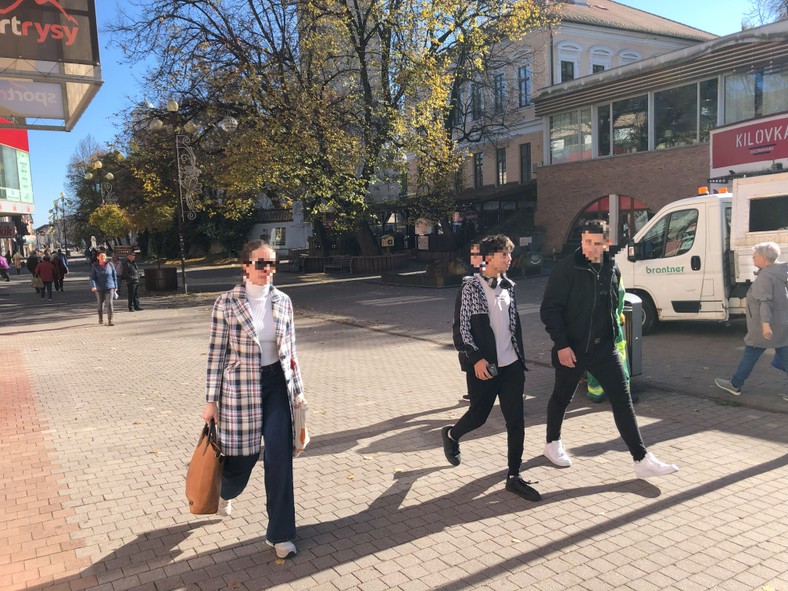
The promenade in Slovak Poprad. It is, among others, in this, 45 km from the border with Poland, the city of the Tatra Mountains, we talked with the inhabitants of Slovakia
In the villages and in small towns you think differently than in large cities. It's not a nut, it's a fact. That is why Prime Minister Fico found one more way to motivate a rural and small -town electorate around him. People in Slovakia still remember the pictures that took place in this country during the Covid-19 pandemic. It was the only country in the world that wanted all citizens to be tested on the presence of Coronavirus.
In Poland, on the occasion of subsequent pandemic waves, there were mainly limitations for unvaccinated people that the government may introduce. Slovakia was then a country that went a lot further. Here, unvaccinated people really had very limited access to many aspects of life. And because the degree of vaccination was relatively small, many people of the prime ministers of Igor Matovič and Eduard Heger simply locked their home.
– Robert Fico uses it today, showing that those decisions were unlawful. Peter Kotlár, a government representative to investigate the Covid-19 pandemic, today says that in his opinion Pandemia was not so dangerous, and the vaccines to which society was forced were unrelated, in many cases even harmful to health. The Slovak government does not say what the consequences will draw in this respect, but by supporting such a narrative, he will keep an eye to voters. People who felt enslaved during the pandemic seem to believe that Fico tells them: “As long as I rule, it won't happen again for the second time.”
Refugees and the Roma case
– As in all Central Europe countries, in Slovakia, an important part of the national debate is also the issue of immigrants, who are expected to find Slovakia on the basis of the EU relocation mechanism – says Vaclav, a resident of Kieżmark.
– Slovaks are essentially opposed to receiving refugees. It is not that people do not sympathize and hate them. As a few months ago a group of refugees caught at the Polish-Slovak border in Podpady, the local highlanders helped them a lot. They brought blankets, food, etc. But in general we have a problem with refugees and in the case of Slovakia, it is not only a matter of fear of rape or robberies that take place in immigrant districts in Western Europe.
Our interlocutor reminds that Slovaks with other culturally groups than Slavs have had a problem for years. It's about the Roma minority. Despite the several hundred years of coexistence and life next to Slovaks, she kept a separate culture. Roma housing estates are still a largely cluster of poverty. This is a problem for Slovaks. A few years ago, in one of the Slovak towns, the idea came to separate the Roma estate with a wall from Slovak houses and the locals did not see anything wrong with it. Marian Kotleba and his extremely nationalist and anti-Romian party “Our Slovakia” had in the elections that took place in Slovakia in 2016 and 2020. Support within 7-8 percent. It was especially the largest in the east of this country.
– Our problem with the Roma means that people are afraid of refugees as another foreign Slovaks of the ethnic and cultural groups. They believe that migrants will mainly bring problems – says Veronika, a Slovak from Poprad, but who has been living in London for 15 years. – When I live in Great Britain, I looked at a multicultural society and I have no problem with it. Now I visit my mother. She has different views. For her, Slovakia, if she is to remain Slovakia, must be composed mainly of Slovaks – he says.
And he adds: – Someone would say that it is a purely fascist slogan. But I know that my mother is not a fascist. She would help strangers in case of such need. But so she was brought up and they have such views that Slovakia must fight for its own, otherwise it will be conquered again and our national independence will disappear. A lot of people in this country think identically. I do not agree with them, but I also have no right to forbid these people such views, because in total they are not guided by anything but patriotism.
***
In Slovakia, the political situation has been similar to that in Poland for many years. Liberal-left and right-wing groups are fighting for power. The difference is that there are no two large parties there, only there are a few smaller groups that must be connected to wider coalitions to create a government. Over the past 15 years, conservatives commanded by Robert Fico were more often in the parliament.
On the other hand, in the years 2019 – 2024, the president of Slovakia was a woman – Zuzana Caputov. This progressive lawyer was a supporter of partnerships and was in favor of the possibility of adopting children by same -sex couples. Despite such views in the second round of 2019 elections, she gained support of 58 percent.