What does the number #168, worn by Iran's players on their shirt, mean when they arrive at the World Cup

Article by Maria Olteanu – Published Wednesday, June 10, 2026, 08:00 / Updated Wednesday, June 10, 2026 08:08
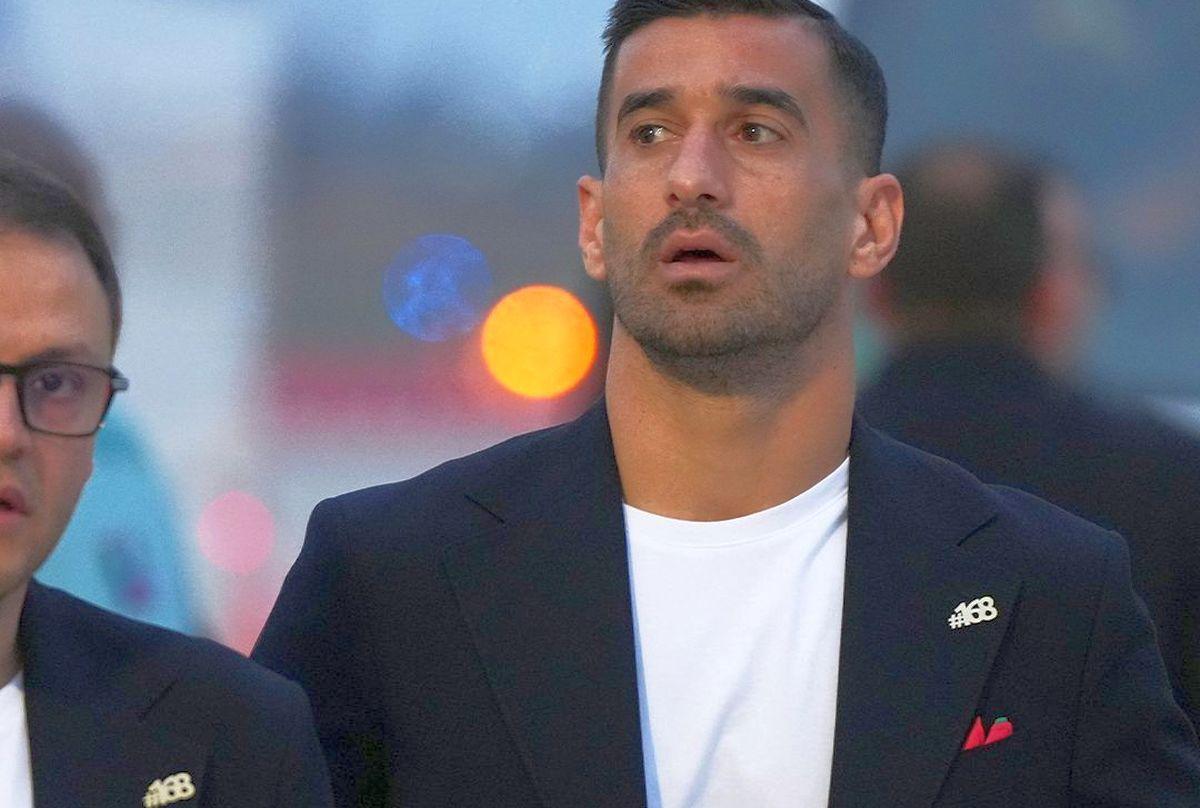
Upon arrival in Tijuana, Mexico for the World Cup which kicks off tomorrow night at 10pm with the Mexico v South Africa match, Iran's national team players wore '#168' badges on their lapels. Below is the meaning.
-
Iran v New Zealand on Tuesday 16th June at 4:00 in Group G
The design, which mimics an online hashtag worn on all the suits of the Iranian delegation, commemorates the number of children killed in an attack on an elementary school on the first day of the US-Iran conflicton February 28, 2026, according to the Iranian Ministry of Foreign Affairs.
An ongoing military investigation has determined that the US was responsible for the deadly missile attack, according to The New York Times, citing US officials and other sources familiar with the preliminary findings. Neither President Donald Trump nor the US government has confirmed this report.
Badge #168 was worn by all members of the Iranian delegation // photo: X @TRT Word
Iran's team left their World Cup training camp in Antalya on Saturday afternoon, but they were not wearing their badges at the time. During the trip, which included a stop in Spain, the badges were attached to the lapels of dark blue jackets and were visible upon landing in Mexico before the team headed to their hotel, according to nytimes.com.
Are the Iranians breaking FIFA rules with their gesture?
While the wearing of a badge by Iranian players outside a match is in a gray area in terms of violating regulations, the gesture indicates that other political messages could become an issue during the tournament due to ongoing geopolitical tensions.
FIFA regulations state that “the kit must not contain slogans, statements or images of a political, religious or personal nature”, otherwise the players and/or team may be sanctioned by the competition organizer or FIFA. This rule applies to all players and officials in the technical area, so if the badge was worn by coach Amir Ghalenoei, he could be sanctioned.
The regulation emphasizes that “political” violations are “less clear” to define, but specifies that “slogans, statements or images” related to “any person, living or deceased” and “any specific political act/event” are not allowed.
There have been precedents
It is not the first time that the Iran team draws attention to this tragedy.
Ahead of a friendly against Nigeria during the international break in March, Iran's starters held up schoolbags as symbols during the national anthem. A few days later, before the match against Costa Rica, the team showed images of people, including children, who had died, as well as sports and heritage infrastructure destroyed during the bombings.
Although it was essentially an act of commemoration, these gestures during matches may fall under rules that violate FIFA's regulations on political demonstrations.
After what happened in March, FIFA said any action would be taken in accordance with its disciplinary code. No official action was subsequently announced. What's more, the president of FIFA, Gianni Infantino, witnessed the gesture before the match with Costa Rica.