Technology that can discover the whereabouts of any world leader and turn him into a target. Putin took emergency measures

A technology originally developed for security and urban monitoring is beginning to produce unexpected effects in the world's major capitals. Artificial intelligence can turn millions of hours of video footage into a veritable weapon for identifying and tracking targeted individuals, and this prospect is already causing serious concern in intelligence circles.
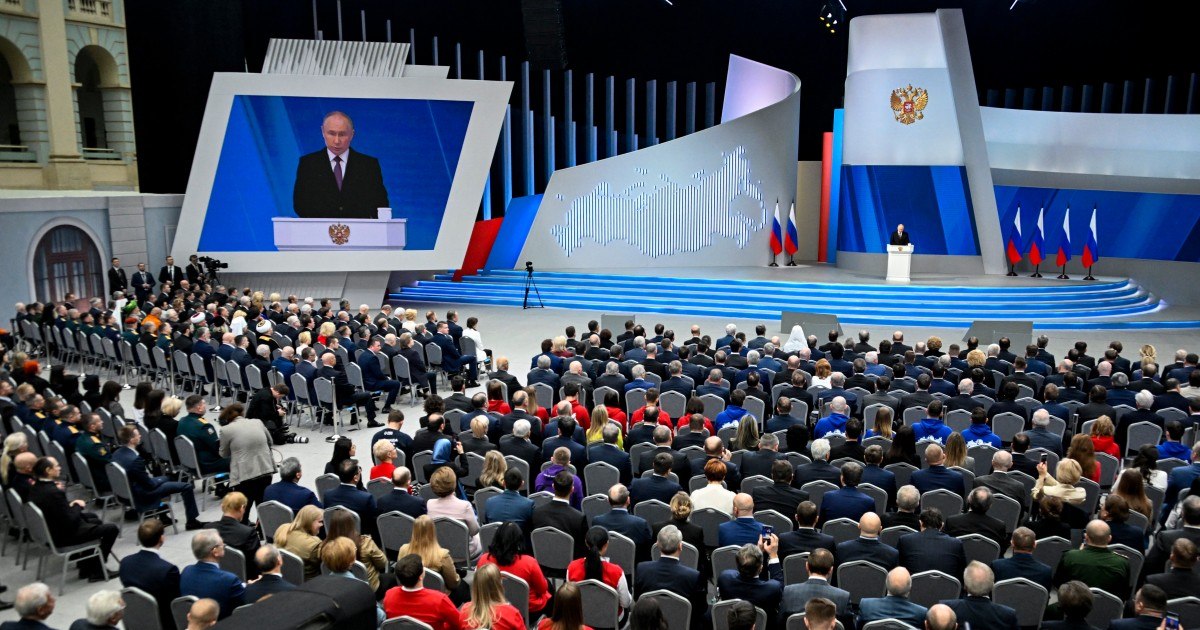
Russian President Vladimir Putin is afraid of new technologies/PHOTO:AFP
According to information published by the Financial Times, the Russian secret services were forced to temporarily disable part of the special surveillance system that ensures the protection of President Vladimir Putin and his inner circle, after fears arose that the network could become vulnerable to foreign espionage operations.
Sources cited by the British publication claim that the system was restarted only after extensive technical checks and after attempts to completely isolate it from the Internet.
The lesson that alarmed Moscow
Russian fears have been heightened by recent events in Iran, where new video analytics technologies have been used to locate high-ranking officials.
According to the cited sources, the Israeli services would have been able to analyze huge volumes of images from traffic cameras and urban surveillance systems to identify movement patterns and meetings of some Iranian leaders.
The case is considered by security experts to be one of the most spectacular demonstrations of the new generation of tools based on artificial intelligence.
If until now the surveillance cameras only offered raw images, the new systems allow the automatic identification of certain behaviors, routes and connections between people.
From facial recognition to behavior analysis
Specialists explain that the new applications go far beyond the classic facial recognition technologies.
An operator can ask the system to find, for example, “two people changing a bag”, “a person changing clothes frequently in a single day” or “a vehicle that has passed the same point several times in a short interval”.
Artificial intelligence simultaneously analyzes thousands of video streams and automatically identifies relevant images.
“It's the Holy Grail of surveillance. We're not looking for objects anymore, we're looking for behaviors”, said a European official involved in the use of these technologies.
A vulnerability created by the states themselves
The paradox is that states that have invested billions of dollars in urban monitoring systems are now discovering that these infrastructures can become tools used against them.
Panic and fury in Russia as Ukrainian drones strike major cities. “This is a taste of our own medicine”
Once a person is identified, modern systems can reconstruct months of their activity: movements, meetings, contacts and daily habits.
Furthermore, video images can be combined with data from social networks, intercepted communications, smart devices or travel history.
The result is the creation of extremely detailed profiles, made in an incomparably shorter time than was possible before.
China, Russia and the West are entering a new technological race
In Russia, fears about the security of political leaders have increased in the context of the war in Ukraine and several operations attributed to Ukrainian services.
Sources cited by the Financial Times claim that Moscow also fears the possibility that its camera networks could be compromised and used to collect sensitive information.
In parallel, China is investing heavily in next-generation surveillance cameras and software capable of automatically interpreting complex scenes and behavioral patterns.
But experts warn that the same technology can become a strategic vulnerability.
“They set up the cameras. All we have to do is find a way in. And there always is one”said an official from a security agency belonging to the “Five Eyes” intelligence alliance.
Technology is not infallible
Despite all the spectacular advances, experts point out that artificial intelligence does not offer perfect solutions.
Organizations such as Hamas or Hezbollah have demonstrated that seemingly rudimentary methods – handwritten messages, analogue communications and meetings without electronic devices – can reduce the effectiveness of modern surveillance systems.
One example is the case of Hamas leader Yahya Sinwar, who was searched for months using the most advanced intelligence and video analysis tools. He was eventually identified and killed in what the Israeli military described as a chance encounter.
A new era of digital espionage
Security experts believe that the world is entering a completely new stage of intelligence activities.
If in the past the challenge was to get the images, today the challenge is to interpret them. Artificial intelligence makes it possible to transform huge amounts of visual data into useful operational information in just minutes.
And for the world's political leaders, secret services and militaries, this shift raises a key question: How safe is a surveillance system when it can be used against its owners?