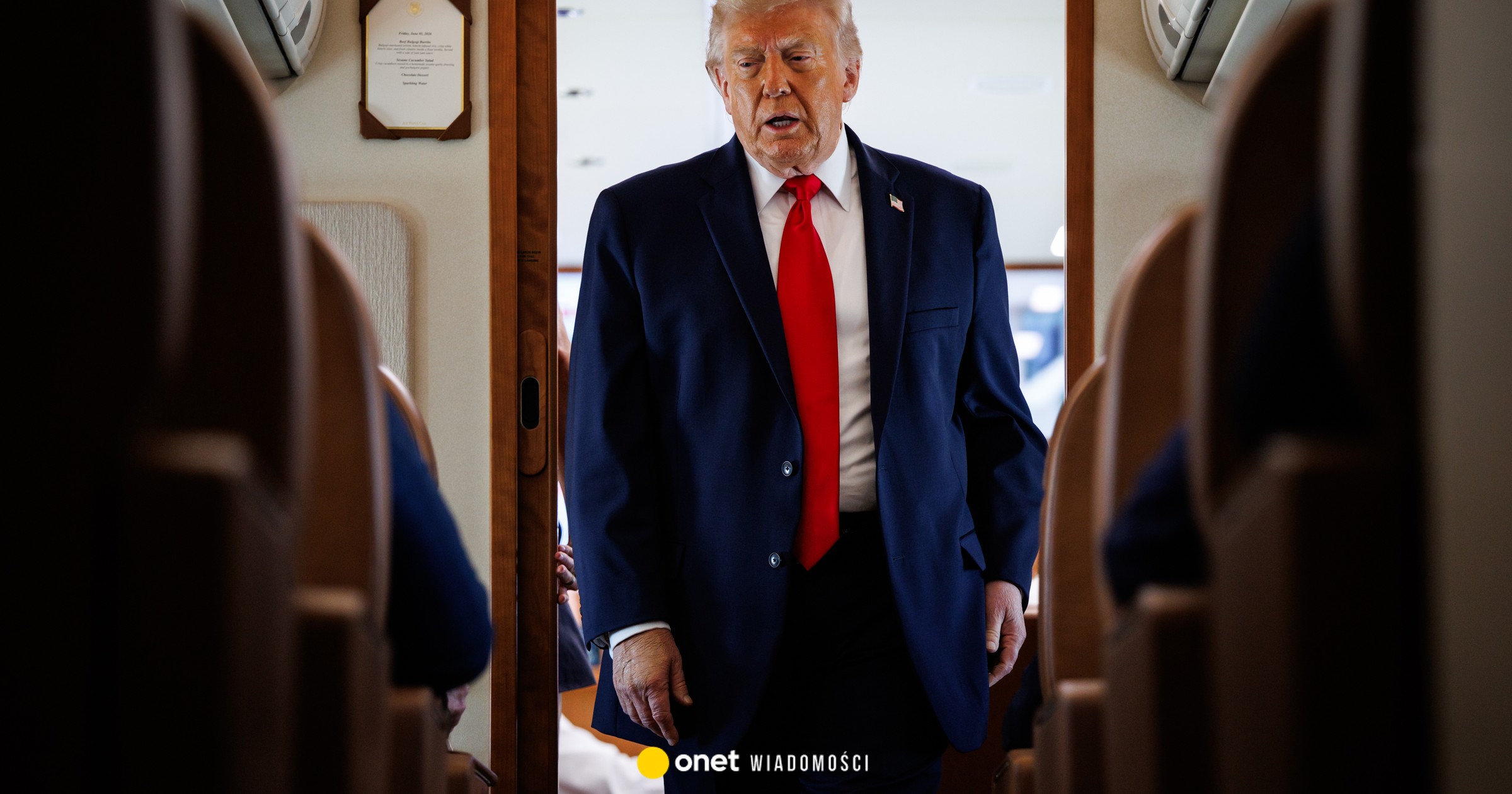
This week I observed something that rarely happens around Trump: public criticism of him. Since the beginning of the war with Iran, behind the scenes I have heard the same message from Republican strategists, congressmen and Trump's confidants: they were willing to give the president time. They wanted to leave him space to pursue his course. But almost everyone added one key phrase: “it needs to end quickly.”
Now this nervousness is also becoming visible in public.
This week, the House of Representatives passed for the first time the “War Powers Resolution,” which calls for an end to the war with Iran. Four Republicans voted with Democrats. In a party that usually supports Trump almost unanimously, this is a clear signal. There's one reason in particular that's bubbling beneath the surface.
For weeks, Republicans have been telling me in confidential conversations that they fear the political consequences of a U.S. war with Iran. Especially those who are in the middle of the congressional election campaign. They worry about the impact on Americans' daily lives, most notably about rising oil and gasoline prices.
According to an analysis of 16 nationwide polls conducted by the well-known website RealClearPolitics, at the end of May, Trump's unpopularity rate among voters reached a record level in his entire career in the White House.
The article continues below the video
Many of the president's allies assumed that the conflict would be resolved much faster. Instead, they keep hearing the same promises: maybe next week, maybe this weekend, maybe an agreement is just around the corner. The longer this goes on, the harder it is to believe these subsequent messages. Trump's statements also contribute to this.
Recently, a journalist asked him what the ceasefire actually meant to him. “In this part of the world, a ceasefire means shooting is somewhat moderate,” he replied. The President of the United States, however, stated that he may start fighting Iran again if American soldiers die as a result of the fighting.
It is also interesting how different public transport is from private transport nowadays. Publicly, most Republicans still follow the Trump line. Behind closed doors, many try to avoid the topic of Iran. They prefer to talk about their Democratic opponents or domestic affairs. One thing is certain: politically, Donald Trump is responsible for this war.
The president still wants to reach an agreement. He wants to be the one to end the crisis and reach an agreement. This is the role in which he feels best. However, even some of his closest allies now have doubts whether it is even possible to reach a lasting agreement with the current regime in Tehran. This is the dilemma for the White House.
Trump does not want a larger military conflict. He knows that escalation would be risky from the point of view of domestic politics. At the same time, with each new attack in the Middle East, the pressure to respond even more harshly increases. Therefore, the key question in Washington now is not whether the president wants an agreement. He wants them. The question is what happens if he doesn't get it. And that's what no one has a clear answer to right now.
Tension is growing in the Middle East
On June 7, the US military shot down two drones. On Friday, it intercepted Iranian ballistic missiles and attacked Iranian coastal surveillance radar sites in Goruk and on the island of Keshm.
Mutual attacks make a lasting truce impossible. Washington has apparently decided to maintain military pressure in parallel with negotiations, which, however, are to no avail.
I’m Ashley Davis as an editor, I’m committed to upholding the highest standards of integrity and accuracy in every piece we publish. My work is driven by curiosity, a passion for truth, and a belief that journalism plays a crucial role in shaping public discourse. I strive to tell stories that not only inform but also inspire action and conversation.