Ten days to the moon. NASA's huge bet, between the “ghosts” of the past and the new space race


In February, NASA is set to launch the Artemis II mission, which will return humans to the Moon and is expected to be an important step toward a future in which Earthlings will build lunar bases and mine resources. But the risks are enormous, the controversies were also present, and the history of releases had “black” moments that cannot be forgotten.
A program that cost 100 billion dollars
The development of the Artemis program, for the return to the moon, has cost almost 100 billion dollars in the last 15 years, there have been many delays (the most recent one was on Friday), technical problems have appeared and the “ghosts” of the past are also present, because it has just been 40 years since the Challenger shuttle disaster.
With huge costs and with China's breath “down the back” of its neck, NASA is under pressure to succeed in bringing humans back to the vicinity of the Moon and then to its surface.
Humans have not come close to the Moon since 1972, and no crew has left Earth's orbit since. It will be a historic moment as the Artemis II crew will break the record set by the Apollo 13 mission for the greatest distance humans will ever be from Earth.
The Artemis II mission is scheduled to last 10 days and will carry a crew of four astronauts around the Moon, but without landing. They will do a “flyby” of the Moon, basically a detour, and the crew will be the furthest from Earth of any space mission, as they will be more than 6,000 km from the far side of the Moon.
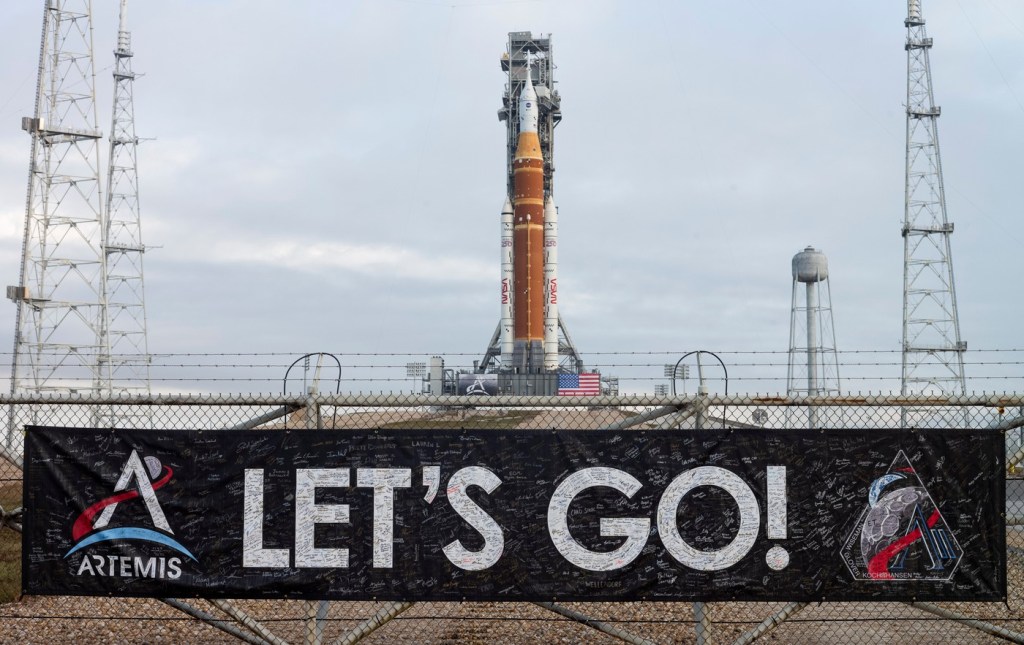
The launch of the SLS rocket with the Orion capsule will be at the earliest on February 8th (should be the 6th) from the Kennedy Space Center in Florida. If, due to weather or technical problems, the release has to be postponed, the February backup dates are February 10 or 11. If it will not be possible to launch on those days either, the next available date will be March 6. If it doesn't work out in March either, the backup date for April is still the 6th.
The four astronauts will travel in the Orion capsule which will be launched using the most powerful rocket ever built by NASA. Called the Space Launch System, the rocket is 30 stories tall. According to the launch plan, after several stages, the “Orion spacecraft” will completely separate from the rocket three and a half hours after launch, to continue its journey to the Moon and back on its own.
The Orion capsule will come no closer than 6,400 km from the Moon's surface. From this distance, the Moon will appear to the four astronauts to be the size of an outstretched basketball. In the Artemis I mission in the summer of 2022, when the unmanned Orion capsule arrived around the moon, it came within 130 km of the moon's surface, but the risks were much lower, with no humans on board. You can read more about the Artemis II mission in a NASA document here.
On day 5 of the Artemis II mission, the Orion capsule will enter the Moon's sphere of influence, and on day 7 it will exit, on its way back to Earth. Orion will not enter the orbit of the Moon, because such a move would mean more maneuvers and much greater risks for the lives of the four people on board. On the parsec.ro website you can read a description of the mission and a timeline of key moments.
The moon is 400,000 km from Earth and the journey to it seems to take forever. Two years ago the plan was that the mission we are talking about here would be launched at the end of 2024, and Artemis III, the one with the selenization, would be at the end of 2025 or the beginning of 2026. However, there were two calendar changes, so Artemis II was moved by more than a year. So is Artemis III, which will be in 2027 or 2028 and for which NASA has chosen nine possible sites for landing at the south pole of the Moon. These changes didn't just come about because of bureaucracy, but mostly because of technical problems with the SLS rockets and the Orion capsules.
The ship that will be used in the February mission is the third Orion capsule built, after the one in 2014 (which made an unmanned orbital flight and returned to Earth) and the one used in the Artemis I mission. Then, in 2022, the capsule returned to Earth, but that version, being also unmanned, did not have systems installed to keep the astronauts alive, because they were not needed. Then problems were noticed with the heat shield which degraded prematurely after entering the atmosphere. NASA explained at length in December 2024 what the problems were with the heat shield.
Humans haven't gotten close to the moon because it's risky and expensive
Why haven't we gotten closer to the moon in the last 54 years? There are many explanations, some related to money, some to fear, and some to geopolitics. The costs of space exploration are huge, the risks are huge when you send people hundreds of thousands of km from Earth, and political and economic priorities have changed a lot since 1972.
After the goal of reaching the moon was achieved in 1969, the Nixon administration decided to focus more on domestic issues and no more budget was allocated for many manned space missions. He opted for sending probes to Mars, Jupiter, and destinations so far away that there was no question of humans being able to get there in a capsule.
Space probes are much faster and no one dies if they fail. The first people who reached the moon, in 1969, did it over three days, while the New Horizon probe, which also reached the dwarf planet Pluto, was near the moon after eight hours (this was in 2006).
The most “black” scenario
Disasters like Challenger and Columbia, explosions that killed two American crews of seven astronauts each, have shown how risky manned space missions are.
The worst-case scenario would be a catastrophic explosion like in the two disasters, and there have also been several public statements saying that the Artemis II mission is a risky one. Doubts are about the heat shield and some industry voices have said that this essential element would be risky. The head of NASA said in early January that he had “total confidence in the Orion capsule and its heat shield” and said that “rigorous analysis” had been done.
During the mission, the Orion capsule must protect the astronauts from the extreme conditions of outer space, and advanced systems provide the air pressure and oxygen that humans need to survive for ten days in space.
To return, the capsule enters the Earth's atmosphere at 40,000 km/h, and the heat shield must withstand temperatures of over 2,500 C.
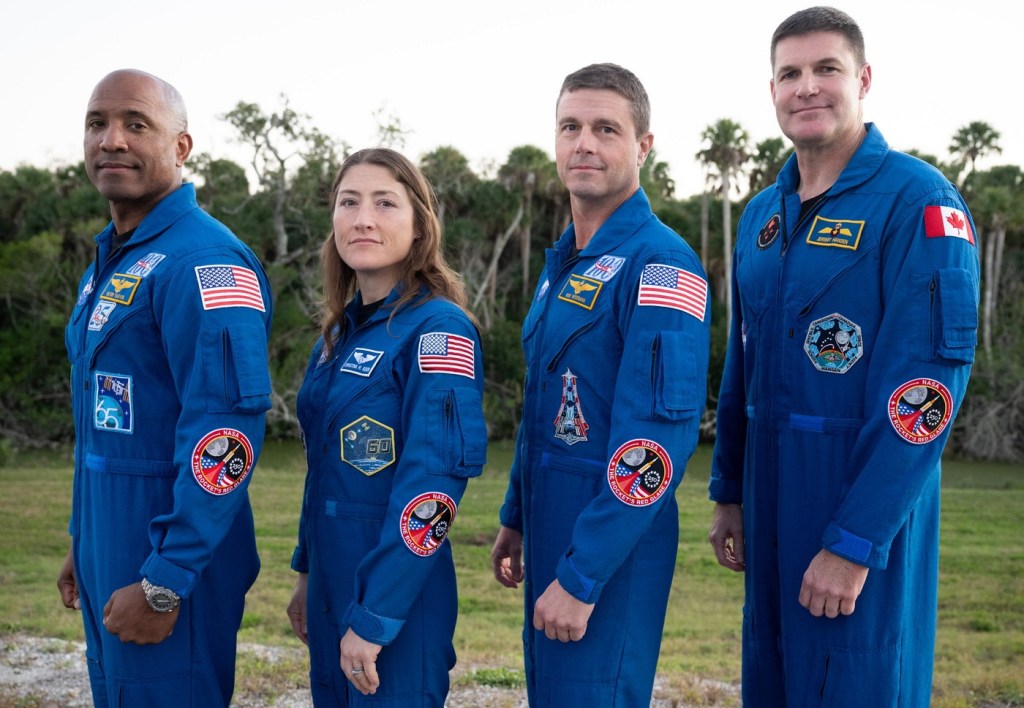
The mission commander is NASA astronaut Reid Williams, and the crew also includes pilot Victor Glover (NASA), Christina Koch (NASA) and Jeremy Hansen (Canadian Space Agency).
Why won't the Artemis II astronauts walk on the moon? Those from NASA explained that the mission was not designed for such a thing, so there is no lander (landing probe) so the astronauts simply have nothing to reach the surface of the Moon. The landing is reserved for the next mission, Artemis III, which will be much more difficult, will last 30 days, of which seven days will be dedicated to explorations in the area of the Lunar South Pole.
A very different world from 1972
The world has changed a lot since the last time humans stepped on the moon and looked at it through the porthole of a shuttle. Competitors in 2026 have different strategies and different goals than they did half a century ago. Humans have big plans for the Moon in the coming decades. They want to build permanent bases, they want to get to exploit resources (water, minerals) and they want the Moon to become a strategic node, but also a starting point for future missions to Mars.
Compared to 55 years ago, the change is due to the fact that the Russians do not really matter anymore, and the most ambitious are the Chinese, who are making rapid progress and have “ticked” several firsts. Another big change is the involvement of the private sector in space exploration, whether we are talking about the US, Europe, Japan or the Middle East.
Through the Artemis II mission, even if it will not be a moon landing, the US is trying to send a message like: we have the confidence to send people to the moon, more than 350,000 km from Earth. The Americans say that this is only the beginning: in 2028 astronauts should step on the moon, and around 2035 the space station in lunar orbit could be ready, and missions to the moon should then become frequent, become routine.
US vs China, different strategies in the new space race
How much the world has changed in half a century is also shown by the difference between the strategy of the US and that of China for the future of exploration towards the “night star”.
China is full of secrets, the space program is strictly controlled from the center, there is little communication about partnerships with other countries and the level of transparency is low, explains an article in the publication The Conversation. A proof is also the fact that, while NASA or SpaceX broadcast the launches live, China did so much less often.
The US has chosen an open approach, far different from China's. The Artemis program is designed so that partners – be they states or companies – can operate in a common framework for exploration, resource utilization and various activities.
It was the US choice, especially since welcoming the private sector into the big space programs greatly lowered launch costs and sped things up. In addition, by welcoming companies from dozens of countries into the program, the experience of engineers that would not be found in the US can be used.
Since China communicates much less than the American side, the degree of uncertainty is greater because it is not known what the Chinese will do in 10-15 years when there will probably be moon bases and a lot of testing for future moon bases.
When human activity becomes permanent on the Moon, the lack of transparency will no longer be just an image problem, but a safety one.