Netanyahu's invisible network. How Israel Encircled Iran Using Secret Bases in Azerbaijan and the Middle East

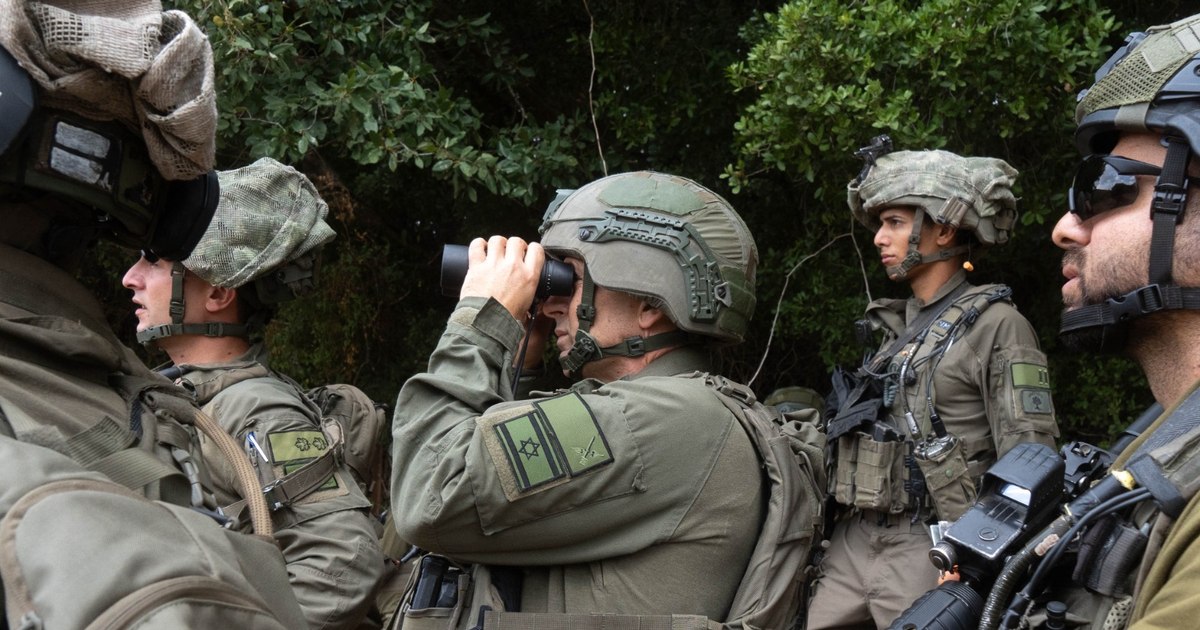
Behind closed doors and out of the public eye, Israel has deployed a strategy of unprecedented geopolitical aggression during the recent conflict with Iran. Four sources familiar with the case, cited by CNN, reveal that Tel Aviv secretly sent elite military units and intelligence agents to Azerbaijan as part of a clandestine network of operational bases designed to stifle Tehran's ability to react.
Israeli troops/PHOTO; IDF
According to details leaked from within the intelligence community, Israeli forces operated from several locations in southern Azerbaijan, right along Iran's northern border. The closest point was just 100 kilometers from the Iranian city of Tabriz – a target that Israeli aircraft directly hit during the war.
The secret deployment in the Caucasus, an absolute first in security analysis, brings to light how Iran's neighbors were drawn into the conflict, becoming, voluntarily or with tacit complicity, launch pads for the operations of the Jewish state.
From Iraqi Kurdistan to the Horn of Africa
The covert ops map reveals a total encirclement strategy. What was originally supposed to be just an assembly of rescue teams for downed pilots quickly turned into an extensive network of espionage and attack in several areas of the globe:
1. Azerbaijan (North)
Special commandos and technicians managed drone operations and electronic intercepts, providing a unique window into Iranian territory.
2. Iraq (West)
Israel maintained two secret bases, initially debunked by The Wall Street Journal and The New York Times, although Baghdad officially denied their existence.
3. United Arab Emirates (South)
Tel Aviv discreetly installed an Iron Dome anti-aircraft battery to protect the emirate's airspace, with high-level visits by Benjamin Netanyahu later vehemently denied by Abu Dhabi officials.
4. Somaliland (Horn of Africa)
The separatist republic provided Israeli jets with a critical refueling point for long-haul flights shortly after Israel became the first state to officially recognize its independence.
The solitary mission in the Caucasus
The partnership between Baku and Tel Aviv is not new, but the war pushed it to the limit. Preparations began as early as January, amid the bloody protests repressed by the regime in Tehran. Israel had planned to install listening devices on the border under the cover of massive airstrikes coordinated with the US.
The plan was overturned at the last minute by US President Donald Trump, who called off the strikes after receiving assurances that Iran would stop the massacre of demonstrators. Convinced that Washington's diplomacy would fail, the Israeli cabinet acted on its own, infiltrating stealth aircraft and special forces to activate the base in Azerbaijan.
The effectiveness of this advanced posture was seen on March 4, when an operation launched from Azerbaijan led to the elimination of Rahman Moghaddam, the head of the intelligence division of the Islamic Revolutionary Guard Corps (IRGC), whom Israel accused of orchestrating an assassination attempt against Trump in 2024.
The diplomacy of denial and the pragmatic interests behind the Baku-Tel Aviv axis
The response of the officials concerned reflects the classic textbook of diplomatic prudence in moments of maximum crisis. Both the Azerbaijani embassy in the US and the Media Development Agency in Baku categorically rejected the reports, calling them “gross manipulations aimed at destabilizing the region”.
In reality, the relationship survives thanks to a highly pragmatic trade-off: Azerbaijan provides much of Israel's oil, and Israel sells state-of-the-art weaponry (including the Iron Dome) to Azerbaijan.
These weapons have already ensured Baku's victory in the 2016 and 2020 Nagorno-Karabakh conflicts over Armenia. In addition, the alliance gives Azerbaijan access to the influential Jewish lobby in Washington.
The revelation of this secret infrastructure shows that, despite the official declarations of neutrality of the states of the region, the geography of the Middle East has been completely redrawn by the logistics of war. For Israel, these outposts have been vital to sustaining its repeated waves of attacks, for the host states, they remain a dangerous secret that places them squarely in Tehran's firing line.