On June 5, 1967, the “Six-Day War” began. On the same day, but in 1942, the USA declared war on Bulgaria, Hungary and Romania, and in 1947 the Marshall Plan was made public. The historian, writer, publicist and politician Nicolae Iorga was also born on June 5.
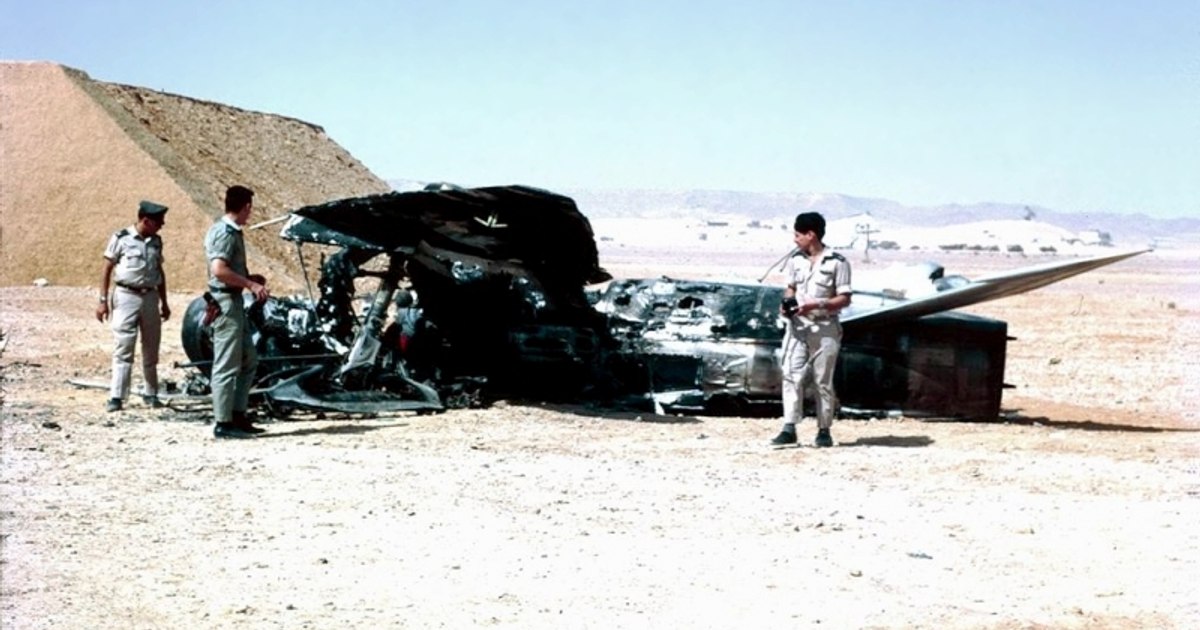
Israeli Air Force officers near a plane that was shot down in Sinai PHOTO: Wikipedia
1871: Nicolae Iorga, Romanian historian, writer, publicist and politician, was born
Nicolae Iorga is known in the world as a medievalist, Byzantineist, Romanist, Slavist, art historian and philosopher of history. George Călinescu said that Nicolae Iorga played in Romanian culture, in the first decades of the 20th century, “the role of Voltaire”.
Nicolae Iorga PHOTO: Wikimedia
He was a co-founder of the Nationalist-Democratic Party in 1910, a member of the Parliament, president of the Chamber of Deputies and the Senate, a minister, and, for a short period, prime minister. He died in 1940, assassinated.
1898: The great Spanish poet and playwright Federico Garcia Lorca, Spanish poet and playwright, was born
Federico García Lorca (b. June 5, 1898, Fuente Vaqueros, Granada – d. August 18, 1936, between Víznar and Alfacar, ibid.) Spanish poet, prose writer and playwright, also known for his talent in other fields of art. He is considered the most popular and influential Spanish writer of the 20th century and one of the reference figures of the Spanish theater.
As a playwright, he is considered one of the reference figures of Spanish theater in the 20th century, along with Valle-Inclán and Buero Vallejo. He was executed by the Francoist militias on August 18, 1936, during the Spanish Civil War (1936-1939).
June 5, 1935: Corneliu Zelea Codreanu establishes the All for the Country Party
Corneliu Zelea Codreanu, the leader of the most important far-right organization in interwar Romania and one of the most charismatic figures of the interwar period, was the one who founded in 1927 together with some friends the Legion of the Archangel Michael, the most important anti-Semitic and ultra-nationalist organization in interwar Romania.
Corneliu Zelea Codreanu PHOTO: Getty Images
He was the character who gave the specifics of the Romanian extreme right, with an ultra-nationalist mystique in which religion, assassination, politics and philosophy were mixed. On June 5, 1935, Corneliu Zelea Codreanu founded the All for the Country Party, the political expression of the Legionary Movement. The astonishing success of Codreanu's speech, in interwar Romania, proven success in the elections, also brought him death.
1942: The United States declared war on Bulgaria, Hungary and Romania
After the USA declared war on Romania (June 5, 1942), in response to the declaration of war received from Romania (December 12, 1941), the Anglo-American aviation carried out (in 1942, 1943 and, especially in 1944) several aerial bombing raids on Romanian territory, along with bombs, which caused great material and human damage, being dropped (in the summer of 1944) and manifests by which it called for unconditional capitulation and the country's exit from the war fought alongside the Axis.
1947: George Marshall, US state senator, made the Marshall Plan public
It is a plan to help Western European countries devastated by thethe Second World War. Its application began on April 3, 1948, being in force until July 1951.
George Catlett Marshall PHOTO: Archive
George Catlett Marshall, better known as George Marshall (born December 31, 1880 – died 1959) was an American general, diplomat and politician, awarded the Nobel Peace Prize. He was born into the family of a prosperous businessman in Pennsylvania.
From an early age he showed inclinations towards a military career. Thus, he attends the courses of the Military Institute in Virginia, which he graduates in 1901. As a young officer, he participates in the First World War, where he stands out for his qualities. After the war he performs various missions in China and the USA.
May 30: The day Joan of Arc, the national heroine of France, was burned at the stake
1967: The Six Day War began
The Israeli army began on June 5, 1967 one of the most important wars in its history. In just six days, he defeated Egypt's dreaded army and inflicted extensive human and territorial losses on his Arab neighbors. 50 years later, the Middle East and the Arab world are still reeling from this bloody episode.
The Six-Day War (June 5-10, 1967) represents a landmark moment for the Middle East and beyond. In search of security, the young state of Israel preemptively attacked and crushed its neighbors. One by one, the West Bank, East Jerusalem, the Sinai Peninsula and the Golan Plateau have turned into trophies for the Israelis and wounds for the Palestinians, Jordanians, Egyptians, Syrians and the entire Arab world. The most crumpled were the Egyptians, whose army, considered the strongest in the Arab world at the time, was simply crushed. After five decades, Egypt is still trying to regain its role as the leader of the Arab world and overcome this trauma passed down from generation to generation.
The defeat was so heavy that Egyptian President Gamal Abdel Nasser, the great messenger of Arab nationalism, was forced to resign in front of the cameras, a day before the end of hostilities. Millions of Egyptians immediately took to the streets and asked him to abandon this decision. In the end, the very charismatic Nasser, a humiliated “protector”, succumbed to the crowd's pressure. But he died three years later, at only 52 years old, obviously weakened. The Six-Day War was the third Arab-Israeli armed conflict.
1973: Ilie Năstase won the Roland Garros tennis tournament
53 years have passed since Ilie Năstase's success at Roland Garros in 1973.
“For me it was the most important tournament, because I had learned tennis on clay, like the other tennis players in Europe. For me it wasn't Wimbledon, or the US Open or the Australian Open. It was Roland Garros! It happened in 1973, even to win without losing a set. That's what I remember. That was my best year on clay. As proof, I was also number 1 on August 23, Romania Day, the first time when the rankings were done on the computer. In that year I think I won all the preparatory tournaments, big tournaments like Madrid, Monte Carlo, Barcelona“, confessed Ilie Năstase in an interview for Adevărul.
Ilie Năstase's name is engraved on the famous “Musketeers' Cup”, which Rafael Nadal lifted 12 times above his head, even though this trophy was awarded for the first time only in 1981.
June 1: The day on which the famous actress Marilyn Monroe was born
1983: Romanian athlete Anișoara Cușmir Stanciu set a new world record in the long jump, with 7.43 m
Anișoara Cușmir-Stanciu (b. June 28, 1962, Brăila) is a Romanian athlete, winner of gold in Los Angeles 1984 in the long jump. Athlete at the “Steaua” Club in 1984 she received the rank of lieutenant, later in 1988 she became a major lieutenant.
After retiring from competitive activity, she became a coach at the Athletics Section of the Steaua Club.
2004: Ronald Reagan, the 40th president of the United States, died
Thanks to his uncompromising policy in the confrontation with the Soviet Union during the Cold War, Ronald Reagan, the 40th president of the USA (1981-1989), made a decisive contribution to the collapse of communism in Eastern Europe and to the assertion of the United States of America as the sole superpower for the next decades, according to Wikipedia.
Roland Reagan, former US president PHOTO: Wikimedia
He died in 2004, on June 5, at the age of 93.