Grupa Azoty in the crosshairs of Russian capital. What could have been behind the takeover attempt?

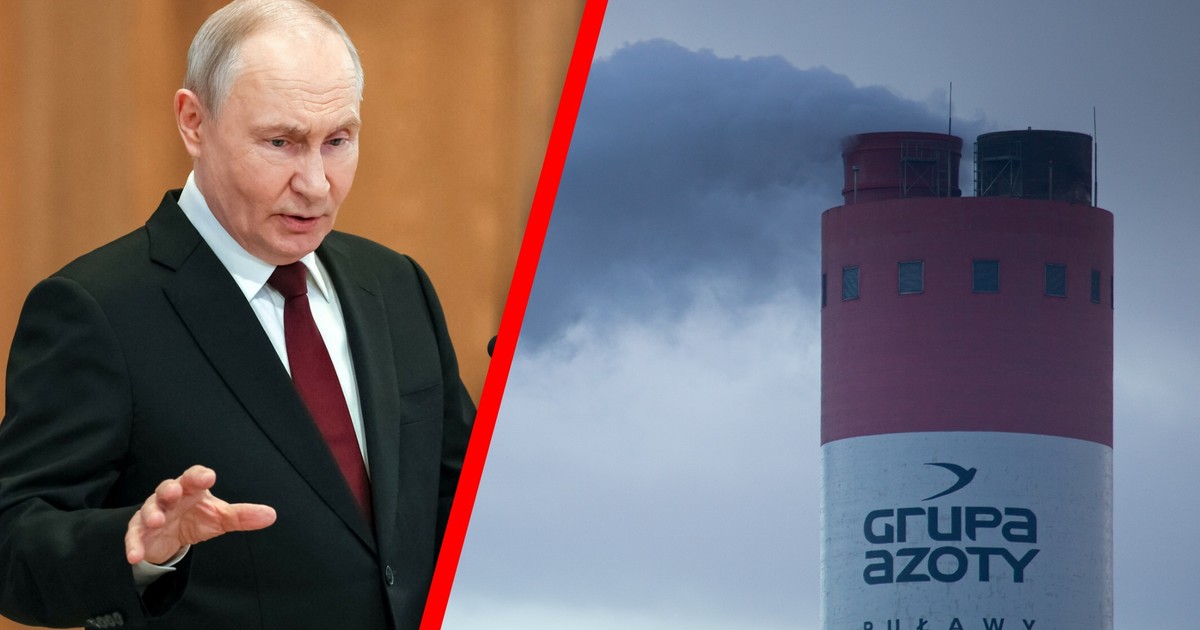
Already in 2012, controlled by Russia Acron Group, Norica Holding announced a tender offer for shares of the then Zakłady Azotowe in Tarnów-Mościce. The aim was to acquire a majority stake, but the tender offer was unsuccessful. Acron bought a minority stake, and the Polish authorities and the company's management board undertook consolidation activities, which led to the creation of a stronger Grupa Azoty, including: through a connection with Puławy.
Today, Russian capital holds a stake of 19.82%. shares of Grupa Azoty, held by entities related to Wiaczesław Moshe Kantor. After Russian aggression against Ukraine, these assets were sanctioned and frozen. The company emphasized that Kantor did not and does not control Grupa Azoty, and does not have the right to appoint the company's authorities.
In a cross-sectional conversation, also available on Onet Audio, on YouTube, Spotify and Apple PodcastsMarcin Celejewski points out that the very presence of such a shareholder and the history of attempts to increase influence over the company must be assessed in a broader perspective.
– I feel like I feel this one the most [rosyjski] breath. Moreover, as I say, it is part of our conversation. Somewhere in the background, the events in the Strait of Hormuz highlighted and showed a completely different perspective on many elements – says the president of Grupa Azoty.
Fertilizers are no longer an ordinary commodity
After the energy crisis, the spike in gas prices and the war in Ukraine, fertilizer production also began to be analyzed as an element of food security.
After the Russian invasion, the European Commission indicated that the availability and affordability of fertilizers is directly important for food security.and fertilizer production is heavily dependent on natural gas. In subsequent documents and initiatives, Brussels began to emphasize the need to strengthen production in Europe, reduce dependence on imports and increase the resilience of supplies.
— If we say that the European Union has noticed the fertilizer production sector as a sector that should be defined as strategic for the sake of Europe's food security, and if we look at Russian influences, which once wanted to take over the Azoty Group, hence why we have frozen Russian shares in the group today, and we combine these two elements, then Russian ownership of the second fertilizer-producing company, i.e. a strategic concept guaranteeing Europe's food security, combined with cheap Russian gas would seem like a perfect strategic story, says Celejewski.
Gas, fertilizers and Russia's cost advantage
The production of nitrogen fertilizers depends on gas, which is both a raw material and an important cost component. This means that Russian fertilizer companies, using their own raw material base, can build a cost advantage over European producers. After 2022, this problem became particularly visible as energy and gas prices in Europe hit the profitability of the chemical industry.
In Poland, the discussion on fertilizer safety has gained additional importance due to the increase in fertilizer imports from Russia and Belarus. Industry representatives warned that a further increase in imports may lead to the displacement of domestic producers from the market, which would weaken the security of supplies in the long term.
Takeover attempt in a new light
Celejewski points out that the current situation allows us to look at the motivations of Russian capital differently.
– Today we are able to see, just like in the emerging image, what could have been behind the earlier attempt by Russian capital to take over this gigantic infrastructure – he says.
– An extremely important element that needs to be taken into account is the fact that building, rebuilding or copying the infrastructure that Grupa Azoty has today is practically impossible in the short term – he emphasizes.
“In the wrong hands, it actually seems like a windfall,” says the president of Grupa Azoty.
Business and Money. Business Insider videocast
Are you wondering what changes in the economy, finances and business really mean to you? How do they translate into prices, investments and the household budget? In the Business and Money videocast, Bartek Godusławski and Grzegorz Kowalczyk from Business Insider Polska analyze the most important phenomena every week and show what they really mean for companies, Poles' wallets and your everyday decisions. Reliable, clear and practical. Stay up to date.
New episodes of the Business and Money videocast every Friday available on Onet Audio, on YouTube, Spotify and ApplePodcasts.