
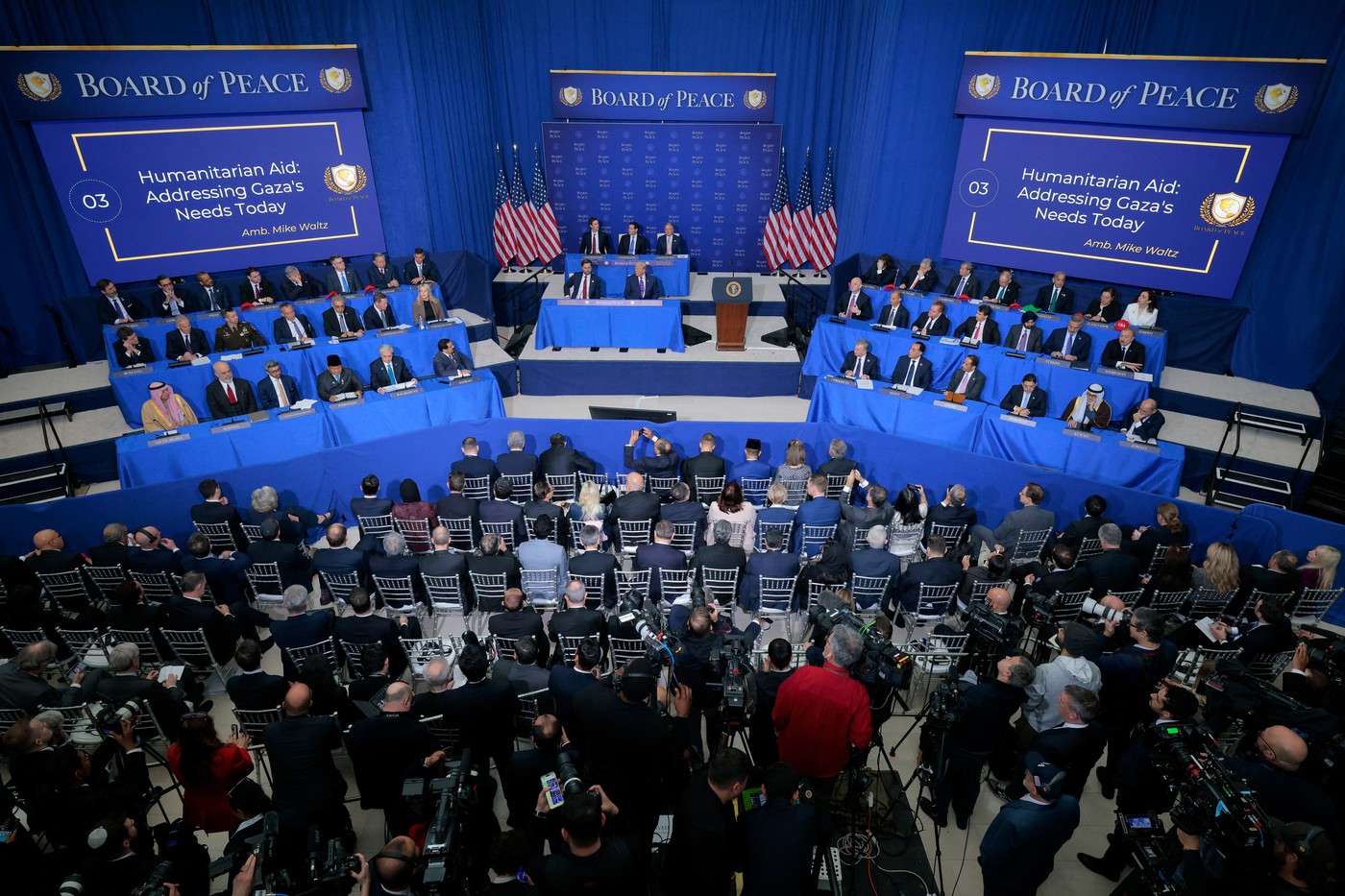
The “peace council” created by Donald Trump to rebuild the Gaza Strip is facing legal problems and has no official funding, despite promises running into billions of dollars, the Financial Times and AFP say.
Created from scratch in January by the US president, who would run it personally even after he leaves the White House, the Council has not received a single dollar, according to the financial publication, citing four sources familiar with the matter.
Instead of using the World Bank-administered and UN-approved fund, the council received donations directly into an account at JPMorgan bank, the council's spokesman said.
And “there is no independent transparency mechanism,” the FT notes.
Trump designed the committee for the tiny coastal Palestinian territory, where Israel and Hamas signed a U.S.-backed truce in October. The “price” of entry to the Council is a billion dollars for a permanent seat.
But major European nations ignore this forum, which gives a prominent place to the United States' historic partners in the Middle East, Donald Trump's ideological allies and small countries eager to get his attention.
In February, President Nicușor Dan participated as an observer at the inaugural session of the council, where he gave a short speech.
Gaza reconstruction, estimated at 71 billion dollars
Recently, Indonesian President Prabowo Subianto ruled out his country paying the requested billion dollars.
Small payments made it possible to finance, in particular, the office of High Representative Nikolaï Mladenov. The United Arab Emirates also provided $100 million for the formation of a new police force in Gaza, but the funds are frozen.
In April, the United Nations and the European Union estimated $71.4 billion needed for reconstruction over the next ten years in Gaza, according to a study conducted with the World Bank.
Nikolai Mladenov, for his part, warned last week of the risk that the current “status quo”, based on an imperfect truce in a divided and devastated territory, could become “permanent”.
On Thursday, three international NGOs drew attention to a humanitarian situation in Gaza that remains “catastrophic, with significant discrepancies between the commitments made and their implementation on the ground”.


