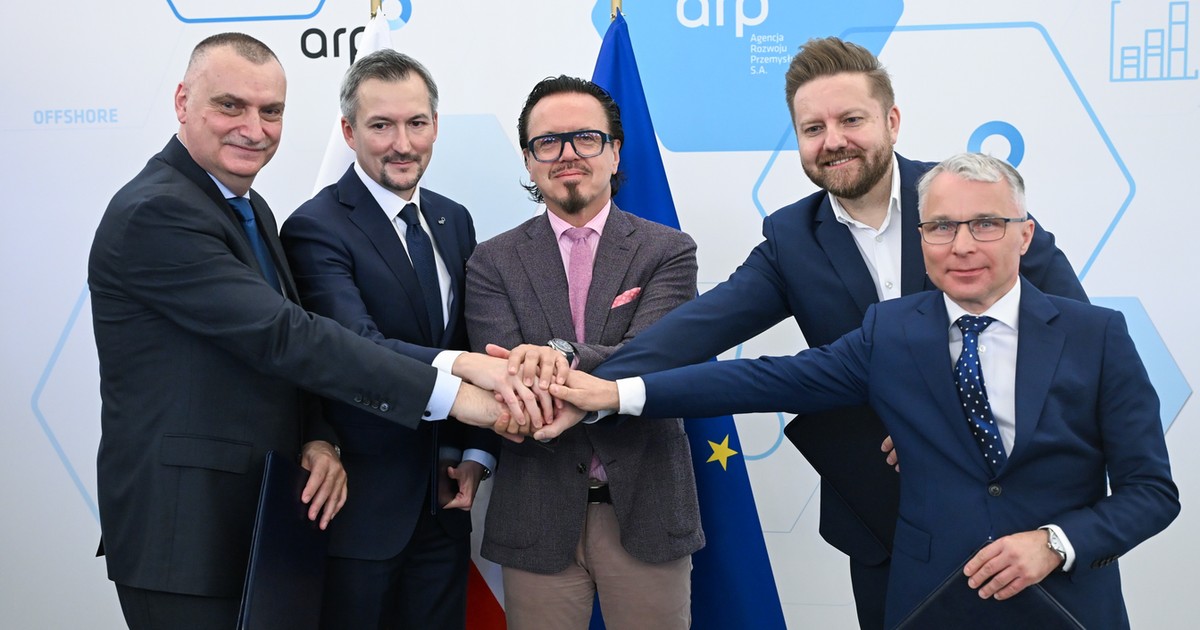
The state and big business are making further serious attempts to implement the idea of local content, i.e. greater participation of domestic companies in key investments – this time in offshore wind energy. On May 20, in the presence of the Minister of State Assets, Wojciech Balczun, letters of intent were signed between the Industrial Development Agency (ARP), the TFK Group, which produces cables, and PGE Baltica and Orlen Neptun – two investors from the offshore industry. The letters concern cooperation in the installation and servicing of undersea cables using a special vessel – a cable carrier.
Read also: Money for mining companies. There is the president's signature
Maximizing the level of local content
The cable laying vessel will be a joint venture between ARP and the TFK Group, and offshore developers will use it for their own offshore wind farms. According to the plans presented, the ship would be ready in the second half of 2029. A special purpose vehicle established by the Industrial Development Agency and the TFK Group will be responsible for its construction, which will outsource the construction to a shipyard of its choice.
When announcing the beginning of cooperation, Minister Balczun emphasized strengthening local supply chains, creating new jobs and increasing the share of domestic capital in the most important energy transformation projects.
“Such a cooperation model will maximize the level of local content in the second phase of the sector's development, and at the same time will consolidate the position of Polish entrepreneurs in the global segment of highly specialized units providing offshore services,” added Daniel Ryczek, acting president of ARP, quoted in the published statement.
Signing of letters of intent
|
PAP/Stach Leszczyński / PAP
President of Orlen Neptun: we need a reliable supplier
The second phase mentioned by Daniel Ryczek is the so-called the second phase of offshore development, covering projects that will be implemented after 2030. One of them is Baltic East – an offshore wind farm of Orlen Neptun with a planned installed capacity of 900 MW.
The president of Orlen Neptun, Janusz Bil, in an interview with Business Insider Polska, informs that Baltic East “is currently entering the phase of advanced preparation.”
— This is one of three projects that won the auction for support under the contract for difference organized by the President of the Energy Regulatory Office (the others were Baltica 9 by PGE Baltica and Bałtyk 1 by Polenergia and Equinor – editor's note). The farm is expected to enter the construction phase around 2030, says the president.
Read also: Dominika Kulczyk's company is expanding at sea. Electricity from the first windmills will flow in two years
He adds that power output cables are one of the key components for all offshore investments.
— For this we need a reliable supplier and contractor of installation services, carried out using an installation vessel — Janusz Bil refers to the letter of intent signed on May 20.
Final investment decision in early 2029.
—As a developer, we conduct transparent purchasing procedures, support local content and assume that Polish companies will have a strong share in the Baltic East project – adds the president of Orlen Neptun.
It also reminds that the project already has the most important administrative permits, including a location decision, preliminary conditions for connection to the transmission network and, required before participating in the auction, a decision on environmental conditions (the so-called environmental decision).
— The next milestone for the project will be the final investment decision. We expect it to be decided in early 2029. In the next steps, we will obtain and guarantee financing, and the construction of the farm, which started around 2030, should be completed in 2032, he says.
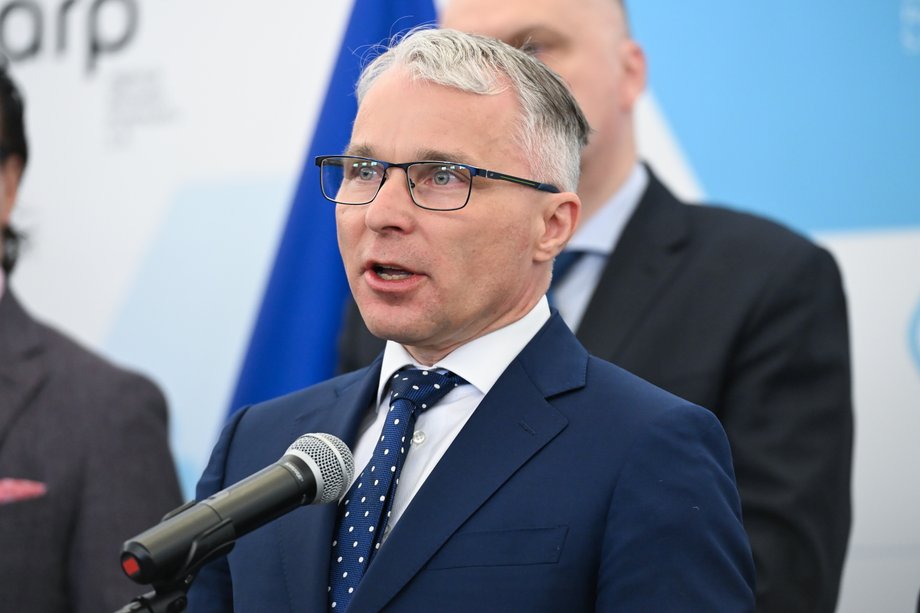
Janusz Bil, president of Orlen Neptun
|
PAP/Stach Leszczyński / PAP
The terminal is working
In June last year, Orlen Neptun, together with the Szczecin and Świnoujście Seaports Authority, opened an installation terminal for offshore wind farms in the latter city. We reported on this event in this article.
– Currently, service platforms for the Baltica 2 project, developed as part of the first phase of offshore development by PGE Baltica and Ørsted, are being assembled and then transported in the terminal in Świnoujście – says Janusz Bil.
— We also store offshore wind turbine blades used in various European projects there. In turn, this year, installation works for the foundations of the BC Wind farm, developed by Ocean Winds, will start from the terminal – adds the head of Orlen's offshore company.
“The investor must know the economics of the project”
The owners of the remaining projects from the so-called the second phase of offshore development in Poland. Although both Orlen Neptun, PGE Baltica and Polenergia with Equinor received 25-year support in the December auction (so they will have a guarantee of revenues from the sale of energy at the auctioned level), the farms have still not received the final green light from investors.
— Final investment decisions are made after a number of conditions are met and project milestones are achieved. This means, among others: the need to ensure the right to location and completeness of the administrative process (including ensuring the possibility of connection), a stable revenue model (CfD), as well as closing the financial model and ensuring the technical readiness of the project – explains Dr. Oliwia Mróz-Malik, manager for offshore wind energy at the Polish Wind Energy Association (PWEA).
As the expert says, before making an FID (Final Investment Decision – editor's note), offshore developers must have an agreed financing structure, established collateral and concluded loan agreements.
— Key, critical contracts must be secured, including those for the supply and installation of turbines, power stations, foundations and cables. The investor simply needs to know the economics and structure of the entire project to be able to assess whether it will provide a satisfactory rate of return, CAPEX/OPEX predictability, ability to meet the schedule or reduce risk. Knowing how much you will pay for individual elements of the farm – and for all the logistics related to them, including the use of ships and ports – is essential – adds Dr. Mróz-Malik. Investors must conduct a final analysis of possible risks, including not only executive but also regulatory ones.
“The more projects, the lower the energy price”
The PWEA specialist is optimistic about the chances of second-phase projects to obtain final investment decisions.
— There is a lot of determination on the part of investors, as shown by last year's auction. Additionally, it is worth noting that Poland also offers the industry an attractive support system, which is not obvious in Europe today; in some countries, investors have to pay for obtaining permission to build a farm. The Polish market and Polish projects are also attractive to foreign players interested in partnerships. This allows us to believe with a high degree of probability that the second phase projects will come to fruition and that they will actually start working for the National Power System in the next decade, he states.
Dr. Mróz-Malik is also optimistic about the remaining, still uncertain offshore projects in Poland, such as the Baltica 1 farm, which did not receive support in the auction, or Baltica 3, which is undergoing reconfiguration (both owned by PGE Baltica, the second of which is being developed with Ørsted).
— We have adopted a stable auction schedule in the coming years, and foreign companies are interested in participating in our projects. As PWEA, we also support the designation of further locations for the development of offshore wind farms in the planned update of PZPPOM. The more projects participating in auctions, the greater the competitiveness of these proceedings, and therefore the lower energy prices. – sums up.