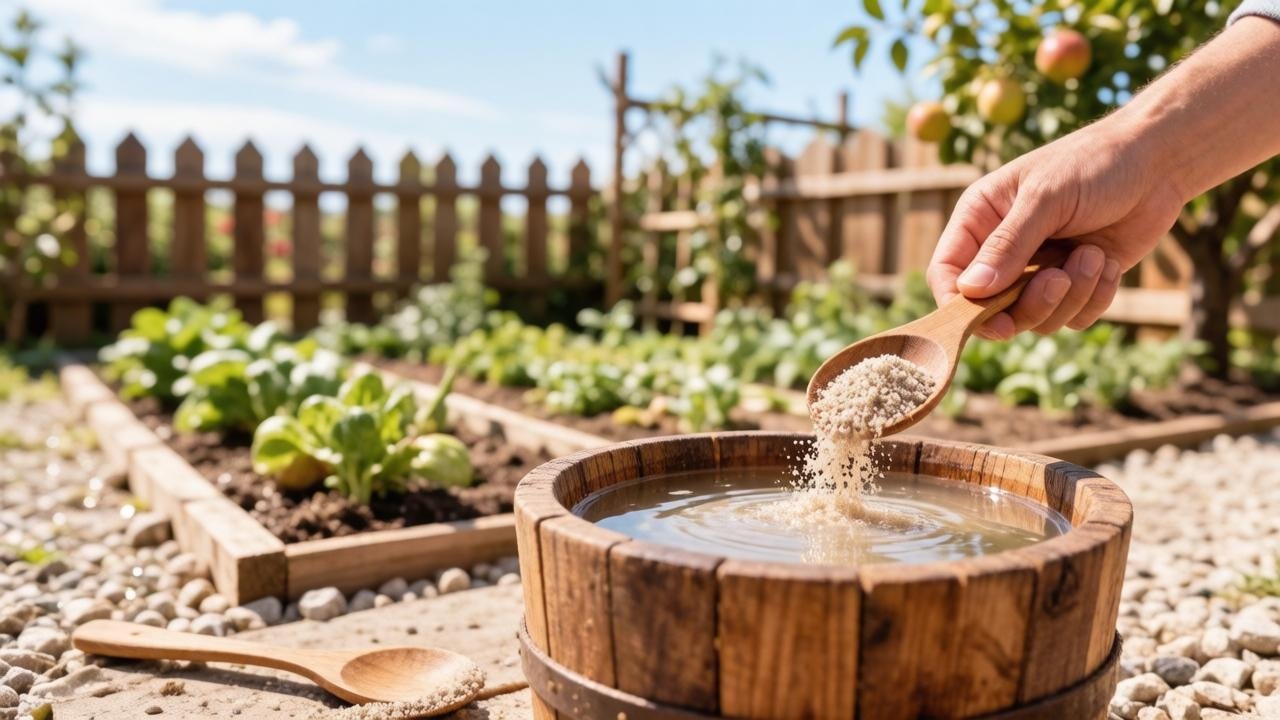
May is a time for gardeners to engage in tactical thinking. The seedlings have already been planted in open ground, the first green shoots are appearing, and all these beds urgently need additional nutrition. If you run around with a watering can and add water to each bush separately, your back will quickly get tired. It is much more convenient to place one large container, pour “smart granules” into it and feed all the plants at once.
This is how the old country method comes into being: add 15 tablespoons of azofoska to a 200-liter barrel. It combines three important elements: nitrogen (produces juicy greens), phosphorus (strengthens roots) and potassium (responsible for the taste and elasticity of fruits). In May, plants need exactly this set: they are actively growing and will soon begin to bloom.
“The main problem with azophoska in a barrel is that it doesn’t like to dissolve instantly. If you just throw the granules into cold water, they will lie at the bottom like a dead weight, and you will water with clean water,” shares the Zen channel “Garden Life” (12+).
First we make a “blank”. We take a bucket of warm water (not ice water from a well, but warmed up in the sun). Pour the same 15 spoons there. Stir well. In warm water, the granules will disperse in a couple of minutes. Stir until there is no “sand” left at the bottom. Pour everything into a common barrel. Pour this concentrated “syrup” into a 200-liter container and mix thoroughly again with a long stick or shovel handle.
Which crops do we water first?
- Tomatoes and peppers: 10–14 days after transplanting into the ground, so that they take root faster and begin to grow.
- Cucumbers and zucchini: when 3-4 true leaves appear, water only on damp soil so as not to damage the delicate stems.
- Cabbage: a week after planting the seedlings – then the heads of cabbage will begin to grow larger.
- Carrots and beets: while the tops are actively growing, pour in a thin stream between the rows.
We pour strictly at the root, trying not to touch the leaves. The norm is the same as for regular watering: 1–2 liters for a tomato or pepper bush, and 3–4 liters for each square meter of carrot or beet beds. Before fertilizing, it is better to water the bed a little with plain water.
Previously, we reported how to fertilize beds with cucumbers using kefir.