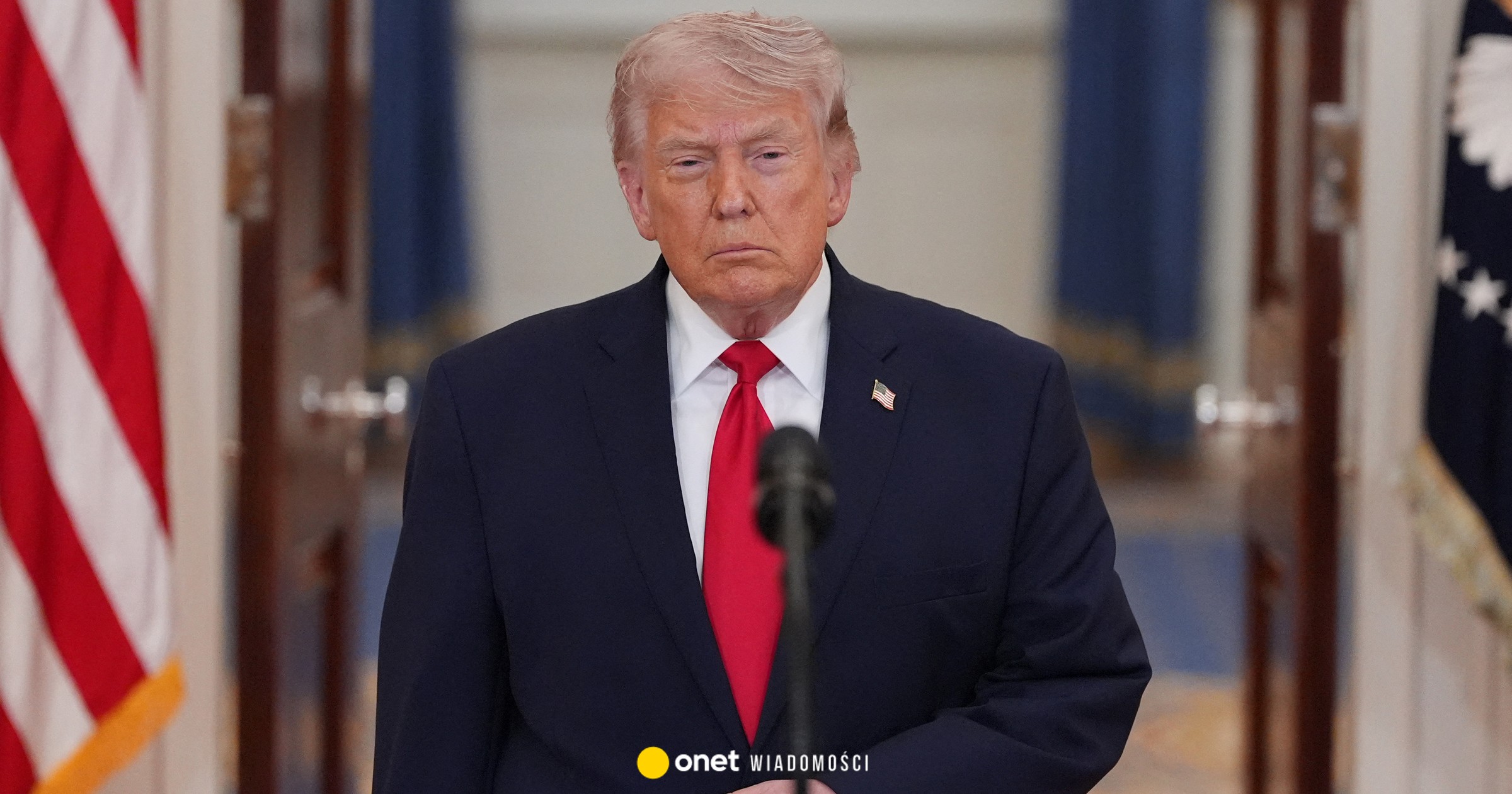
Israel has long divided Democrats. Now it's also dividing Republicans. This is a big problem for Trump

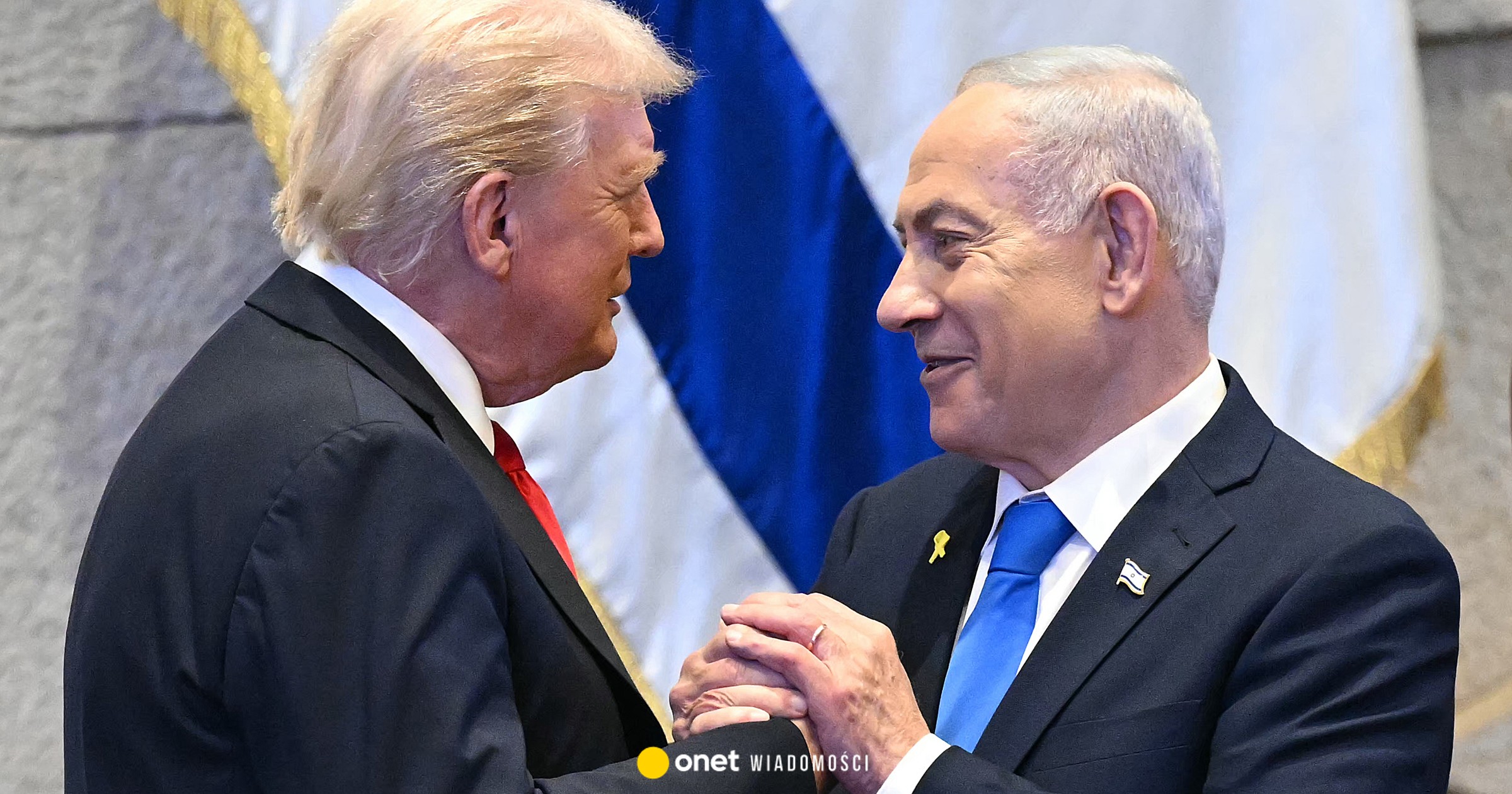
The Republican Party is beginning to divide over support for Israel. New POLITICO poll results show that Trump voters who identify with the MAGA (Make America Great Again) movement are more supportive of Prime Minister Binyamin Netanyahu's government and its relationship with the United States than those who do not identify as MAGA but voted for the president anyway.
According to the poll, almost half of Trump's MAGA voters say they support Israel and accept the current government's actions, while only 29 percent say they support Israel. Trump voters outside the movement express a similar opinion. A majority of MAGA voters (41%) say Israel has legitimate reasons to conduct a military campaign in the Gaza Strip, up from 31%. non-MAGA voters. In turn, 24 percent MAGA voters say Israel's actions were initially justified but went too far, compared with 31 percent non-MAGA voters.
MAGA voters are moderately supportive of Israel, and the survey suggests they remain more likely to support the longtime U.S. ally even as divisions within the party deepen. Cracks appearing have significant implications for the future of the US-Israel alliance and the Republican Party's efforts to maintain the coalition, that ensured Trump's return to the White House.
Change of moods
The political situation in the Middle East has changed dramatically in recent years. The issue of support for Israel has long divided the Democratic Partyand some Democrats blame the Biden administration for its approach to the Gaza Strip costing them the White House in 2024 by 35%. Americans who voted for Vice President Kamala Harris say Israel's actions in Gaza were initially justified but went too far, while 27 percent believe that the Israeli military campaign in the Gaza Strip was never justified, and 28 percent no opinion.
Only 10 percent Harris voters believe Israel still has justification for waging war in Gaza. This number highlights almost complete loss of support among Democrats for the military campaign, which enjoyed significant support from the Biden administration.
Republicans were strongly united in support for Israel in the immediate aftermath of the October 7 Hamas attack. But in the face of war with Iran and growing concern about Trump's foreign interventions, support for the country is wavering among the non-MAGA wing of the Republican Party and among young conservatives. According to a study conducted in cooperation with Public First, voters who do not support MAGA are 10 percentage points more likely than those supporting the movement to say that the Israeli government has too much influence on U.S. foreign policy.
Tucker Carlson speaks at a conference hosted by Turning Point in Phoenix, Arizona, on December 18, 2025.OLIVIER TOURON / AFP / AFP
— There is currently an “America First” attitude in the Republican Party – let's withdraw from all conflicts in the world, let's not engage in them – notes Amnon Cavari, associate professor at the Lauder School of Government, Diplomacy and Strategy at Reichmann University in Israel.
The poll reflects this dynamic, with a significant portion of 2024 Trump voters — 29 percent. — claims that the president devoted too much time to international affairs instead of national issues.
Trump voters from the MAGA movement are more tolerant of the president's global agenda, and only 19 percent of them complain that he devoted too much time to international affairs. This percentage doubles to 40 percent. among Trump voters outside the MAGA movement.
The issue of Israel is a particularly hot-button flashpoint in the GOP coalition, but a POLITICO poll shows a persistent gap between Trump voters who identify as MAGA and those who don't. This division was revealed in views on Trump's deportation campaign, the war in Iran, and even his way of dealing with economic problems.
Generational divisions
A POLITICO poll shows clear generational divides among Republicans on Israel-related issues, with the youngest Trump voters more likely than the oldest to express concern about America's relationship with Israel.
32 percent Trump voters under 35 say the United States is too closely aligned with the Israeli government, while 11 percent Trump voters over 55 express the same opinion.
When asked whether the United States should distance itself from Israel — even as both countries face common threats — or work closely with a longtime ally to defend against shared threats, the generational divide persists. Nearly half of Trump voters aged 18 to 34 say there should be distance between the two countries, while just 13% say Trump voters over 55 express the same opinion.
James Fishback, a 31-year-old far-right Republican candidate for Florida governor who is highly critical of Israel and has gained popularity among younger “America First” supporters online, believes the Republican Party faces a “huge showdown” over the Middle Eastern country, “the first signs of which we will see in November this year and just before that in the primary elections.”
— And then we will have a final test of strength on the issue of Israel in the Republican primaries [w 2028 r.]and then in the general elections – predicts. — I simply cannot imagine a strongly pro-Israel candidate becoming the Republican presidential candidate, he adds.
The generational divide in the Republican Party in many ways mirrors divisions in the Democratic Party, whose younger voters also hold stronger views against Israel's influence and actions, largely due to the rising death toll and ongoing humanitarian crisis in the Gaza Strip, polls show.
– The fact is [Izrael] lost support among young Democrats is not surprising, says Cavari. — The fact that he is rapidly losing support among young Republicans is particularly disturbing, a the trend is very clear.
The influence of pro-Israel groups on the elections
Pro-Israel groups' involvement in tight primary elections has become a flashpoint on both sides of the political scene.
The American Israel Public Affairs Committee (AIPAC), an influential group that aims to elect bipartisan candidates with strong support for Israel, has faced backlash for its involvement in the Democratic primaries in New Jersey and Illinois. AIPAC is also involved in Republican primaries, and some GOP voters are concerned about its role.
But AIPAC also works on the Republican side — and the Republican Party is starting to split on the issue. The study showed that Trump voters from the MAGA movement increased by 14 percentage points. are more supportive of AIPAC's policy interventions than their counterparts in the coalition, while Trump voters outside the MAGA movement are 11 percentage points more supportive. are more likely to oppose AIPAC's actions.
Deryn Sousa, a spokeswoman for AIPAC, said in a statement that “millions of Americans are members of AIPAC because they want to strengthen an alliance that advances America's interests and values, and we will continue to focus on building the largest bipartisan pro-Israel coalition possible in Congress.”
AIPAC has financially supported several incumbent Republican Party politicians, including Senators John Cornyn of Texas and Bill Cassidy of Louisiana. The group, along with the Republican Jewish Coalition Victory Fund committee, also poured millions of dollars into trying to unseat Republican Rep. Thomas Massie of Kentucky, in part for opposing aid to Israel and trying to limit Trump's war powers in Iran and elsewhere.
Even though AIPAC has become a factor dividing committed voters of both parties, 30 percent Americans have never heard of this organization or don't know enough about it to express an opinion.
“Poll numbers will fluctuate,” notes Patrick Dorton, spokesman for the AIPAC-affiliated super PAC, United Democracy Project. — Of course, we find ourselves in a situation after the events in the Gaza Strip and the war with Iran.
According to Dorton, AIPAC's political arm will continue to play “an important role in promoting U.S.-Israel relations.”