Extraordinary discovery in Pompeii: What was found inside a human mold from almost two thousand years ago

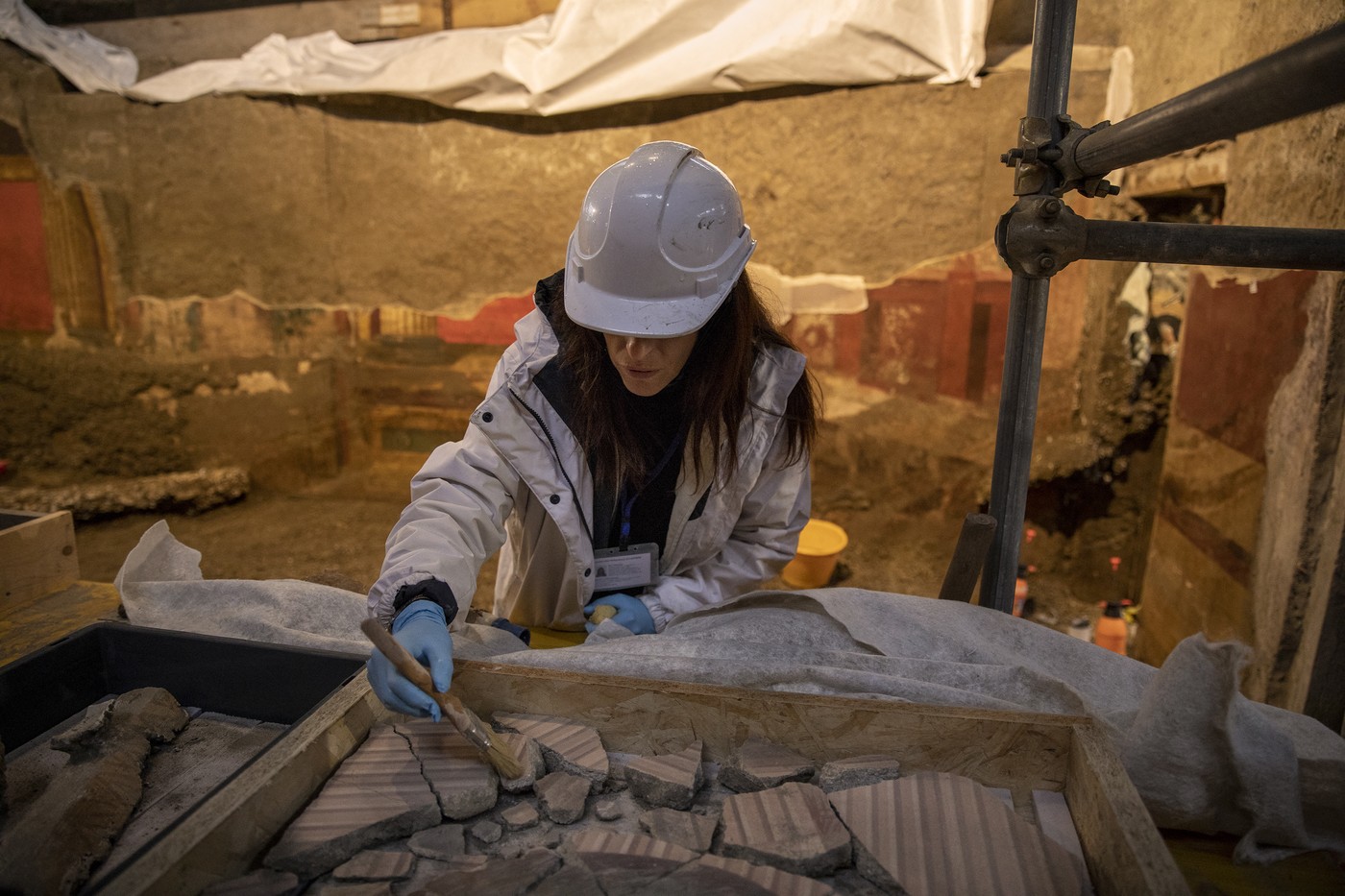
The latest discovery in the Pompeii Archaeological Park shows that one of the victims of the eruption of Mount Vesuvius almost two thousand years ago was a doctor caught while trying to flee, according to EuroNews.com.
The identification of the doctor was possible after studying a small box hidden in the plaster of a human cast. This mold was found in 1961, during the research led by Amedeo Maiuri.
The area, called Orto dei Fuggiaschi, was then occupied by a vineyard and housed the casts of 14 people caught in the pyroclastic cloud while trying to save themselves.
Recent analyzes of materials in the park's warehouses have revealed the personal belongings of one of the victims. Among them were a box made of organic material with metal elements, a cloth bag with bronze and silver coins, and a number of medical instruments.
How the doctor of ancient Pompeii was identified
Specialists performed X-ray and CT scans on the cast. They exposed inside the box a slate plate, a rock probably used as a support for the preparation of medical or cosmetic substances, and small metal surgical instruments. The findings support the hypothesis that that person was a doctor.
Technologies based on artificial intelligence and 3D reconstructions allowed the content to be analyzed without destroying the cast. Archaeologists, restorers, anthropologists, archaeobotanists, numismatists, radiologists, technicians and digital modeling specialists worked together on this research. The study also revealed that that box had a gear locking system.
The director of the Pompeii Archaeological Park, Gabriel Zuchtriegel, said that this man brought his tools with him so that he could practice elsewhere, but also perhaps to help others.
“Already two thousand years ago, there were people who were not only doctors during working hours, but doctors at all times – even when they were running away from the eruption,” commented Zuchtriegel.