“Smell does not necessarily imply pollution.” The explanations of the Environmental Guard, after the prefect complained that “you can't open the window in Ploiesti” because of the “terrible” smell

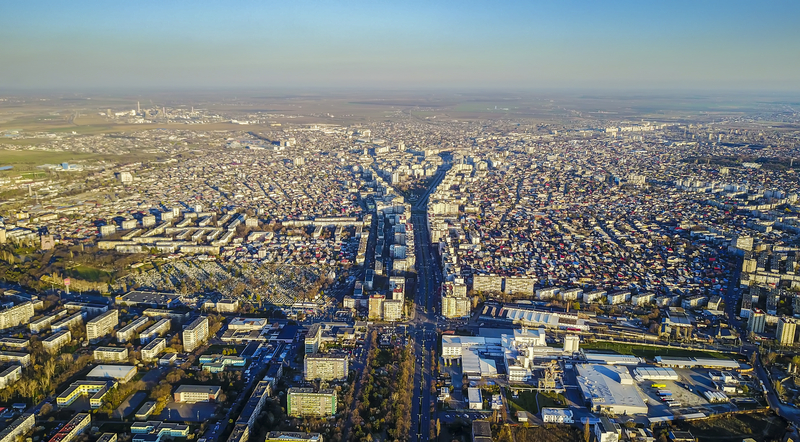
The National Environmental Guard announced on Wednesday that the head of the institution went on a working visit to Prahova, meeting with the prefect of the county, Daniel Nicodim, and with the representatives of the local and county public authorities, for discussions about the air quality in the municipality of Ploiești.
In a joint press conference, prefect Daniel Nicodim complained that there is “a terrible smell” in the city.
“It is clear that Prahova County is probably the most industrialized county. I was talking to the Commissioner from the Environmental Guard who told me that they have about 60 very large targets that can generate or generate pollution and in this context I think it is necessary to take some steps for a simpler, more direct communication, not to come up with scientific explanations when you cannot open the window in the city of Ploiesti, in the morning, to you are ventilated, because there is a terrible smell coming from outside”, said the official, quoted by News.ro.
The mayor of Ploiești, Mihai Polițeanu, said that, according to the data on pollutant levels, “hundreds of exceedances” were registered starting from February which “did not have a correspondent in measures taken by the Prahova Environmental Guard”.
“I told Mr. Commissioner General that the level of trust of the citizens of Ploieşti municipality and my staff in the Prahova Environmental Guard is zero and will remain zero until proven otherwise. From my point of view, the Prahova Environmental Guard fulfilled its attributions, at least unsatisfactory”, declared the mayor.
Explanations provided by the National Environmental Guard
GNM said that in the last year it “fined the refineries in Prahova with 340,000 euros”.
“Air quality and olfactory discomfort in the Municipality of Ploiești are significantly different problems, in the sense that the smell does not necessarily imply pollution and vice versa, but both lines can also have effects on public health,” said the institution, in a post on Facebook.
The General Commissioner of GNM claims that “the problem of air pollution in the area of Ploiești Municipality is a concern” of the institution.
“However, olfactory discomfort must be addressed including from the perspective of the impact on the health of the population. That is why the National Environmental Guard has sent, from the middle of last year until now, more than 1350 addresses to the Public Health Directorates (DSP) in the country so that they, according to their attributions, investigate the impact of olfactory discomfort on the health of the population”, Andrei Corlan said.
GNM said that “to improve air quality in Prahova county” it collaborates with local authorities, monitors the situation of the operator in Ariceștii Rahtivan and requested the intensification of measurements with the mobile laboratory in the area of activities of the Petrobrazi, Vega, Lukoil Refineries and the former Astra Română refinery.
Over 1,350 complaints about the smell
According to GNM, in the last year there were over 1,350 notifications regarding the smell, notifications which it sends to the Public Health Directorates.
“It is useful to understand that “odor” and “air pollution” are two distinct notions, with different consequences and separate institutional reaction mechanisms: Odors are perceived at extremely low concentrations, which may come from industrial activities, from natural processes or from diffuse sources that are difficult to quantify. On the other hand, air pollution means the presence of pollutants in concentrations above the limits established by law, (measured by indicators such as PM10, PM2.5, benzene, NO₂, SO₂)”, explained GNM.
On the other hand, the institution says that “the law recognizes olfactory discomfort as a potential risk to health and quality of life and establishes that the assessment of the impact on the health of the population falls under the responsibility of public health authorities”.
“Effects on health often occur before pollutants exceed the limits established by legislation. Therefore, an integrated interpretation is necessary: monitoring of pollutants must be correlated with monitoring of effects on the population, and this must be done in close collaboration with public health authorities,” GNM also stated.