
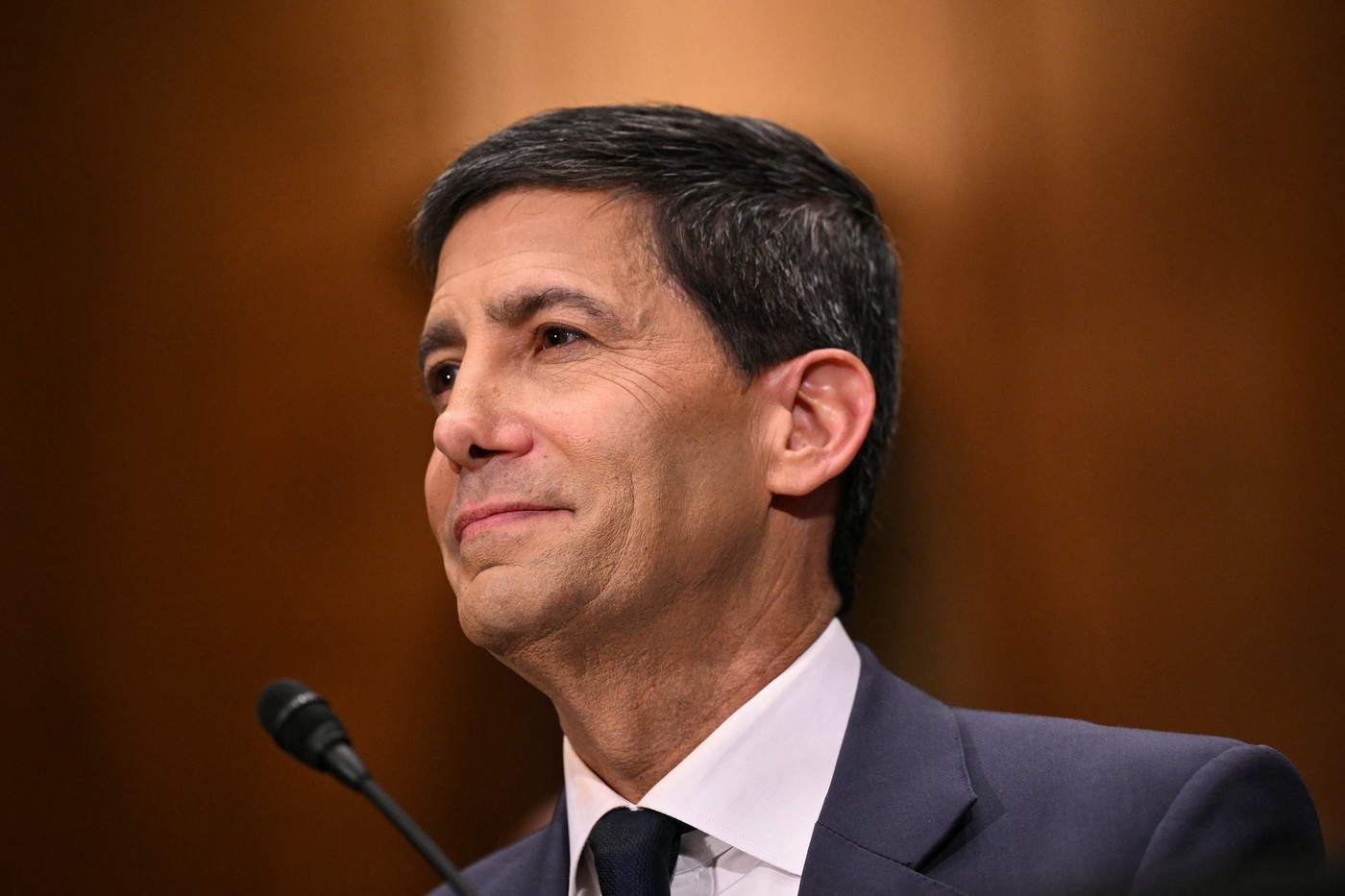
The Senate confirmed Kevin Warsh as the 17th chairman of the Federal Reserve on Wednesday, in a vote that confirms tensions between the White House and the Fed.
Warsh won confirmation by a 54-45 vote, the closest since Senate approval became a requirement for the position in 1977.
Former chairman Jerome Powell has said he will remain on the Fed's board indefinitely, amid concerns that President Trump's legal attacks are “damaging the institution.”
Who is Kevin Warsh?
Kevin Warsh is an American financier and lawyer, best known for serving on the Board of Governors of the Federal Reserve (US central bank) from 2006 to 2011. He played an important role in managing the 2008 global financial crisis
Business card
Full name: Kevin Maxwell Warsh
Born: April 13, 1970, Albany, New York
studied:
- BA in Public Policy – Stanford University
- Doctor of Laws (JD) – Harvard University
- in economics and public policy at MIT
Career:
- Member of the Federal Reserve Board of Governors (2006–2011). When appointed, he was the Fed's youngest governor.
- He was a key intermediary between the Fed and Wall Street during the 2008 crisis.
- He represented the Fed in the G20 and in economic dialogues with Asia.
- Prior to the Fed, he was economic advisor to the president and executive secretary of the National Economic Council in the George W. Bush administration.
- After the Fed, he was a Senior Fellow at the Hoover Institution (Stanford).
- He teaches at the Stanford Graduate School of Business.
How Kevin Warsh thinks about the economy
Inflation: “it's not an accident, it's a failure of economic policy”
Warsh is from the camp of those who prioritize fighting inflation, even at the cost of slower economic growth or higher unemployment risk. They prefer to favor higher interest rates to keep inflation under control.
Warsh believes the Fed reacted too late to post-pandemic inflation and sees inflation as the result of too cheap money and tolerating fiscal excesses.
Money printing (QE): “we overdid it”
Warsh is a vocal critic of prolonged quantitative easing (QE); the Fed's huge balance sheet and the idea that the central bank can solve any economic problem.
He says, in short: The Fed has become too big, too political and too comfortable.
Fed Independence: The Warsh Paradox
Declaratively, he is a defender of central bank independence. But basically, he is close to Donald Trump, who has frequently attacked the Fed for not lowering interest rates.
Markets say the Fed will be more “politicized” under him, even if the official discourse is pro-independence.


