They left salaries of €2,200 in Holland to return permanently to Romania. The unexpected reason: “We were shocked when we came”

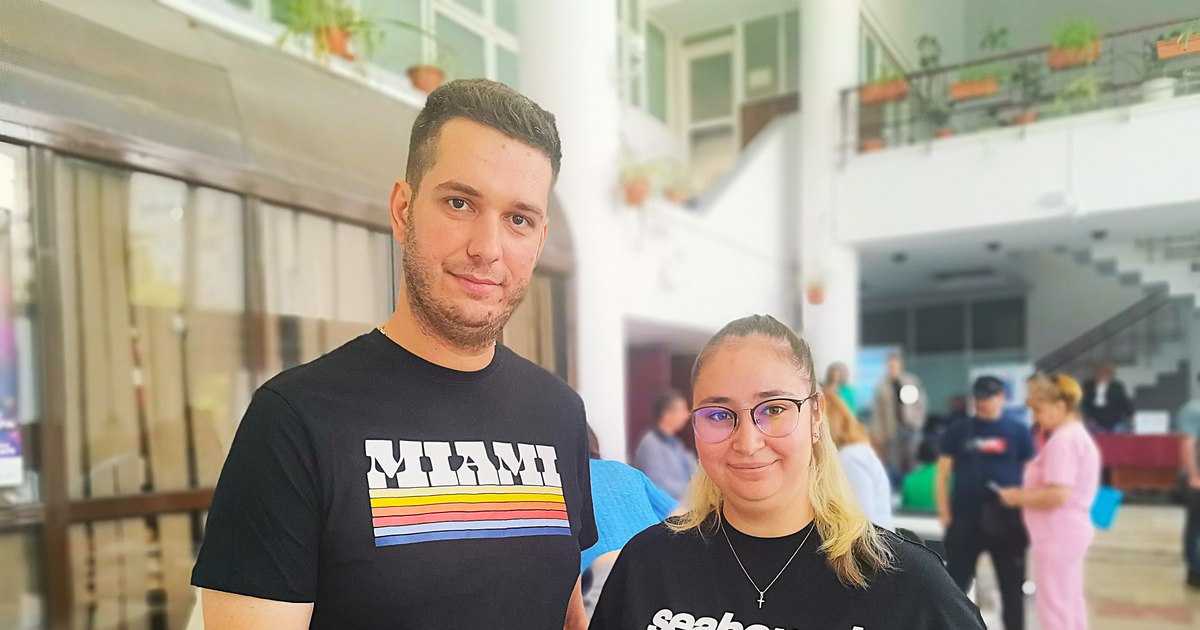
After four years in the Netherlands, two homesick young men decided it was time to return and try their hand again in their country. They come from salaries of 2,200 euros, but they would accept to work for less.
Nicolae and Mădălina are now looking for work at home PHOTO: Alina Mitran
Nicolae (32 years old) and Mădălina (26 years old) decided, after four years of working abroad, that it is time to return to Romania, to settle down in their house, maybe to increase their family, so they are looking for work. I met them at the General Job Exchange in Slatina, where they curiously researched each individual offer. They are not afraid of work, they already have experience in the technical field, but not only that, and on the other hand, they are aware that salaries in Romania are much lower than in Western countries.
They left the country in 2022. He had previously worked abroad, in England and the Netherlands, his wife had not. “When I left the first time, Mădălina was at post-secondary health school, she said she wanted to finish it”, Nicolae explained. The young woman finished school and tried to work in the sanitary field. It was the first contact with what, because she had her own experience, the young woman confirms that it is not just gossip. “Here, if you don't have money, you can't work in the public system. I think nowhere, not only in the health system”Mădălina says in passing.
That's how he got a job at a major fiber optic cable company, where he worked for two years. Finally it was decided to follow Nicolae to Holland in 2022.
“I spent four years in the Netherlands. At first it was a technical field, for two years. That place was simply closed and the agency found us something else, also technical. But they told us that it is only for a period of time. It was 5-6 months, they had no other technical job to offer us. We had experience and didn't accept what other jobs they offered us. An offer eventually came up at a factory-warehouse where online orders were placed and we were preparing those orders for delivery. You had a norm, and the norm was always increasing. He saw that you were doing a lot, the rate kept increasing and so on. At first I didn't do it, but after, they kept pressuring you and I did it. I was making even more than others there for a year or two. And they kept asking for more, more,” the young people reported how they started to care less about money and more about well-being.
“You felt like a minority, there was some discrimination”
There were only eight Romanians and approximately 180 Poles in that warehouse. The Romanians are not exactly solidary either, besides the others outnumbered them. “You felt like a minority, there was some discrimination,” the young people revealed.
However, the wage gain is far above what Romania offers now.
“Around 2,200 – 2,300 euros and we spent 1,000 a month, maximum, both of us. And with 1,000 I can say that you had everything you wanted, you were not limited to anything. The prices were much lower there than here in Romania. We were shocked when we came. When you drew a line, you got out much better there. You bought everything you needed.” the two young men told.
They found Romania almost unchanged, and that is not necessarily good.
“Many told me: don't come back, because you'll see that it's hard! And I asked them: if it's hard, why do you stay here? I came before Easter, so far I haven't had much contact with the labor market, I hope we won't be disappointed”, Nicolae also said.
“The Romanians did the hardest work”
Nicolae is a graduate of higher studies, studied Accounting. Na professed and explains why: “Here in Romania I had the opportunity, but when I first got a job, at Dedeman, I took a lot of money. After about five months, I went to work at a professional company, to do accounting, and they gave me half of what I was taking at Dedeman. And I refused. I thought then that in time I would gain experience and maybe the salary would increase, but I was young and I was also thinking about money“.
Now looking for work on a salary of at least 800 euros, “at first, and after 3 months, maximum 6, to reach over 1,000”. It is less than half compared to the last salary earned, instead they calculated that in Romania they have their own house, they will no longer pay rent.
Nicolae says that he felt, in the Netherlands, that more money no longer satisfied him and that there are other things that compensate.
“I ran for the money, but at some point the money entered the card but you no longer felt that satisfaction. At the beginning, when you saw 500 – 600 euros more, it was something else, but now, towards the end, I didn't even look at how much they had accumulated. We were thinking of coming home”, the young man revealed.
Romania, the champion of European countries in fraud with fake jobs. Young people, the most affected
He hopes that this time the plan will work. They are willing to try for a while, but they do not exclude the option of leaving again.
“We now left with the intention of staying here, but you never know. If we don't find something, the money doesn't suit us, we can leave anytime. I mean, you see one month, two, three… We still stayed away, we were focused on raising money, but the time has come to sit down, maybe even have a child”. it's Mădălina's turn to say what their plans are.
“Here you have family, you have everything”
We talk about how to work in the Netherlands and the young people say that Romanians are highly appreciated. And because they are clever, they quickly find solutions to various problems, but also because they are industrious and, because they came there “to make money”, they are willing to perform work that the Dutch began to refuse. “At least in the Netherlands, all the hard work was done by the Romanians, the Dutch didn't do any work. Instead, we, the Romanians, who went for the money, did it. He asked you to do it, you didn't say you didn't like it, that you didn't know. He showed you once, twice, after you did it. The Dutch first came to see, to try, instead we, the emigrants – Romanians, Poles, Portuguese – went to work directly”. Mădălina reported.
“QIn the Netherlands, no one cares about studies. They only care about what you do. There he didn't ask you if you knew how to do it, he made you do it. He said – You are Romanian, you must know how to do it. – that's what an employer told me. If you know their language it is much better. But we managed in English. There was a lot of communication in English, and 80-year-old people were speaking, you could manage in English everywhere, and in the supermarket and in the shops, everywhere.” the young people also told.
People looking for a job met with employers PHOTO: A. Mitran
3,000 jobs disappear: wave of layoffs at a major European bank, amid takeover pressure from UniCredit
They worked a lot, but it wasn't the toil that necessarily made them return, but the longing for home and their family. “Here you have family, you have everything. There you were in a routine of it – work, home. You still went out on the weekends, but you didn't feel fulfilled. It's not very good to make friends there. I had been there before, I knew the world was bad and you had to be strong. It's not for everyone”Nicolae added.
“We saw things that seemed interesting to us, we are still studying to see if it would work here”
With the savings they managed to make by working among foreigners and with the wedding gift, they collected a significant amount, which they plan to use to build a house and to implement a business idea. “We also thought about business, we saw many things that seemed interesting to us, we don't know if it would work here, we have to study more”, said the young man.
Until they gather their information, they want to get a job, that's why they came to the meeting with employers, organized by the public employment service.
“When we were in Romania, we always had a job, we were not in a position to look for work. I considered that I can find myself better than anyone else”, Nicolae also revealed. They learned that they can register in the AJOFM database as job seekers and that they can benefit from the services offered to the unemployed: advice on certain rights they have depending on where the workplace is located, mediation on the labor market, free courses, etc.