Endometriosis does not always have symptoms, but it can affect fertility. Why treatment differs from one patient to another

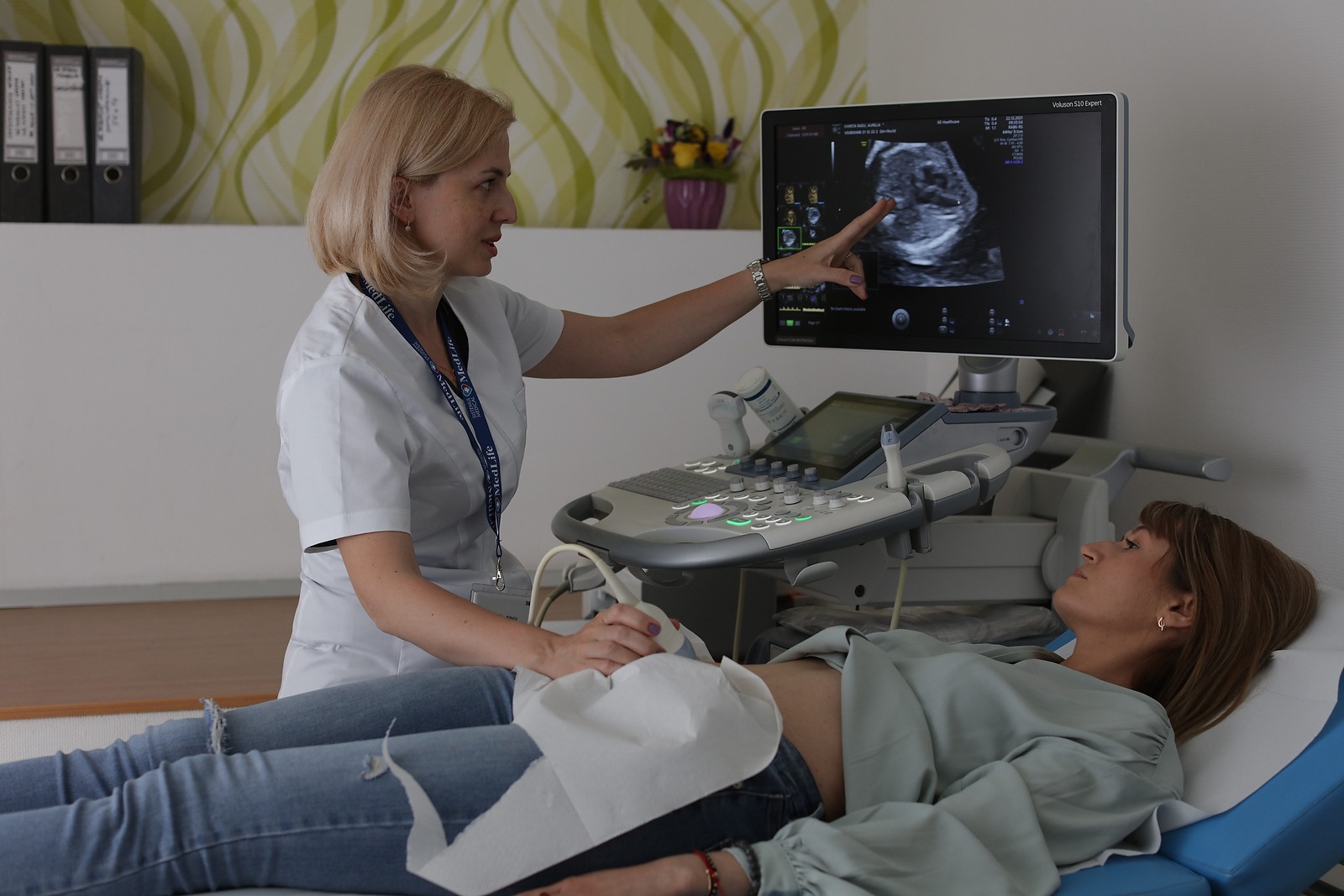
Endometriosis is one of the important causes of infertility and affects between 20% and 30% of young women of reproductive age, draws attention Dr. Florina Raluca Mitroispecialist gynecologist in the framework Favorite MedLife hyperclinicswith overspecialization in couple infertility treatment, assisted human reproduction and in vitro fertilization. Most of the time, the symptoms of this condition are loud, but there are also situations where the disease is present, even if the woman has no symptoms. The specialist doctor explains the impact that endometriosis has on the patients' fertility and warns that pain during menstruation is not normal and should be investigated.
Endometriosis is severe and often disabling. It affects adolescent girls and women of reproductive age. Unfortunately, it is still much underdiagnosed.
“Endometriosis is a chronic pelvic inflammatory condition that is extremely common, especially during the period of reproductive life, in young women”, emphasizes Dr. Florina Raluca Mitroi. The disease is present when the endometrial glands and stromal tissue ends up migrating outside the endometrial cavity, adds the specialist doctor: “Most often, endometriosis tissue is present in the myometrium – that is, in the wall of the uterus – causing the condition called adenomyosis. Other times, it is located in the pelvic peritoneum, at the level of the ovaries, at the level of the uterosacral ligaments, at the level of the rectovaginal septum, and, much less often, at the level of the urinary bladder, of ureters. Statistically, endometriosis affects around 20%-30% of young patients in the reproductive period”.
Adhesions affect fertility
When the patient is of reproductive age, fertility can be seriously affected. On the one hand, due to the adhesions it forms, endometriosis can prevent the normal functioning of the ovaries and fallopian tubes and can affect the endometrial environment necessary for embryo implantation.
“The adhesions prevent the capture of the oocyte, the fertilization of the oocyte by the sperm, and then the embryo can no longer form. Endometriosis affects folliculogenesis, maturation of the oocytes, and there have been studies that have shown that it can affect the ovarian reserve by reducing the number of oocytes. It also affects oocyte quality,” explained Dr. Mitroi.
Thus, a woman under the age of 35 who wants to get pregnant and finds that after a year of regular, unprotected sexual contacts, she does not manage to get pregnant, she definitely needs an infertility consultation, the gynecologist specialist recommends. “Or, in the case of patients over the age of 35, we are talking about 6 months of trials”, points out the doctor.
“Patients can be asymptomatic”
An essential point to note is that fertility problems themselves should be investigated by a specialist and that there are not always loud symptoms. “I want to emphasize the fact that patients can be asymptomatic, although they have endometriosis. Of course, in much smaller numbers compared to those who present the common symptoms, namely: chronic pelvic pain, dysmenorrhea – pain during menstruation or dyspareunia – pain during sexual contact”, explains Dr. Mitroi.
Infertility affects 20%-30% of patients with endometriosis, adds the specialist doctor: “There are fertility studies in patients with moderate or severe endometriosis, which have shown that the way they can get pregnant is through an in vitro fertilization procedure. There is the possibility of getting a spontaneous pregnancy, but here we are talking about women with mild endometriosis”.
The treatment is personalized
Once endometriosis is diagnosed, the treatment takes several aspects into account, says the specialist doctor: “It is important to take into account the personal history of each patient, her pathologies, and, to achieve a pregnancy, clearly, the treatment will be personalized”.
In symptomatic patients, transvaginal ultrasound is a gold-standard diagnostic investigation, superficial lesions of endometriosis benefiting from drug treatment. “When the symptoms are exacerbated, and we do not see anything ultrasound, the recommendation is to perform an MRI with an endometriosis protocol. This imaging investigation can identify the presence of endometriosis implants, deep endometriosis lesions. In this case, the treatment is surgical, excision of the endometriosis lesions or, of course, adhesiolysis (no – intervention by which adhesions are surgically removed, tissues that have abnormally stuck together)”, says the specialist.
Two very important aspects in this whole discussion are the age of the patient, as well as the degree of damage caused by the disease. “If we are talking about patients with deep endometriosis lesions – that is, grade 3-4 endometriosis – then it would be advisable to carry out cryopreservation of oocytes first and, subsequently, surgical intervention. In the case of patients with mild endometriosis, doctors can recommend an IVF procedure after drug treatment. After cryopreservation and surgical intervention, the patient can turn to IVF after at least 6-12 months, depending on the degree of endometriosis”, emphasizes Dr. Mitroi.
When we talk about surgery, most of the time, the approach is laparoscopic, especially in young patients, even if the endometriosis is deep. This is because post-intervention recovery is faster and the risk of complications is lower. However, it also depends on the patient's surgical antecedents, says the doctor.
How to get pregnant
Endometriosis patients who turn to IVF to achieve pregnancy go through the ovarian stimulation protocol and ovarian puncture. “Subsequently, before carrying out the embryo transfer, i.e. the transfer of the embryo into the uterine cavity, a personalized treatment is recommended for patients with adenomyosis – that is, for those whose endometrial tissue has migrated into the uterine walls. This treatment has the role of preparing the uterus for the embryo transfer, because patients with endometriosis, as I have stated, have a low degree of pre-implantation endometrial receptivity. An embryo transfer is not performed during the natural cycle, at a patient with endometriosis, precisely because of the fact that the implantation is deficient”, says the specialist doctor.
Pregnancy protects against disease progression. “Studies have shown that, when the patient becomes pregnant, during pregnancy, but also at menopause, endometriosis stops progressing. The explanation lies in the fact that the disease is hormonally dependent. And then, during pregnancy and menopause, endometriosis stagnates”, states Dr. Mitroi.
As for the evolution of pregnancy in patients with endometriosis, it is normal, but medical supervision is naturally needed.
Lifestyle change matters
As a pelvic inflammatory disease, endometriosis is sensitive to a woman's lifestyle. The diet is very important and the recommendation is that the diet should be designed in such a way as to have an anti-inflammatory effect. That means reducing the consumption of dairy products, red meat and foods with gluten. “At the same time, physical activity helps in the inflammation process – it would be recommended to practice yoga, pilates – these forms of movement reduce the degree of inflammation in the body, and the evolution of the disease can be slowed down. In the case of people with mild endometriosis, we are also talking about drug treatment – non-steroidal anti-inflammatories, combined oral contraceptives, progestogens – which help to reduce the symptoms. All these can improve the quality of life”, recommends the specialist doctor.
Medical measures mainly aim at the quality of life, especially since, in some cases, the patients are severely affected by endometriosis. “I had a patient with endometriosis who got pregnant naturally at the age of 40. Until then, she had intense pelvic pain, pain during sexual contact, heavy periods. All this affected both her quality of life and her married life, the specialist exemplifies.
“Menstrual pain is not normal”
Dr. Mitroi recommends especially women of childbearing age not to overlook an important symptom of the disease, such as pain during menstruation, i.e. dysmenorrhea. “They should come to the gynecological consultation when they have symptoms such as: pain during menstruation, pain during sexual contact, chronic pelvic pain, during defecation or heavy menstruation. Because none of the listed symptoms are part of normality, and in the absence of a diagnosis and personalized treatment, the quality of life can be seriously affected”, says doctor Florina Raluca Mitroi.
“Unfortunately, in my office I have many young patients – between 25 and 35 years old – who I diagnose with endometriosis. They simply do not know that they have the disease when they come to me for a routine consultation, considering that menstrual pain is normal, even when it is moderate. I always say that “I need NSAIDs, but sometimes the pain is bearable.'' I wish they knew that menstrual pain is not normal and that they would they must go to a gynecological consultation in order to be correctly diagnosed and treated”, concludes Dr. Florina Raluca Mitroi.
***
Read other informative articles on medical topics in the Make Romania good section.
This article is supported by MedLife, the largest network of private medical services in Romania, and is part of an extensive information and education effort, dedicated to prevention and a long-term healthy lifestyle.
At MedLife, health is approached with care and responsibility, starting from the real needs of each patient. Medical decisions are based on complex evaluations, supported by multidisciplinary teams of good doctors and state-of-the-art technologies. Through modern diagnostic and treatment solutions and, more recently, genomics expertise and the possibility of early identification of risks for common and lifestyle diseases, MedLife aims to help people take better care of their health.
The objective is clear: active prevention and timely intervention, before health problems affect the balance and quality of life. Because health means more than the absence of disease. It means energy, mobility and balance, at any age. MedLife is constantly investing in solutions that support sustainable health and contribute to a life well lived, not just today, but over the long term.
More information about the available services can be found at https://www.medlife.ro/.
Article sponsored by MedLife