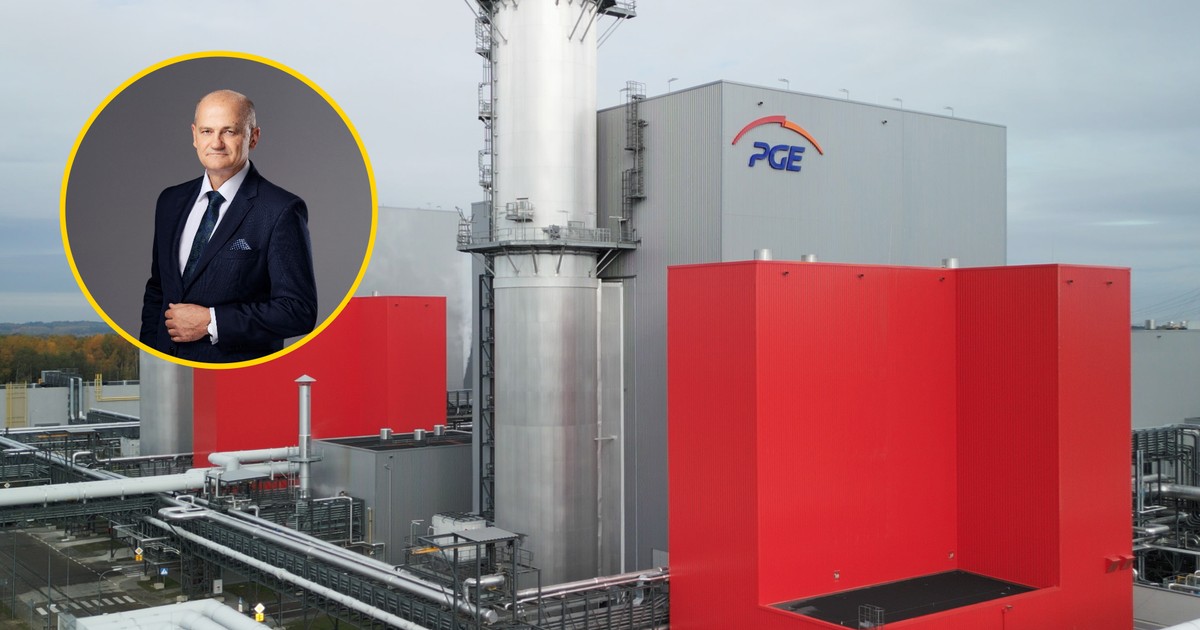
GE Vernova is a US-based global manufacturer of energy technologies that operates in 100 countries and employs approx. 85,000 people. people. The company is one of the world leaders in the production of gas turbines, and in Poland it is responsible, among others, for: for the implementation of blocks in the largest investments of leading energy companies, such as PGE and Enea.
GE Vernova in Poland also participates in the construction of network infrastructure for offshore wind farms, in cooperation with Orlen Synthos Green Energy enters the market of small SMR nuclear reactors and develops production capacity. We talk about these and other matters with the company's president, Sławomir Żygowski.
Szymon Majewski, Business Insider Polska: What exactly does GE Vernova do and what role does it play in Poland's energy transformation?
Sławomir Żygowski, president of GE Vernova in Poland: We have been present in Poland for almost 35 years, and our factories have a much longer history. We offer technological solutions for the energy industry, ranging from gas and steam boilers, through renewable sources and the grid, to nuclear solutions such as small modular reactors, i.e. SMRs. We have our own production capacity – a steam turbine factory in Elbląg and a generator factory in Wrocław. In Warsaw, there is an engineering center that works globally for the gas energy industry and develops in the field of nuclear energy and renewable energy.
In addition to our production and engineering base, we also implement specific projects in Poland. We are strongly involved in the development of gas generation capacity – for the Polish Energy Group we designed and implemented two units using CCGT technology at the Dolna Odra Power Plant in Gryfino, which play a key role in stabilizing the system. We are implementing the CCGT project in Ostrołęka for Energa, we have started implementing a project using the same technology for Enea in Kozienice and this is certainly not our last word.
We also operate in the area of connecting offshore wind energy projects in the Baltic Sea to the national grid infrastructure. We are building a power station and transformers for the Baltic Power farm owned by Orlen and Northland Power, and another for the Baltica 2 project for PGE Baltica and Orsted. Together with Orlen Synthos Green Energy, we are also preparing to implement specific SMR nuclear reactor projects using our BWRX-300 technology.
It is sometimes said that Poland, as part of its transformation, will become a huge construction site for various technologies for years to come. How does this affect the attractiveness of our country in the eyes of investors and suppliers?
We are certainly observing such a process. A few weeks ago, Prime Minister Donald Tusk mentioned that investments in the energy transformation will be worth approximately PLN 1 trillion. The transition away from coal that we are seeing creates opportunities for de facto almost every energy technology. At the same time, however, it must be remembered that similar investments are also taking place in other countries. As a result, production and execution capacities and supply chains are under great strain. To put it simply, the most important components for new energy industries may become scarce over time. Customers notice these phenomena and try to adapt – for example, they do not decide on turnkey contracts, but first order a key component, such as a gas turbine, in order to plan the rest.
Production capacity is very tight
Where is the problem of bottlenecks in energy supply chains most visible?
I will start with gas energy. It is now experiencing a global boom, caused especially by high demand in the United States, where the development of gas gas is associated with the expansion of artificial intelligence and the construction of data centers. The result is a limited supply of gas turbines on global markets. The situation is similar in the network area – many countries are currently developing their transmission and distribution infrastructure. Many countries are also announcing a return to nuclear energy and the construction or expansion of new units, which also affects supply constraints.
How do geopolitics, including the current war in the Middle East, influence these limitations?
War, although terrible, is a temporary situation, and the world will cope with the current crisis. However, the rapid increase in demand itself causes constraints on components and production capacity. Only at GE Vernova, the global order portfolio for gas units increased in the first quarter of this year from 83 GW to 100 GW, and we estimate that at the end of the year it will exceed 110 GW. All these orders must be fulfilled in the coming years – the production of gas and steam turbines, generators and other parts. As a result, deadlines are longer and customers incur higher costs. However, technology suppliers are trying to meet expectations and are increasing production capacity.
Deadlines are longer and customers incur higher costs
Recently, Tauron failed to select a gas technology supplier to build the OCGT unit in Jaworzno. Can such difficulties slow down the pace of energy transformation and increase its costs?
The market is always looking for balance and in the long run it will certainly achieve it. The current restrictions undoubtedly affect the costs and valuation of projects. The government encourages energy companies to invest through mechanisms such as the capacity market, which provides an economic incentive to build gas sources. It also encourages keeping energy costs at a reasonable level, which is crucial for economic development. The entire energy sector must therefore strike the right balance between the limited availability of technology and the need to maintain reasonable costs.
How can these problems affect the implementation of EU and Polish climate ambitions, or the pace of phasing out coal?
There is currently an ongoing discussion in the European Union about the reform of the ETS system. We are looking at these trends; although it is not our role to create policies, we want to support solutions that will lead to the decarbonization and electrification of economies. In different countries, these processes may be slightly faster or slower, but we believe that gas technologies have a role to play everywhere, as they help reduce carbon dioxide emissions and enhance the development of renewable energy sources. However, the pace of decarbonization will depend on what conditions allow.
President of GE Vernova in Poland, Sławomir Żygowski
|
GE Vernova / GE Vernova
What is the potential of GE Vernova in nuclear energy?
When it comes to the atom, we are very precise. As part of a joint venture with the Japanese Hitachi – GE Vernova Hitachi Nuclear Energy – we focused on SMRs in the proven BWR technology, which we have so far used in 60 nuclear reactors around the world. However, in response to market expectations, we decided to reduce their power to 300 MW, creating the BWRX-300 reactor, while ensuring their modularity, i.e. division into smaller, interchangeable and easily reproducible parts. We see great opportunities in SMRs. Current joint plans with our partner – Orlen Synthos Green Energy – assume the construction of 26 small modular reactors in Poland intended for industry as well as supporting the power system. We hope that the first projects will soon enter the construction phase, and in the first half of the next decade we will enjoy the electricity that will flow from them.
Read also: A new nuclear project in Poland. An important contract was signed
At the same time, there is room in Poland for both technologies, large and small nuclear, and nuclear energy will certainly play a large role in the future energy mix.
How does GE Vernova intend to respond to the challenges related to the promotion of local content? Will it rely on Polish subcontractors in its own supply chains, thus giving a premium in orders from state-owned companies?
We are very rooted in Poland. In addition to the factories and engineering team I mentioned, we also have executive and support teams – a total of over 2,000 people employed. Our gas and steam turbines and generators are and will be present in the power plants of the largest Polish energy companies. We have built relationships with supply chain partners over the years. Therefore, we are deeply convinced that we meet the requirements set by the Polish government, encouraging an increase in the share of Polish business in key investments. We also consider ourselves a Polish company. However, taking into account the challenges I mentioned earlier, we must also be open to cooperation with foreign suppliers – at least in the execution and construction part. It is also easy to encounter bottlenecks in these areas – there are relatively few Polish companies and the needs are great.
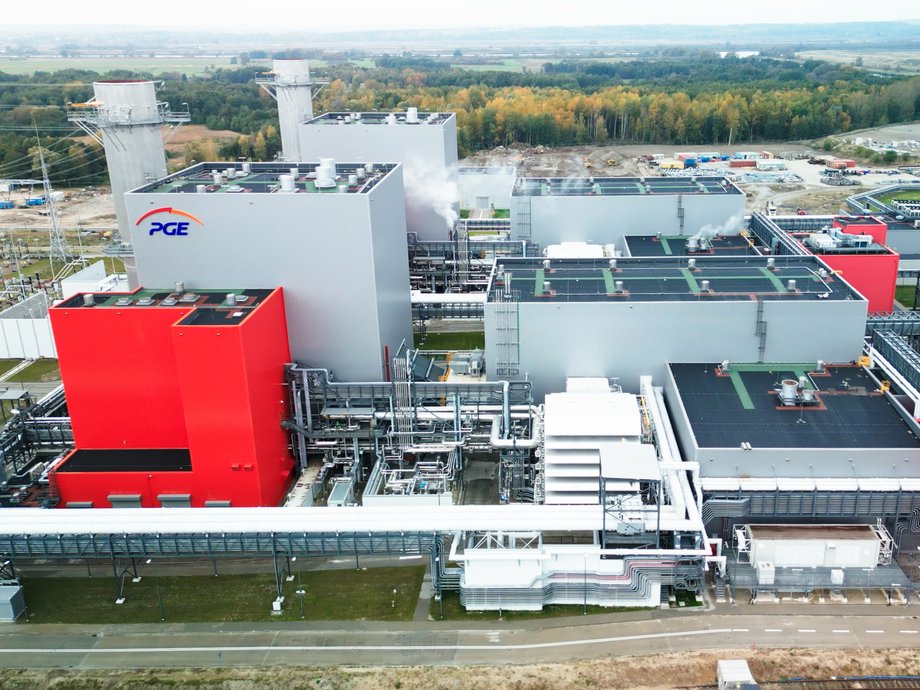
PGE Gryfino Dolna Odra power plant, in which the gas units were designed by GE Vernova
|
GE Vernova / GE Vernova
We feel like a Polish company
So in what areas is the Polish economy best prepared for the energy transformation, in terms of its own production or implementation potential, and in what areas does it need to rely on partners from abroad?
The biggest challenge will probably be maximizing local content in nuclear energy, although some Polish companies have experience in implementing such projects in other countries. In other areas, Polish contractors are already present today. Most of the key components in conventional and renewable energy are imported, but our companies are able to assemble them themselves.
Read also: The government will soon present a plan to re-Polonize the economy. The minister talks about lobbying attempts
So where is the greatest added value?
I have already mentioned gas energy, networks and nuclear energy. In addition, as designers, we also offer our clients hybrid solutions combining renewable energy installations – primarily photovoltaic farms – with energy storage. From the point of view of a company like ours, scale is also important. We are present in over 100 countries and employ over 75,000. people, which makes us implement larger rather than smaller projects. Hence our presence in the large-scale energy sector. This does not mean, however, that we would not be interested in, for example, accelerating the development of wind energy on land, where we could supply our own turbines. We are taking a fresh look at this sector and hope that appropriate legislative changes will accelerate its development. Repowering, i.e. modernization of aging windmills, will certainly be a strong incentive for this.
Finally, let's get back to gas. Ultimately, in its fossil version, it is to give way to the so-called decarbonized gases – biomethane or green hydrogen. Will your technologies, including those constructed in Gryfino, Kozienice or Ostrołęka, be adapted to this?
All our blocks meet the so-called hydrogen-ready standard, are powered by fuels containing hydrogen from 5%. up to 100 percent We have extensive experience in this – hydrogen co-fuels over 120 turbines in our global fleet. We are also working on future technologies that will allow us to go 100 percent. to hydrogen. However, much depends on hydrogen infrastructure. We recognize the limitations related to the logistics, availability and economics of green hydrogen – there is still a long way to go before its production is fully profitable.