“At the edge of subsistence.” How much a police officer earns monthly according to seniority. The new salary law, harshly criticized by the Europol Trade Union

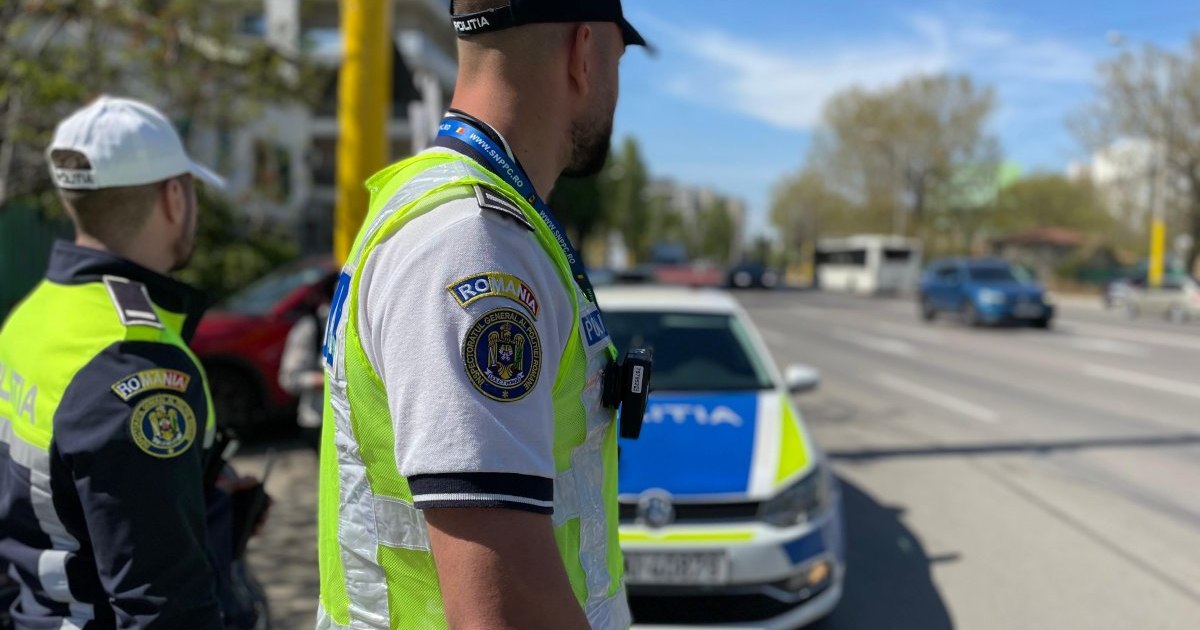
The new salary law radically changes the way the employees of the Ministry of Internal Affairs (MAI) are paid, and the Europol trade union draws attention to the very large differences between the salaries of the chiefs and those of the execution police.
How much will the police officers receive according to the new salary law/PHOTO: Romanian Police
“As in an absurd play, the differences between command and execution wages defy any norm of common sense or social equity.
While the “elected officials” of the system, installed in management positions, start from over 20,000 lei gross, over 80% of the police officers are struggling at the limit of subsistence, with basic salaries that barely exceed 6,000 lei”the union explains in an article.
The organization points out that a rookie police officer, “that is, the man who goes out on the street, beats the pavement at night, acts first in scandals, manages traffic accidents, acts of domestic violence”, he will receive, according to the new law, 5,967 lei gross, i.e. 3,500-3,800 lei net.
Also, a chief police officer will receive a maximum gross salary of 6,974 lei, i.e. approximately 4,500 lei net.
“These are the people who represent over 80% of the Romanian police force. The ones who actually provide the police service. The ones you wait for when you call 112.
Those who come, or stop coming, because they are too few and too poorly paid to stay in the system. At the other end of the table, where the coefficients rise nicely and the reference values multiply with pleasure, lives another species, the generals, the quaestors, the chiefs, in general, this initiated, privileged blanket of the system”. adds the Europol union.
Europol union: “The new wage law only deepens the gap between the bosses and the many”
The union shows that a general police chief has a gross position salary of 19,078 to 20,311 lei, and a first deputy 20,815 lei gross. However, the union states that it does not contest “the right to decent pay for senior officers or police officers in command positions.”
“It's about proportions. About a system deliberately built to reward the top of the pyramid and keep the massive, essential, operational base in functional poverty.”
The Europol union claims that the new salary law does not solve the problems in the MAI, but maintains the large differences between the chiefs and the execution police.
“The government juggles coefficients and tables, covering itself with statistics and empty promises, but forgets to put first those very people who keep the system alive. Thus, the new salary law only deepens the gulf between the bosses and the many, perpetuates the humiliation of those who, although they wear the uniform with dignity, are treated as simple executors without the right to a decent life.”
The Europol trade union warns that it is being considered to eliminate physical training as a service obligation. The reaction of the Romanian Police
More than half of the former employees of the MAI have pensions of over 5,000 lei
Six out of ten retirees (61%) of the MAI receive pensions of over 5,000 lei. Last year's data shows they leave the system at an average age of 50 years and three months.
Against this background, MAI employees reacted harshly to the Government's plans to increase the retirement threshold in the system, at the same time denouncing the ban on working for the state after retirement.
“I believe that for all systems in which retirement is allowed at an age that means 50-51-52 years, when a man is in full physical and intellectual faculties, where the pension is as much as the last salary, things must be corrected (…)”declared, then, Ilie Bolojan.
Police unions protested against the circulated changes, pointing out that the retirement age has already been increased by the 2023 law, gradually rising to 65 until 2035.
The Federation of National Unions of Policemen and Contract Personnel in Romania criticizes the project by which military pensioners who work for the state could lose up to 85% of their pension. Unionists argue that the measure is unfair and unconstitutional, as it would violate the right to work and penalize people who have a right already earned.
“Adevărul” asked the MAI for information about the average retirement age of employees in the system, but also about the service pension received.
Thus, in 2024, the average age at which MAI employees retired was 50 years, and in 2025 it increased slightly to 50 years and 3 months, indicating a slow evolution in the direction of extending professional activity.
Regarding the level of pensions, the distribution of the approximately 90,000 beneficiaries shows that most people fall into medium income ranges. Thus, in October 2025, approximately 35,423 former police officers received pensions between 5,001 and 7,000 lei, representing the largest category.