How long does it take for the luxury ship affected by the hantavirus outbreak to arrive in Spain. The plan for the passengers after 3 died and 3 others were evacuated

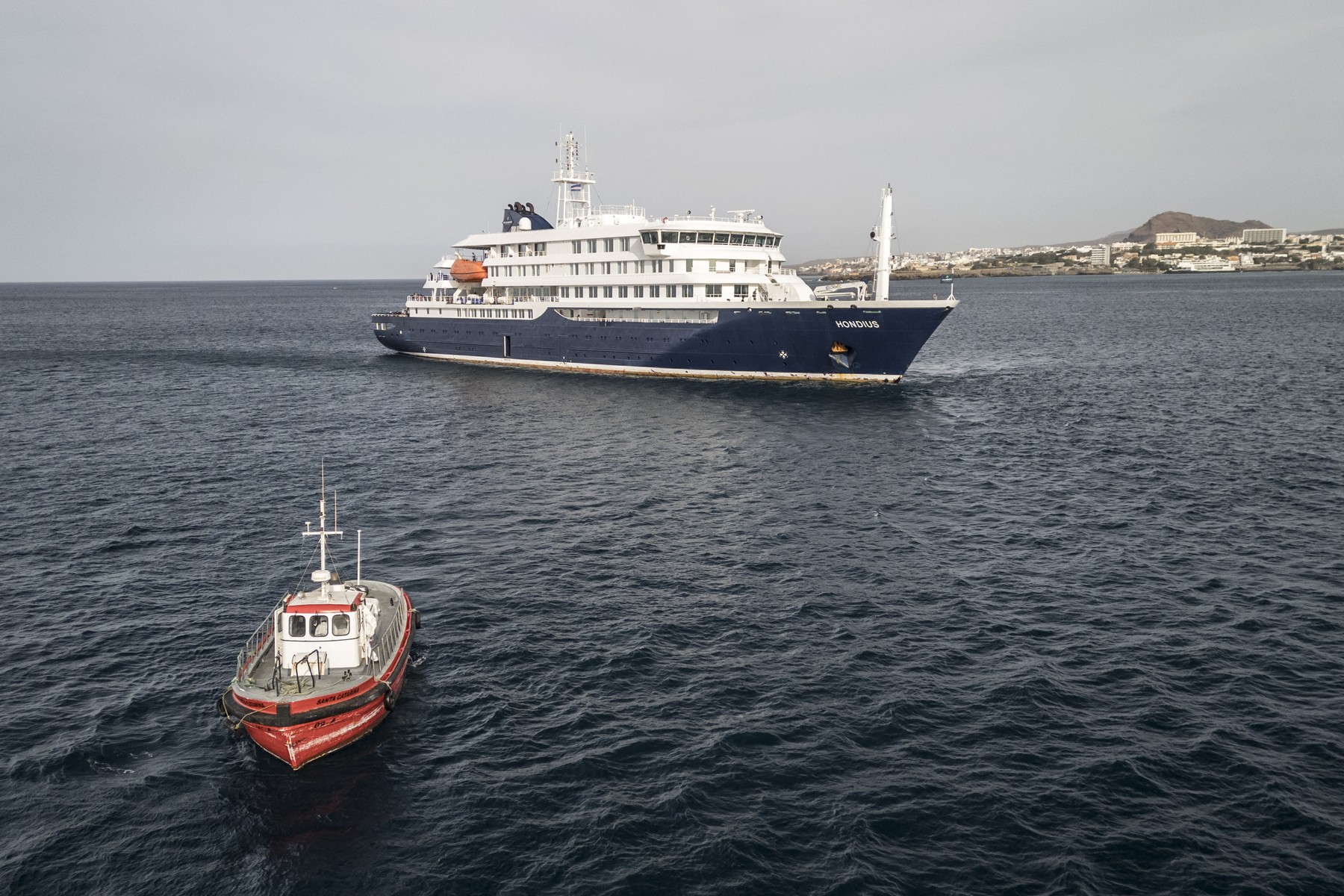
The luxury cruise ship affected by the deadly outbreak of hantavirus and stranded since Sunday off the coast of Cape Verde is to leave soon, on Wednesday, for Spain, after three people, two of whom are seriously ill, were evacuated, reports Reuters.
The MV Hondius, with nearly 150 people on board, is expected to dock in Tenerife, Spain's Canary Islands, within three days, Spain's health minister said, adding that those still on board are showing no symptoms of the disease.
Once they arrive in Tenerife, if they are still healthy, all non-Spanish citizens will be repatriated to their countries, Minister Monica Garcia said in a press conference held in Madrid.
Quarantine
The 14 Spanish passengers will be quarantined in a military hospital in Madrid, Garcia said. The length of the quarantine will depend on when they may have come into contact with the virus, she said, adding that the virus has an incubation period of 45 days.
Three people – a Dutch couple and a German national – have so far died as a result of the outbreak.
Eight people – including a Swiss citizen who returned home and is being treated in Zurich – are suspected of having been infected with the virus, three of whom have been confirmed by laboratory tests, the World Health Organization (WHO) said.
South Africa has confirmed that it has identified among the victims the Andes strain of the virus which can – in rare cases – be transmitted from person to person through very close contact.
“This is the only strain (of hantavirus) known to cause human-to-human transmission, but such transmission is very rare and … only occurs through very close contact,” South Africa's Ministry of Health said.
Three people, evacuated
WHO Director-General Tedros Adhanom Ghebreyesus announced in a post on the X social network that the three people evacuated from the cruise ship on Wednesday are heading to the Netherlands.
The Dutch Foreign Ministry stated that among these people there is a Dutchman, a German and a Briton and that they will be transported to specialized hospitals in Europe.
Two of the evacuees were showing acute symptoms, the operator of the MV Hondius, Oceanwide Expeditions, said. The third person was closely related to the German passenger who died on the ship on May 2. The Dutch ministry also said that person was possibly infected with the virus.
The ship left southern Argentina at the end of March and traveled to some of the most remote places on Earth.
Cape Verde was supposed to be the ship's final destination, but the archipelago nation off West Africa did not allow passengers to disembark because of the outbreak.
“Very, very different from COVID”
After the outbreak, the WHO said the risk to the general population from this virus, usually transmitted by rodents, was low and stressed on Wednesday that the situation remained unchanged.
“So when we talk about close contact (in the case of human-to-human transmission), we mean very close physical contact, whether it's sharing a room with bunk beds or a cubicle, providing medical care, for example, (which is) very, very different from COVID and very different from influenza,” Maria Van Kerkhove, director of the department of epidemic and pandemic management at the WHO, told Reuters.
Van Kerkhove said the WHO was working with countries to trace passengers who left the ship at St Helena in the South Atlantic before it reached Cape Verde.
South Africa has identified 65 people who came into contact with people with confirmed or suspected hantavirus cases, and other countries have identified 12, said the WHO representative in South Africa, Shenaaz El-Halabi.
Testimony of a passenger on board
The ship's captain is keeping passengers informed, and those on board have been advised to limit close contact with other passengers and regularly use hand sanitizer, one of the passengers, Kasem Hato, told the international news agency.
“People are taking the situation seriously but not panicking, trying to keep physical distance and wearing masks to be safe,” he said.
“Our days have been almost normal, waiting for the authorities to find a solution, but morale on the ship is high and we are occupying our time with reading, watching movies, enjoying hot drinks and other such activities,” Hato added.