2026-05-05 13:45
publication
2026-05-05 13:45
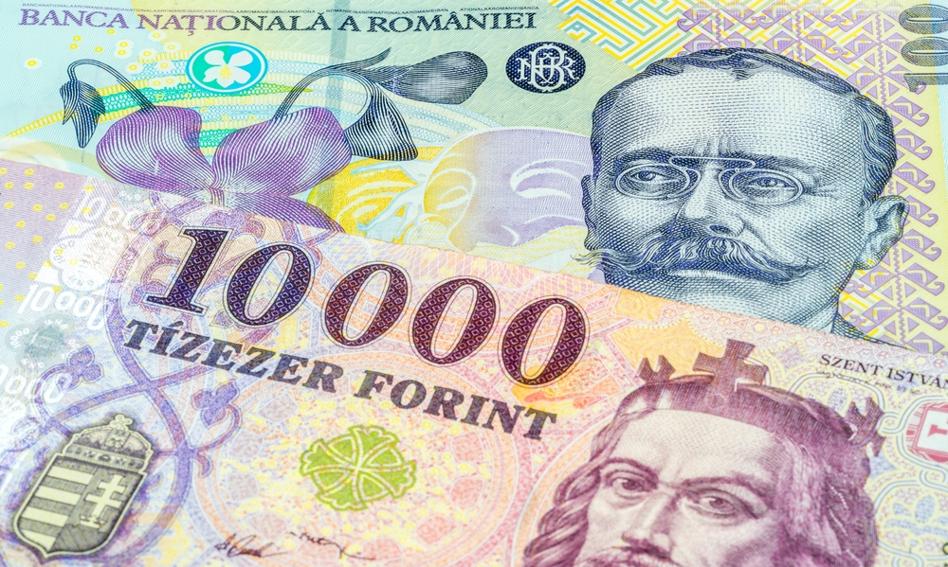
Politics is dealing the cards again on the Central and Eastern European currency market. While the Hungarian forint (HUF) awaits credible fiscal plans of the new government, the Romanian leu (RON) is buckling under the weight of the coalition's collapse and the no-confidence vote, according to the latest report published by UniCredit.
From the report published today by The Investment Institute at UniCredit bank, we learn that in the shadow of global turmoil related to energy prices, local political factors currently remain the main driving force on the currency market in our region.
Hungary: Markets are looking at the new government and EU billions
In Hungary, investors' attention is focused on the new government, which is scheduled to be sworn in on May 9
The report's authors assess the situation of the Hungarian currency with moderate optimism: “Although global headwinds have halted the post-election HUF rally, we still see room for the EUR-HUF rate to catch up with its regional peers if the new government presents credible fiscal convergence plans.”
Analysts recall that the forint clearly performed worse than the region's currencies in 2020-2024, but this trend began to reverse at the beginning of 2025 thanks to the new management of the Central Bank (NBH), which placed greater emphasis on currency stability.

However, to sustain these gains in the medium term, credible plans will be needed to support the government's ambitious intentions to adopt the euro
Romania: The specter of a political crisis weighs on the currency
The mood is completely different in Bucharest. Political risk in Romania has increased dramatically as a result of the collapse of the ruling coalition and the no-confidence vote scheduled for today, which immediately put pressure on the leu's quotations.
In Romania, the central bank loosened its grip on the RON amid resurgent political risks ahead of today's no-confidence vote,” the report said.
“Sthe situation escalated when the largest coalition party (PSD) withdrew support for the prime minister and submitted a motion of no confidence with the support of the far-right AUR party
If today's no-confidence motion passes, political risks will remain elevated, with the specter of downgrades in credit ratings and a negative impact on economic growth.
According to UniCredit analysts, the most likely scenario is the formation of a new coalition under the leadership of a new prime minister
Investments without borders – our new series
We invite you to read articles on investing prepared in the educational series Investments without borders, whose partner he is UniCredit. You will find them under this link, along with our other materials about investing in global markets.
.jpg)