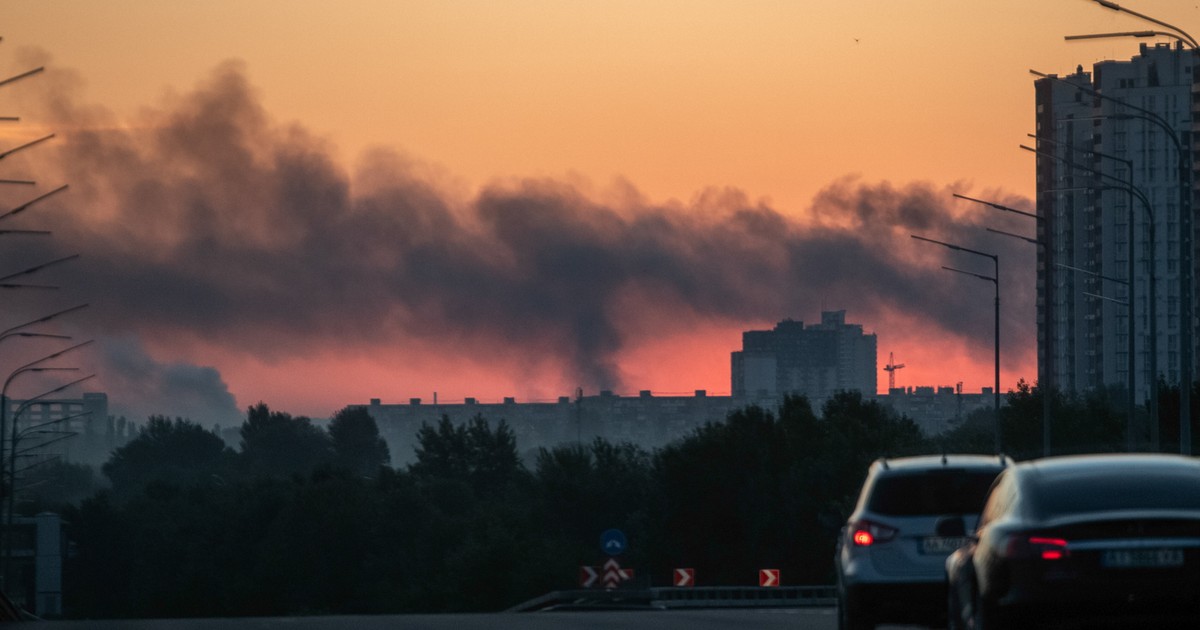
A surprising change of roles. Ukraine can give Europe what it urgently needs to defend itself

Many Europeans see Ukraine as a burden – after all, supporting a country besieged by Russia costs billions. That is why right-wing populist and left-wing parties close to Moscow regularly demand an end to financing Kiev.
This view, however, ignores a key shift in the way security experts now view Ukraine. Many of them are convinced that Ukraine's experience in modern warfare, waged mainly using drones, are invaluable to the Westand in some types of weapons, the country has even achieved technological superiority.
— We, Europeans, must understand that we need Ukraine more than Ukraine needs us, said Finnish President Alexander Stubb recently.
Since the Munich Security Conference in March 2025, Ukrainian President Volodymyr Zelensky has repeatedly emphasized that his country can play an important role in defending Europe — and not only against a Russian attack. And indeed, The transformation Ukraine has undergone since the beginning of the great Russian invasion in February 2022 is stunning.
Initially, it was completely dependent on weapons supplies from abroad – from grenade launchers to anti-aircraft missiles. Today, Ukraine has an extremely dynamic network of arms companies. Its defense industry has grown from around 300 companies in 2022 to over 1,000 today, 80% of which is in private hands.
Over 50 percent the weapons and ammunition that Ukraine currently needs are produced on its territory. The country has even become an exporter of security technology. For example, in the current war in the Middle East, Kiev has helped protect Gulf states from drone attacks from Iran and has established long-term arms cooperation with Arab states.
The situation regarding knowledge in the field of military tactics has changed similarly. In the first years of the war, Ukrainian soldiers were still trained on a large scale by NATO countries. Today, Ukrainians believe that they know much better what is needed on the front – the transfer of knowledge is starting to reverse.
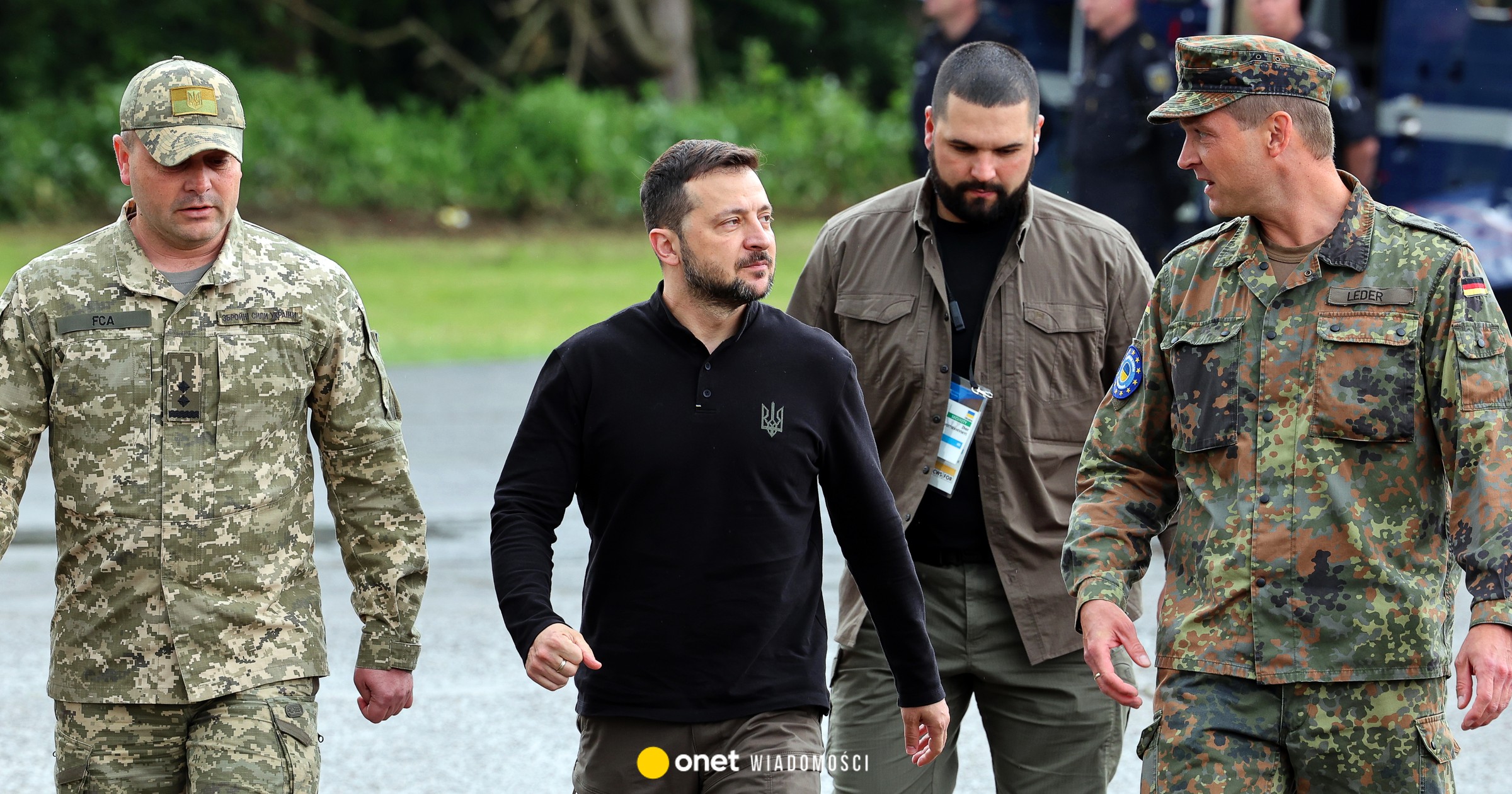
German army inspector Christian Freuding said in an interview for “Die Welt” that in the future the Bundeswehr will increasingly involve combat-experienced Ukrainian military personnel in training German soldiers. “Training today must, of course, take into account the threat posed by drones, and the use of drones by our own armed forces must become a matter of course,” Freuding said. “Right now, we can't learn this better from anyone else than from Ukrainians, because they do it every day.”
Pioneer in drone warfare
Already during NATO exercises in May last year, the Ukrainians proved how outdated the military tactics of the alliance countries are and how poorly prepared they are for a war using drones. “The results were terrible,” said an Estonian officer. A unit of only 100 Ukrainians managed to destroy two NATO battalions during the day. This is also disturbing because Russia has also gained extensive experience in modern drone warfare.
The war with Iran has shown how disastrous the consequences of ignoring Ukraine's experience can be. The United States was simply not prepared to effectively — and, above all, economically — fend off Iranian drone attacks on bases of the Americans and their allies in the Persian Gulf. In a modern war, it is not profitable to fire Patriot missiles, which cost several million dollars and are produced in small quantities, at kamikaze drones, which cost only about PLN 30,000. hole. (PLN 109,000) per piece.
Ukrainians have developed their own interceptor drones that do this job much cheaper. According to Ukrainian data, such drones destroyed at least 33,000 in March alone. incoming Russian drones. This shows that mass, i.e. the ability to quickly increase the production of inexpensive weapons in a crisis, is a decisive factor in modern warfare.
In no other field is Ukraine's innovative power more evident than in drones. At the beginning of the war, they were mainly used for battlefield reconnaissance. Currently – according to a study conducted by the Center for European Policy Analysis – from 80 to 85 percent Ukrainian attacks on Russian targets are carried out using drones — both directly at the front and deep in the Russian rear. They are responsible both for the high losses that Russia suffers on the front and for the targeted strikes on Russian oil installations, which have intensified in recent months.
Currently, the so-called drones with first-person view (FPV). Ukraine has radically accelerated their production – in 2024 it produced 2 million of them, last year 4 million. This year, this number is expected to double and reach 8 million. Ukraine now produces so many of these relatively cheap but effective weapons that it can even export them. — We currently have a production surplus of 50 percent in some types of weapons. — President Zelensky said a few days ago. — The army will take what it needs and the surplus will be exported.
In the field of drone production, Ukraine is increasingly entering into joint venture agreements with European countries such as Germany, Great Britain, Denmark and the Netherlands. Kiev has also concluded cooperation agreements with Norway and Poland and plans to establish cooperation with Spain, France and Romania.
By the end of the year, the Ukrainians want to build 10 production plants in Europe equipped with materials and Ukrainian expertise. This is beneficial to both sides – Ukrainians can thus produce supplies in countries where plants are not exposed to Russian attack. In turn, European partners can benefit from the technology that Ukraine has developed in recent years and from the rapid innovation cycles that the war has forced on the country.
Advances in land robotics
According to the Ukrainian Ministry of Defense, in March alone, the army carried out 9,000 front-line missions using unmanned land vehicles equipped with explosives, machine guns or rocket launchers. In November there were only 2,900 such operations, and in the previous year land robots were used only occasionally or for testing purposes. “It's better to send metal into battle than people,” wrote The New York Times, quoting a Third Army Corps officer responsible for robot attacks. “Human life is precious and robots don't bleed.”
Ukrainians have also developed Delta, a digital command system that connects all relevant entities on and off the battlefield. It combines satellite and drone reconnaissance, also using artificial intelligence, with combat units and enables particularly quick targeting and destruction of targets. “Currently, the gold standard is the ability to detect a target, directly transmit information and destroy it. Effective software shortens the time between target detection and attack,” wrote David Kirichenko for the Center for European Policy Analysis.
At a time when Europe must rearm and restructure its arms industry, cooperation with Kiev is simply logical.
“Ukraine offers three important advantages: speed – [jej] design and production cycles are measured in weeks, adaptability – thanks to an innovation-driven engineering culture born out of necessity; and cost-effectiveness – through a well-trained workforce and existing infrastructure that can deliver systems at competitive prices,” wrote geoeconomics expert Heidi Crebo-Rediker in a study by the Council on Foreign Relations. “Integrating these capabilities into the European defense ecosystem will increase not only mass but also agility, which is essential in times of rapid technological change and hybrid warfare.”
Above all, Ukraine has huge and powerful armed forces. The German government constantly emphasizes that the Bundeswehr is to become the strongest army in Europe in the future. In the foreseeable future, Ukraine, with approximately 900 thousand active soldiers and combat experience, however, it will probably remain the most powerful non-Russian armed force on the continent.
As doubts grow in Europe as to whether we can really count on American protection in the event of a serious threat, there are voices demanding that Ukraine be included in European defense structures after the end of the war. Especially since this country – also thanks to financial support from Germany – is currently developing the types of medium-range weapons that Europe lacks – because these capabilities are provided primarily by the United States.