Peter Magyar's Tisza conveys that he is not participating in the founding of any new party beyond Hungary's borders

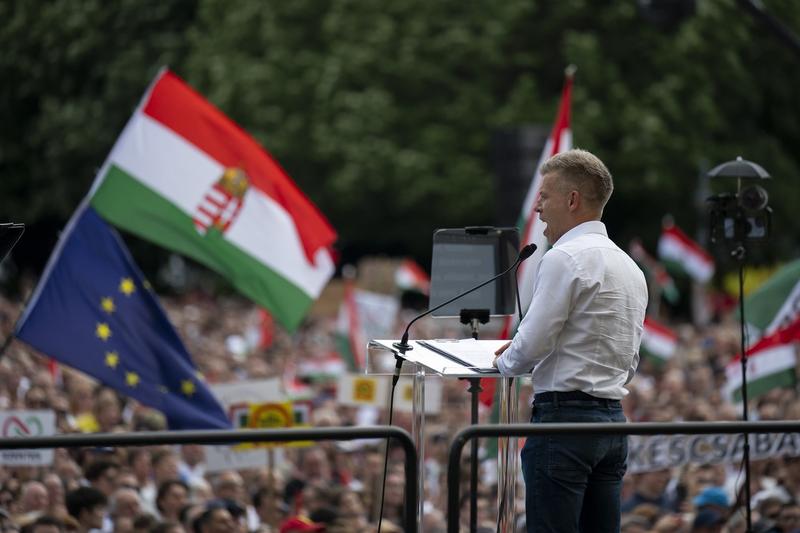
“The Tisza party works for the unity and reconciliation of the Hungarian nation, does not assume any role in the founding of any new party, beyond the borders of Hungary, and does not support initiatives that would lead to the division of the community,” Zoltán Tarr, the vice president of Tisza, the formation of Péter Magyar, who will soon take over the government in Hungary, said in a post.
According to the Hungarian press agency MTI, picked up by Rador Radio Romania, the politician, who, as the future head of the Ministry for Social Relations and Culture, will also be responsible for maintaining relations with Hungarians beyond Hungary's borders and in the diaspora, also emphasized: “We respect the fundamental principle, stated before the elections, according to which we believe that the formation of the internal political life of the Hungarian communities beyond the country's borders is the responsibility of those who live there and therefore we will not interfere'.
“In this spirit, despite all information or insinuations to the contrary, we will not participate in the founding of any new party from beyond Hungary's borders and we will not support initiatives that would be suitable for dividing the community,” Zoltán Tarr said in his Facebook post.
The reaction comes after the announcement of István Kátai, founder of a Tisza branch in Transylvania, regarding the initiative to establish a new Hungarian party in Romania, called the Party of Hungarian Unity in Romania (RMPE).
In his post, Tarr recalled that incoming Prime Minister Péter Magyar made it clear in his recent meetings with representatives of Hungarian parties across Hungary's borders that he would base his relations with Hungarians across the country's borders and with the organizations representing them “on a clear and transparent basis.”
Zoltán Tarr emphasized that protecting the interests and cultural identity of ethnic Hungarians beyond Hungary's borders is not a secondary task for the future government, that already acquired rights will be preserved under any circumstances, but at the same time, fundamental changes are expected regarding the transparency and efficiency of the use of resources received from Hungary.
He thus reiterated Magyar's previous announcement that, in the interest of responsible management and clarity, the future Tisza government will verify the use of subsidies allocated to these Hungarian communities over the past decade.