For Taiwan's 23 million residents, the most important diplomatic meeting in 2026 could be one to which they are not invited, writes Reuters in an analysis published on Wednesday.
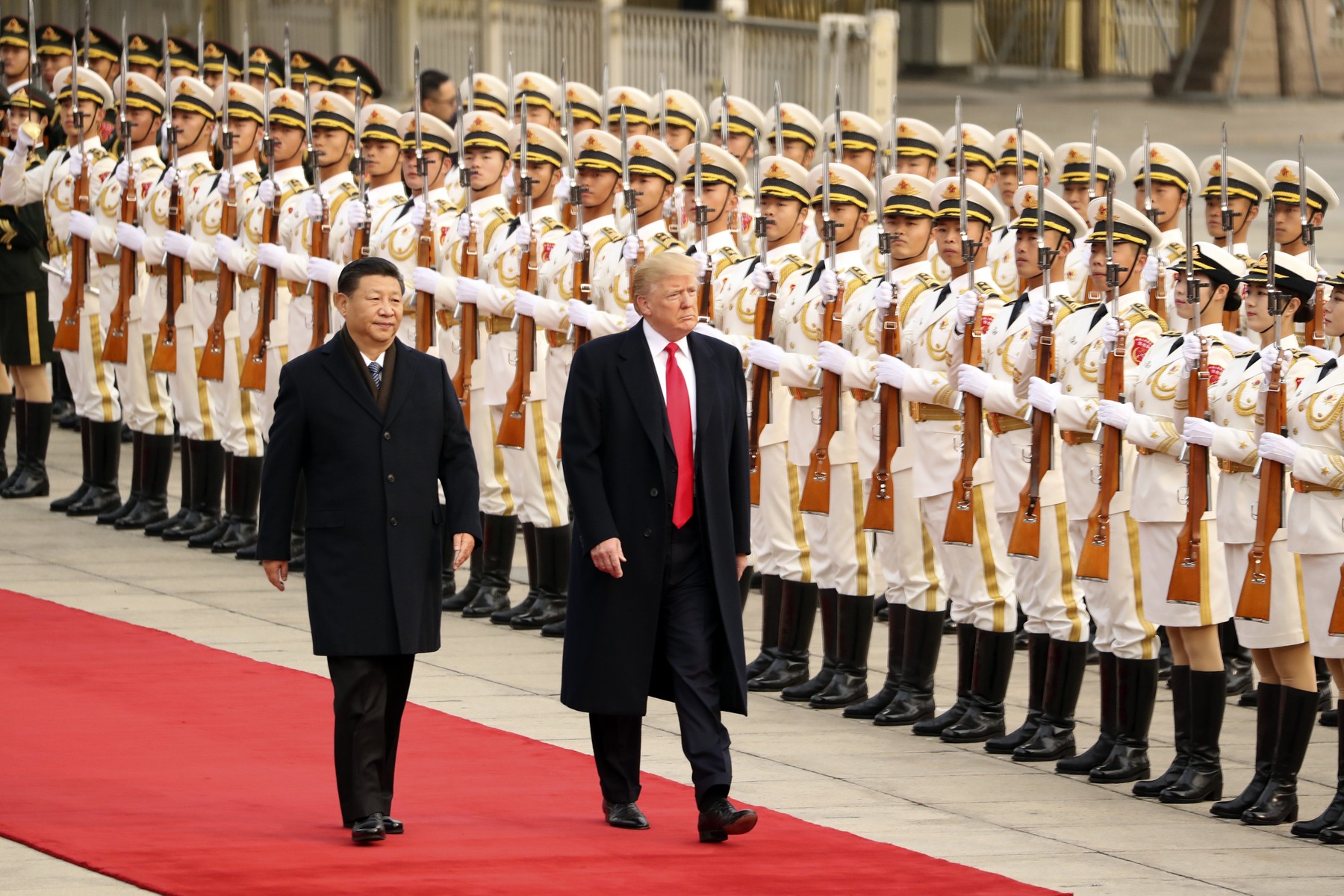
Chinese President Xi Jinping has made it clear that Taiwan will be high on his agenda when he welcomes his US counterpart Donald Trump to Beijing next month.
Reuters points out that the Chinese leader's agenda stands in stark contrast to his meeting with Trump last year in South Korea, where he deliberately avoided the thorny issue for relations between Washington and Beijing.
The government in Taipei will be watching for any sign that Trump, who has unsettled partners with his transactional approach to alliances, might soften or reformulate long-standing US Taiwan policy in exchange for China buying US aircraft or agricultural products and easing economic pressures.
“On Taiwan, the logic is simple: if the US does not want to fight a major war with China over Taiwan, it should not support Taiwan's independence,” Wu Xinbo, director of Fudan University's Institute of International Studies, which sits on the Chinese Foreign Ministry's policy advisory board, told Reuters.
Will Xi succeed in convincing Donald Trump?
“Trump has no interest in going to war with China. To avoid a major conflict involving the United States, he should make it clear that he will not support independence and will not take actions that encourage a separatist political agenda,” added Wu Xinbo.
The US follows a “one China” policy, whereby it officially takes no position on Taiwan's sovereignty and only recognizes, without accepting, China's position, which claims the democratically governed island as its own.
The United States says it “does not support” Taiwan's independence, but is helping the island nation maintain its self-defense capability.
Experts say Taiwan, a world power in semiconductor manufacturing, is at the heart of the military balance in the western Pacific, so even a nuanced shift in US wording could affect Beijing's assessment of US determination to continue support for the island.
Such a shift would unsettle Taipei and raise new questions about Washington's security commitments in Asia.
Trump administration officials have repeatedly said there has been no change in policy on Taiwan and have consistently condemned China's pressure on the island.
Privately, they point out that Trump, within a year and a few months into his new term, has approved significantly more arms sales to Taiwan than his predecessor, Democrat Joe Biden, did during his entire term.
China has called for changes to the wording used by the US regarding Taiwan
At a bilateral summit with Biden in 2024, Xi asked him to change the US wording on Taiwan to “we oppose Taiwan's independence” instead of the current version. The US refused to make this change.
People involved in preparations for Trump's visit say privately that Beijing has consistently sent similar signals at the working group level ahead of his visit to China, but declined to provide details, citing the confidential nature of the discussions.
Officials in Taiwan, whose government rejects Beijing's claim to sovereignty, are on high alert.
“We will watch whether the United States makes changes to its position on Taiwan Strait issues as a result of that meeting,” said Shen Yu-chung, deputy minister at the Mainland Affairs Council, the body responsible for Taipei's China policy.
“We will use the remaining time to intensify policy communication with the United States,” he stressed.
Hsiao Kuang-wei, a spokesman for Taiwan's foreign ministry, said in turn this week that since Trump began his second term, his administration has “constantly reaffirmed its support for Taiwan.”
China has never given up on using force to bring Taiwan under its control. Most recently, it held military exercises around the island in late December after the US announced an $11 billion arms sales package to Taiwan – the largest in history.
China used both incentives and pressure in the run-up to the meeting between Xi and Trump. It provided “benefits” for Taiwan in trade and tourism. Then last week, Taipei accused China of pressuring three African countries to block overflight rights for President Lai Ching-te's visit to Eswatini, leading to its cancellation.
The US has strongly criticized China's actions.
An “unwavering” US commitment to Taiwan
Lai states that Taiwan is already an independent country called the Republic of China, its official name. Beijing considers President Lai both a “separatist” and an illegitimate leader whom it accuses of pushing the two sides of the Taiwan Strait to the brink of war.
Raymond Greene, the top US diplomat in Taiwan, gave public assurances ahead of the meeting that US commitments, including those under the Taiwan Relations Act, which mandates arms sales, remain “unwavering”.
Robert O'Brien, a former adviser to Trump, said he would not become “the first American president to lose Taiwan.” “That would not be a goal that Donald Trump would want. It is not the legacy that he wants,” he stressed.
The stakes for Washington are high given the island nation's strategic position where the US discreetly uses advanced radar stations and listening posts located in Taiwan's mountains aimed at China, according to security sources.
“Does the United States really want to lose one of the best locations for gathering intelligence on China?” said a Western security source, speaking on condition of anonymity because of the sensitivity of the subject.