What's happening in Mali? This is how Russia loses what little influence it has. “The country hangs in the balance”

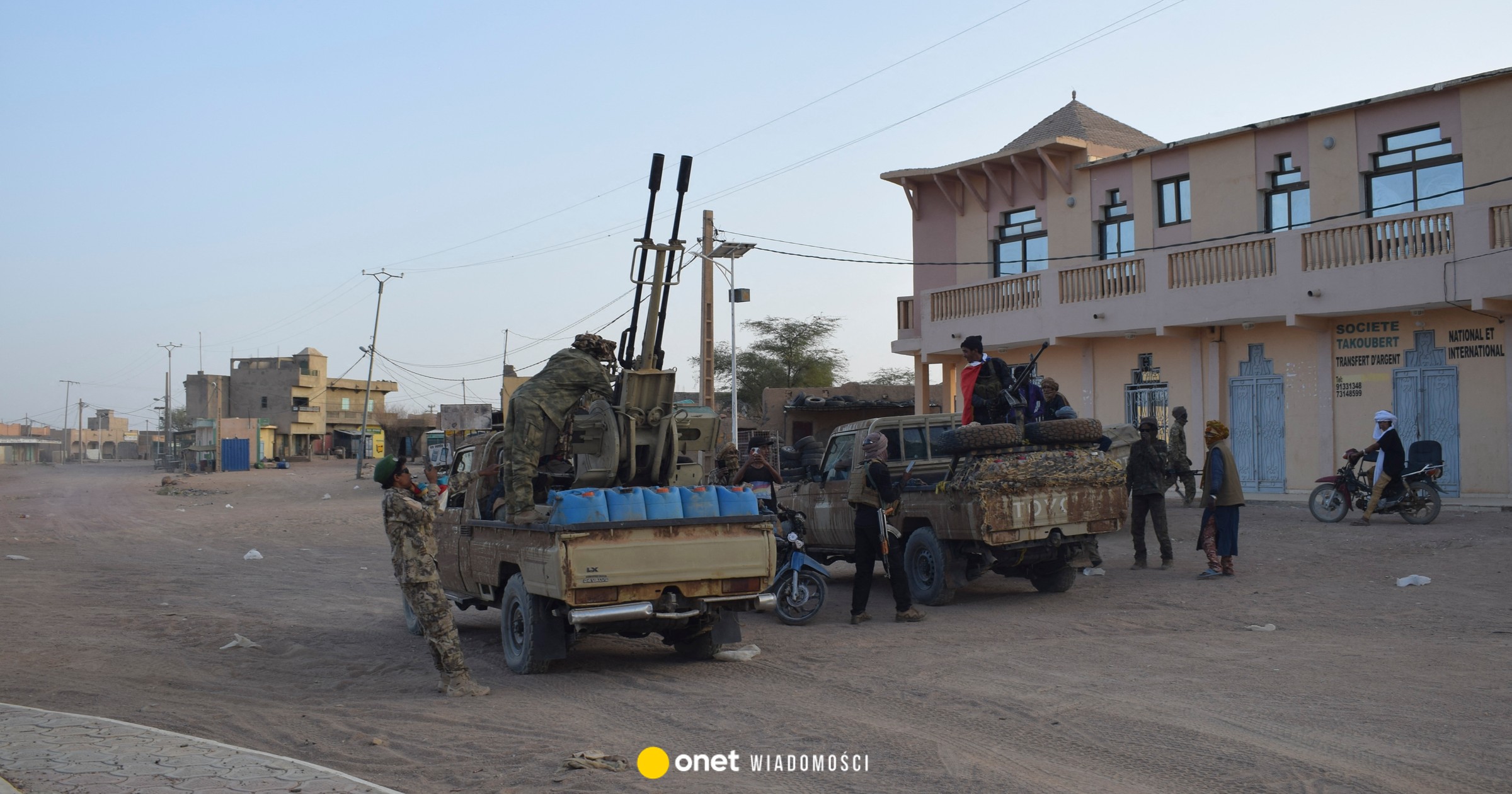
On April 25, separatists and Islamists attacked the Mali army. The rebels report that they have captured the important city of Kidal. The attack killed Mali's defense minister.
However, the key to understanding the current crisis lies in the events of several years ago.
In June 2025, information appeared that the Wagner Group had left the country and was replaced by it African Corps — a branch of the Russian Ministry of Defense. Ilya Barabanov, a military observer for the BBC's Russian section, notes that initially former mercenaries signed contracts with the Ministry of Defense. Later, soldiers from the Russian armed forces supplemented the formation.
In the Central African Republic, the structure of the Wagner Group was retained, and in Syria, Libya, Mali, Chad and Burkina Faso, private military companies were completely replaced by African Corps fighters. Moreover, as the expert notes, the Deputy Minister of Defense of Russia, Yunus-Bek Yevkurov, organized the event at that time a great journey through African countriescreating a military bloc consisting of Mali, Niger and Burkina Faso.
In Mali, the African Corps supported the military junta led by General Assimi Goita, which came to power in a military coup in 2021.
Barabanov emphasizes that the Russians actively participated in the fight against Tuaregs and Islamists in the north of the country. — Now we have learned that the Russians and government troops have abandoned the town of Kidal, leaving it to the attacking Tuaregs. It can be said that after this event, the Mali authorities lost control over the territory in the north-east of the country. The death of the minister of defense and the chief of the junta's general staff has already been confirmed, explains Novaya Gazeta's source.
It also recalls that after the fall of the Bashar al-Assad regime in Syria in 2024, Russian military equipment was transported by sea to Tobruk, Libya, under the control of Marshal Khalifa Haftar, and from there it independently headed towards Mali.
At the same time, Dossier Center expert Denis Korotkov emphasizes that there is no accurate data on the number of African Corps in Mali. — I can assume that there may be 1.5 thousand people throughout the country. up to 2.5 thousand fighters of this formation – estimates.
One of the biggest attacks
As reported by The Washington Post, on April 25, separatists and jihadists attacked the capital of Mali, Bamako, military bases and the Bamako-Senou airport. Moreover, the attackers stated that they had succeeded retake the city of Kidal. The rebels confirmed this the next day, April 26. The Russian African Corps left the city.
The attack involved the jihadist Support Group for Islam and Muslims (JNIM) and rebels from the Azawad Liberation Front (FLA).
The main demand of the jihadists is the introduction of sharia law in the country, and the separatists – the independence of northern Mali (Azawad).
Currently, in Bamako, as the BBC writes, citing eyewitnesses, all flights have been canceled at the airport, there are roadblocks and shots can be heard in some parts of the city.
According to the Figaro newspaper, he stayed in his residence near the capital of Mali on Sunday killed Defense Minister Sadio Kamaraas well as members of his family.
It's probably him he was one of the main architects of the regime and built relationships with the Russian military. “Le Monde” calls him “the second person in the junta and a key figure in the alliance with Russia.”
“Mali now hangs in the balance”
Jeune Afrique reports that a car with an explosive device was blown up near the residence of the Minister of Defense. Later, the spokesman of the government of the republic, Issa Ousmane Coulibaly, confirmed the death of Mali's Defense Minister Sadio Kamara.
The authorities also reported that as a result of the explosion, part of the residence and the nearby mosque collapsed. The faithful inside were injured.
“Mali now hangs in the balance” – this is how “Le Monde” describes the situation. Several sources told the newspaper that shooting continued on Sunday in Kati, a military town on the outskirts of Bamako where ruling generals live. JNIM attackers are still “hiding in unfinished buildings and in the hills surrounding the city,” said a Malian soldier at the scene.
In Senu, where Bamako International Airport is located and which was also targeted by the JNIM-FLA coalition on Saturday, “everyone is staying at home, no one dares to go out on the street because terrorists are still roaming the area, although there have been no direct clashes today”.
As Barabanov points out, the goals of the Tuaregs attacking government facilities are not entirely clear yet. The expert notes that they had previously declared their willingness the separation of the northern part of Mali and the creation of the independent state of Azawat there. At the same time, Islamist groups operate in the south of the country.
Blows for the Russians
— Previously, rebels used economic pressure methods, disrupting logistics in the country. Even the capital Bamako was not delivered fuel and some important goods. And without fuel, military equipment is useless, explains Novaya Gazeta's interlocutor.
According to him, “it is also clear that currently all the resources of the Kremlin's army are devoted to the war in Ukraine“At the same time, even if the Russian authorities wanted to help the junta in Mali and transport reserves from Russia, it would not be easy due to the extremely difficult logistics.
Barabanov claims that because Russian military bases in Syria are practically non-functional, transporting military cargo and troops to Africa has become extremely complicated.
Korotkov also notes that a rebel attack was announced on at least five military facilities where Russians could be located, as well as the capture of Kidal. At the same time, in other areas, they appear to have “encountered resistance from the African Corps and government troops.”
— On the third day of fighting, the rebels failed to storm the capital and large military facilities. The city of Kidal has been a center of Tuareg resistance for a very long time. Since the 1990s, the city has changed hands several times. Although this one numbering 15 thousand inhabitants, although the town does not have any significant logistical importance, it has significant symbolic significance as center of Tuareg resistance – emphasizes the expert.
Bamako, April 26, 2026AFP/AFP
Russia's influence in Africa
After the series military coups in the Sahel countries — the region south of the Sahara, which includes, among others, Mali, Burkina Faso, Niger, Chad and Mauritania – Russia has rapidly expanded its influence in Africa, offering military aid to local juntas without making demands on democracy and human rights.
Initially, Moscow's main tool was the private company Wagner Group, which operated in the so-called gray zone: protected regimes, trained military personnel, participated in combat operations, and at the same time gained access to the mining of gold, diamonds and other resources.
After Yevgeny Prigozhin's death, the Kremlin actually legalized this presence and transferred operations to the African structure of the Ministry of Defense – the African Corps.
In 2024, there were approximately 1,000 people in Mali. Russian soldiers, and another 2 thousand — in the Central African Republic, as well as in Burkina Faso, Niger and Sudan. In parallel, Moscow strengthened its political influence through Russia-Africa summits, anti-Western rhetoric about neo-colonialism, and disinformation campaigns.
For the regimes in Mali, Niger and Burkina Faso, Russian support became a convenient replacement for the French and American military presence, which was gradually driven out of the region after the coups. Simultaneously the security situation in the Sahel has not improved: the number of jihadist attacks was increasing, and human rights defenders and refugees accused Russian mercenaries and Malian soldiers of mass murders and torture of civilians, as well as the use of the so-called scorched earth tactics.