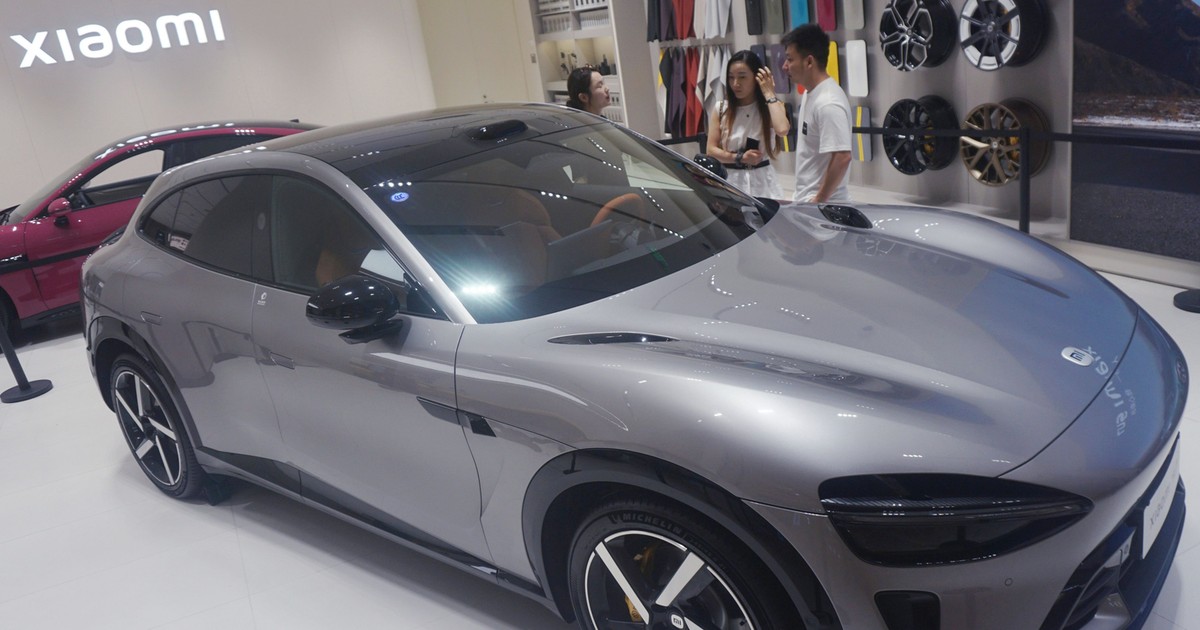
Xiaomi has shocked the automotive industry with the pace of its development. After announcing its plans in 2021, the company needed just three years to launch the SU7 sports sedan.
Read also: An investment portfolio without sleepless nights. These are the safe havens in 2026.
The success was immediate – the first 50,000. orders arrived within just 30 minutes of opening the lists.
Another model, costing 35 thousand hole. The YU7 SUV (Tesla Model Y rival) broke this record: 200,000. booking in three minutes. During Friday's Beijing motor show, Lei Jun presented the latest version – YU7 GT, which, according to him, “meets the standards of top German cars”. This is the first model co-created with European engineers.
Xiaomi's advantages: a smartphone on wheels and robotic precision
The Xiaomi factory in Beijing produces a car every 76 seconds. The degree of automation is 91%, and hundreds of robots supported by autonomous transport carts take care of every detail of the assembly.
Xiaomi's advantage is the “intelligence” of the vehicle. These cars connect seamlessly with the brand's smartphones and home appliances, creating a consistent digital environment that traditional European manufacturers still lack.
Xiaomi is here the third most popular smartphone brand in Europe, which gives it a ready base of loyal customers.
Read also: Wojciech Grzonka, president of CSG Polska, on cooperation with the Polish defense industry
European challenges: can prestige be bought?
Despite the enthusiasm, analysts are cooling down. Entering the European market means a clash with the power of BMW, Mercedes and Porsche. Matthias Schmidt of Schmidt Automotive Research notes that “the road to the premium market is extremely long”, and Xiaomi may succeed at the expense of mass brands rather than German giants. Experts point to three main barriers:
- brand loyalty: Europeans are strongly attached to their native automotive traditions
- security issues: Chinese regulators have tightened supervision of autonomous technologies following a fatal crash involving an SU7
- logistics: Xiaomi's competitiveness is largely due to the Chinese supplier ecosystem, which cannot be easily transferred to the Old Continent.
However, the company is taking its expansion seriously – last year it opened a research and development center in Munich, employing over 75 engineers. The official start of sales in Europe is planned for the near future, although specific countries have not been indicated yet.