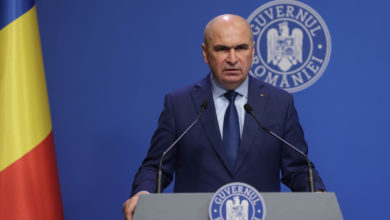
PSD's strategic error. How the party led by Grindeanu reactivates Bolojan electorally / What can happen next. Two scenarios

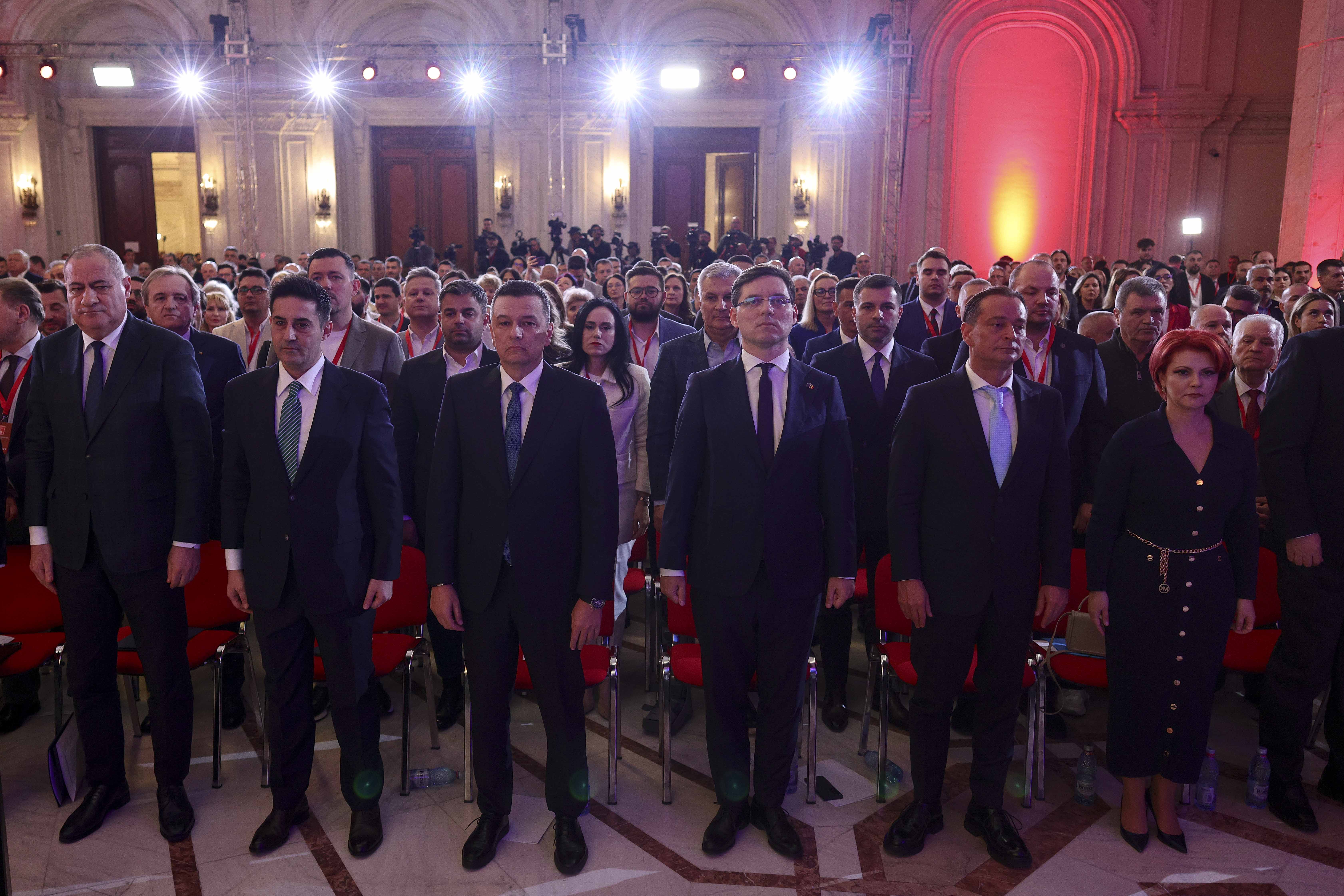
The way in which the PSD chose to open this crisis can produce a political effect exactly opposite to the one sought. Instead of closing the issue of Ilie Bolojan, PSD risks giving him the chance of political re-legitimization, turning him into a formidable future counter-candidate, writes George Jiglău, lecturer at the Department of Political Sciences at UBB Cluj, in an opinion article published today by HotNews.
Until a few days ago, Bolojan was in a clear phase of erosion. After almost ten months of government, with unpopular measures and with substantial social and political costs, he had lost a significant part of the capital of sympathy with which he had entered the Victoria Palace.
Now, by becoming PSD's direct target, he can recover precisely the type of legitimacy he was losing: that of the politician attacked by the party that has concentrated, for many years, the largest reserve of antipathy in Romanian society.
“It is no coincidence that PSD has not won a second round of the presidential elections since 2000”
To understand why PSD can do Bolojan a political service, let's briefly recall his fulminant path to the top of the state. Supported on a political brand accumulated over time, since the period when Bolojan was perceived as the efficient administrator from Oradea, in less than seven months starting with the Ciucă disaster from the presidential elections of November 24, 2024, Bolojan took over the leadership of the PNL, the presidency of the Senate, the interim from Cotroceni and the head of the Government. All this in an extremely tense social, economic and political context
This route was accompanied by a very strong expectation: that it will bring order, seriousness and execution capacity to a center of power perceived for years as improvised, clientelistic, inert, incompetent. Ilie Bolojan was invested symbolically long before he was invested politically.
The government, however, worked against this image. The package of fiscal and budgetary adjustments, social tensions and the atmosphere of austerity began to transform him, in the public perception, from the administrator who puts order into the politician who cuts, imposes and technically explains why society has to bear the costs.
In the INSCOP barometer carried out at the end of May 2025, Ilie Bolojan enjoyed 42.2% confidence. In the March 2026 INSCOP barometer, it had dropped to 25.1%. Bolojan entered very high in the public perception and has fallen noticeably after the months of austere rule.
This is precisely where PSD's long-term strategic error appears. PSD remains a large party with resources, structures and capacity to win parliamentary elections (it remains to be seen whether 2028 will not signal a change of pattern).
In highly personalized moments, especially in presidential elections, he very often activates the rejection reflex. Not by chance, PSD has not won a 2nd round of the presidential elections since 2000. It lost the 2nd rounds in 2004, 2009, 2014, 2019, and in 2024 and 2025 PSD candidates came in 3rd place.
In strongly personalized contexts, the entire antipathy accumulated over time is manifested towards the PSD candidate or leader. And when the PSD tries to point the finger at a strong personalized political opponent, like Traian Băsescu on the occasion of the suspension referendums, there is always the risk of producing sympathy for the one attacked. In the present case, the capital of antipathy towards the PSD can be transferred to Ilie Bolojan in the form of a new capital of sympathy for him.
“Bolojan is not Băsescu”
At this point, the comparison appears that will, most likely, be intensively exploited against Bolojan in the long term: that with Traian Băsescu. The offensive line is easy to predict. Bolojan will be presented as a champion of austerity, a leader who focuses the decision and who demands sacrifices without accepting too many corrections from around, just like Băsescu when he was president. There is, of course, real ground for this comparison. Bolojan's opponents will find reasons to cast him in the same mold: the leader with a strong ego who demands high social costs in the name of economic stabilization.
But the comparison becomes insufficient if it is taken too far. Traian Băsescu did not erode politically only because of austerity. His erosion was compounded by a whole landscape of personal controversies. Elena Udrea became one of the symbolic figures of that circle of power, first at Cotroceni, then in the Government, and her presence fueled the perception of excessive personal and political proximity for a long time.
Elena Băsescu's 2009 MEP candidacy was, in turn, publicly read as an expression of the use of presidential influence for the benefit of the family. The scandals that later targeted the former president's brother, Mircea Băsescu, who was definitively convicted of influence peddling, strengthened this association between the exercise of power and integrity issues in the president's family proximity.
Ilie Bolojan does not have such image stains. His main vulnerability is, so far, only a political one: the tough measures, the rigid style, the reduced availability for broad negotiation, the impression that he sees governance as an exercise in correction rather than an exercise in representation.
These things can bring him antipathy and limit his electoral appeal. But they do not compose, at least for now, the type of attrition that brought down Traian Băsescu. Because of this, Bolojan can lose sympathy without completely losing credibility. And by the same token, he may remain a formidable figure in the longer term even if he continues to be challenged for his tough policies.
“Dan-Bolojan or Dan vs. Bolojan?”
Future scenarios cannot neglect Nicușor Dan. He began his term as president in a highly visible partnership with Bolojan. His victory in May 2025 was read as a liberation from the scenario of an extremist president, in a context dominated by the fear of George Simion and what the Georgescu episode had already represented. The Nicușor Dan – Ilie Bolojan tandem worked then almost naturally: the newly elected president, legitimized by a wave of civic and pro-European relief, and the prime minister in whom the expectation of administrative order and reform was concentrated. The appointment of Bolojan as prime minister was the clearest political expression of this beginning of the mandate.
However, Nicușor Dan's capital also got diluted in the meantime. We are not talking about a collapse, but a visible crack. It appeared especially in the last weeks, with the reactions to the appointments at the top of the prosecutor's offices. The press recorded the criticisms coming from civil society and parties, including USR, and the president himself publicly admitted, in a recent interview, that he was criticized by supporters and praised by PSD for these decisions.
In parallel, Nicușor Dan continued to insist on the idea that the pro-Western parties are “condemned to govern together”, claiming a mediator role and avoiding a clear delimitation in the conflict between PSD and Bolojan. Politically, this position is understandable. Electorally, it can become costly if it starts to be perceived as a rapprochement with the PSD and as a cooling of the relationship with Bolojan.
Hence the first important scenario. If Nicușor Dan ends up being perceived as getting closer and closer to the PSD and dissociating himself from Bolojan, then he is creating a problem for himself for the next political cycle. Bolojan may gradually become the natural alternative for that part of society that rejects PSD, does not want to see AUR or other radical figures in key positions, but begins to accumulate disappointment with the current president. In such a scenario, Nicușor Dan could secure a very serious counter-candidate for 2030, especially if the local and parliamentary elections in 2028 will confirm that there is room for a new resettlement of parties.
However, there is also a second scenario, that of the long-term Dan-Bolojan partnership. Nicusor Dan can quickly understand the risk represented by Bolojan and try to save the political relationship with him. In this scenario, the partnership between a Nicușor Dan who remains president and a Bolojan who can become, if necessary, the main figure of an anti-PSD and anti-extremist opposition could be the basis of a very strong political pole for 2028 and 2030. The major competition would then shift between this pole and the other two big blocs: PSD, on the one hand, and AUR-type radicalism, on the other – having the two electoral colors that overlap to an extent that gives more space to a Dan-Bolojan political pole.
But which party(ies) could stand behind them? In this equation, GNP is an important and very uncertain variable. So far, the party has publicly reaffirmed its support for Bolojan. But the PNL also has a history of quickly sacrificing its own leaders in moments of crisis, the Orban and Câțu episodes being the most recent.
For this reason, the scenario in which Bolojan remains at the head of the party and the government for a while, after which he is pushed to the sidelines by a camp more favorable to the resumption of collaboration with the PSD in another formula, which has been talked about in recent months, cannot be excluded. If the PNL follows this logic again, the risk is to repeat a reflex that has done it more harm in recent years by explicitly associating with the PSD.
USR, for its part, has every reason to watch this development very carefully. In recent months, the relationship between Bolojan and USR has often seemed more coherent than Bolojan's relationship with his own party. PSD has speculated this repeatedly. These days, the coordination between PNL and USR around the hypothesis of a government without PSD shows that there is already a functional political proximity.
For USR, Bolojan's perspective becomes interesting precisely because he can aggregate more than the party's own pool. If Nicușor Dan continues to be perceived by a part of his electorate as sliding towards positions more compatible with PSD, then Ilie Bolojan can become for USR the figure around which to gather a broader formula than the party itself. That would matter a lot both for the 2028 parliamentary and 2030 presidential elections.
Bologna 2030
All of this should, however, be read as an analysis of the setup right now. Until the local and parliamentary elections of 2028 and the presidential elections of 2030, parties, leaders, alliances may change, new figures may appear that today we do not even anticipate.
However, two things remain very likely even in such a horizon: Nicușor Dan, as president in office and potential candidate for re-election, will inevitably be a major player in the political game, and Ilie Bolojan has already built a brand strong enough to remain, in turn, not only a relevant actor until then, but the one who can capitalize on all the antipathy that PSD manages to arouse in the future.
By 2030, the elements that eroded Bolojan will erode themselves and what will dominate is the image of a fair man, who tried to do good according to his own principles and powers, but who was politically executed by the PSD in the name of his own interests. A man who was already president, even acting, and who did his job honorably while he held that mandate. Why not a full mandate for PSD's most explicit opponent on the political scene?
The opinion article was originally published on the Contributors.ro platform.