Russia attacks the memory of Poles. The monument to the victims of repression has disappeared

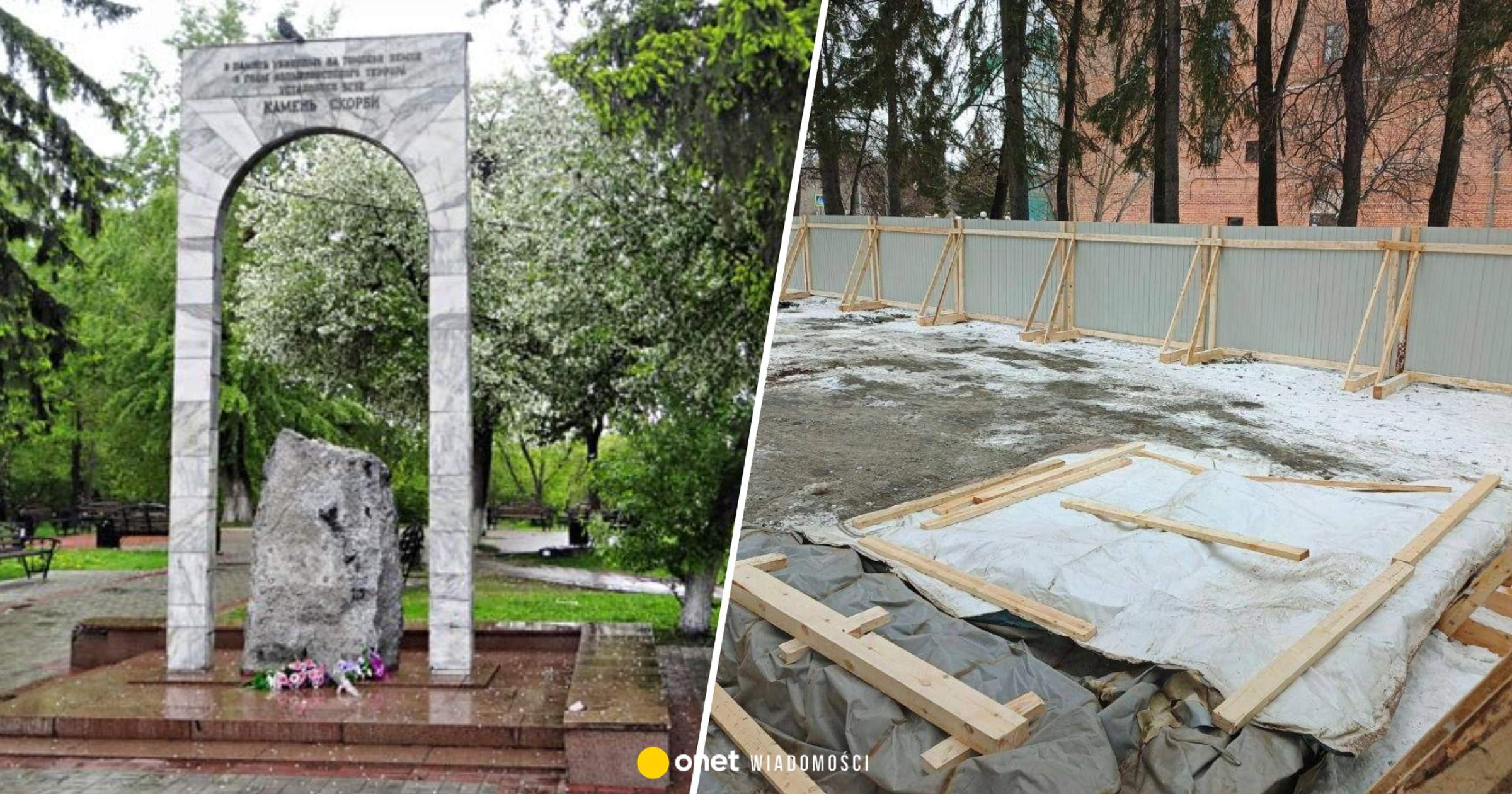
The Memorial Square, located in the center of Tomsk, was fenced and then surrounded by officers to remove the stones forming the monument. According to eyewitness accounts, cited by the independent Russian website Novaya Gazeta Yevropa, the police will prohibit photographing the works and issue ID cards to people who try to break this ban.
Ksenia Fadeyeva, a former associate of Russian opposition leader Alexei Navalny, who died in 2024 in a penal colony, wrote on Telegram that the square was once the site of an NKVD prison. During archaeological works, traces of mass burials were found there.
The Memorial Square in Tomsk was opened in 1992 on the initiative of the city administration and the Memorial Association.
Russia removes Polish memorial sites
As Aleksandra Polivanova from Memorial noted, Polish memorial sites in Russia are among those that will suffer the most after 2022 (the beginning of the Kremlin's full-scale war with Ukraine). — In many cities, monuments have been practically removed and dismantled. (…) The monument to Polish exiles was removed in Buryatia; monuments, Polish and Lithuanian, were removed in Piwovarishe, Irkutsk Oblast. (Further places are) Petrozavodsk, Vorkuta, St. Petersburg, Shlisselburg, Galashor, Yakutsk, Tomsk, Belostok in the Tomsk region – the activist reported in February this year. in an interview with PAP.
Memorial – whose full name is the International Historical, Educational, Charitable and Human Rights Association “Memorial” – was established in the 1980s as an association of independent organizations. For the next three decades, Memorial researched political repression in the USSR – also against Poles, including the Katyn massacre. On April 9, the Russian Supreme Court recognized Memorial as an extremist organization.