The eighth round of elections in just five years in Bulgaria. This time, the ballot may be different

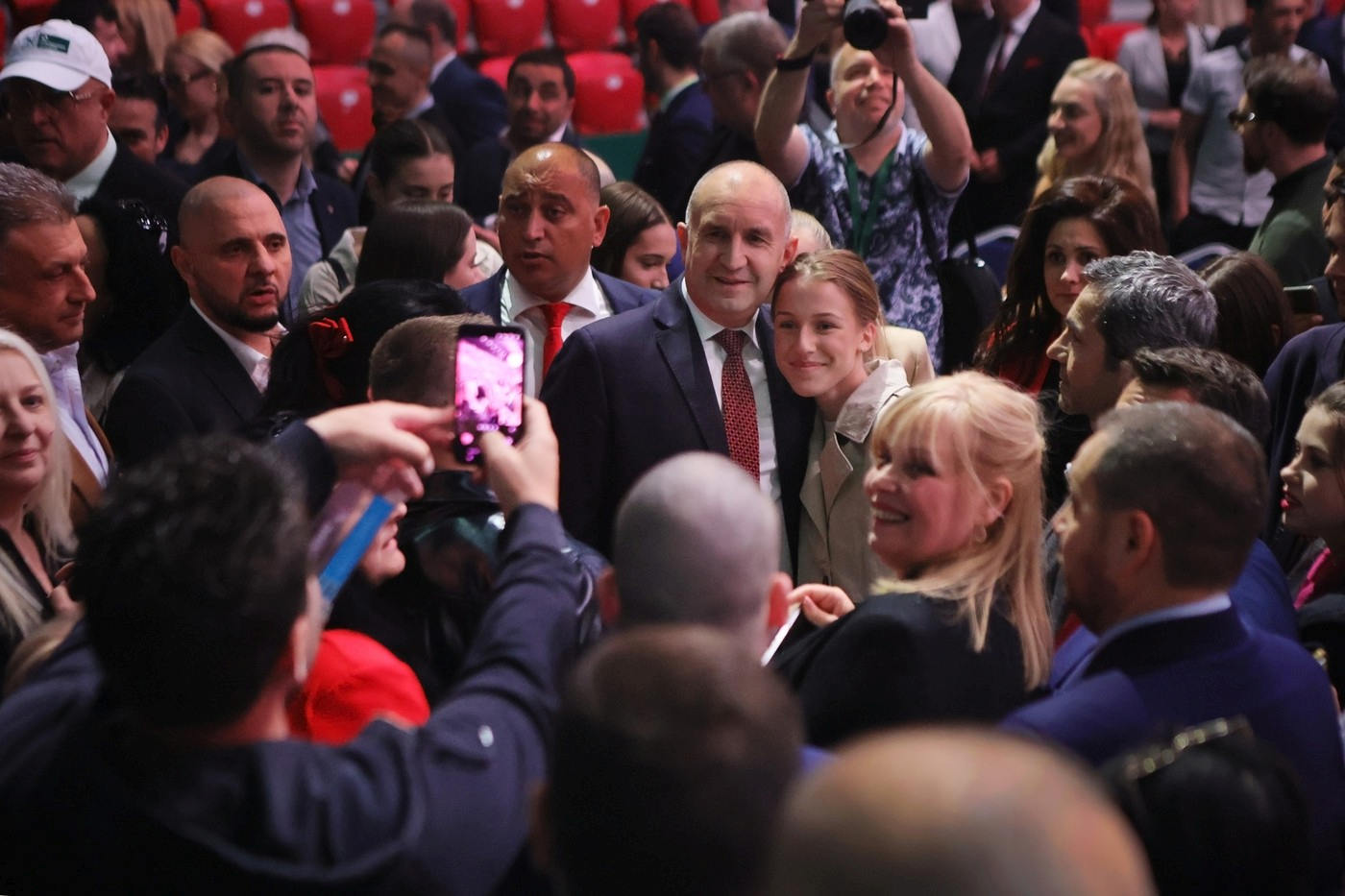
The Progressive Bulgaria coalition of the country's former president, Rumen Radev, could win 30% of the vote in Sunday's parliamentary elections and has a chance to form a somewhat safer coalition in a period of political instability, AFP and Reuters write.
Bulgaria is holding its eighth round of parliamentary elections in the last five years on Sunday, and the coalition of former president Rumen Radev, a voice sometimes critical of the European Union but favorable to Russia, is the favorite to win.
The previous seven rounds of elections have not provided the political stability Bulgaria seeks, and political fragmentation has heightened uncertainty, with coalitions collapsing after brief periods in power.
This time, things might be different.
Radev, head of state from 2017 to 2026 and a former general in the Bulgarian air force who left office in January to prepare his candidacy at the head of a centre-left coalition called “Progressive Bulgaria”, is now credited with a score of around 30%.
At least in theory, there is a greater chance for the formation of a stable government.
Political instability
A member of the eurozone since January 1, Bulgaria has been going through a period of political instability since 2021, when former Prime Minister Boiko Borisov, in power for almost twelve years, was forced out of office under street pressure.
Since then, no government has been able to stay in power for more than a year.
The new elections were triggered by the resignation, in mid-December, of another government, also led by conservatives from GERB, Borisov's party.
The government was brought down by a series of anti-corruption demonstrations on an unprecedented scale.
What does Radev want?
Radev, whose main goal is to “eliminate the oligarchic model of governance” in the country, has openly supported anti-corruption protests since the end of 2025.
He is at the same time a critic of some EU policies, of Ukraine and a politician eager to ensure the resumption of relations with Russia.
Critic of the EU's green energy policy, which he considers naive “in a world without rules”, and of sending weapons to Ukraine, he denounced a ten-year defense deal with Kiev last month.
Last year, he called for a referendum on Bulgaria's accession to the eurozone, saying the country was not ready.
fragmental
Rumen Radev is popular because he managed to gather under the same banner “for the first time” the remnants of the old socialist left, fragmented until now into a constellation of “marginalized radical left parties”, Boryana Dimitrova of the Alpha Research polling institute explained to AFP.
Progressive Bulgaria seems to attract both a Eurosceptic and pro-Russia audience as well as young people living in small towns.
With just over 20% of voting intentions, the conservatives in GERB, Borisov's party, are his main competitors.
This center-right coalition openly supports Ukraine and the Brussels line, although it played a central role in joining US President Donald Trump's “Peace Council”.
The reformist, liberal and pro-European coalition “Continuing the change – Democratic Bulgaria” (PP-DB), now credited with 12-14% of the votes, will enter the third place in the parliament.
Next is the Movement for Rights and Freedoms (DPS) – A New Beginning, led by US and UK-sanctioned mogul Delian Peevski, with 9-10% in the polls.
The radical pro-Russian party “Renaissance” occupies the fifth position, with 7-8%, followed by the populist party MECH, with 6%, and the pro-Russian Bulgarian Socialist Party, with 4-5%.
Vote buying
Bulgaria is considered by many analysts to be particularly vulnerable to pro-Russian disinformation, and the government has requested the activation of the EU's early warning system, designed to help member states counter disinformation campaigns.
The move was strongly contested by Radev, who accused the interim government of wanting to “discredit” the election result.
Since the start of the election campaign, police have carried out dozens of raids in investigations into vote-buying and say they have seized more than €500,000 in cash and arrested more than 200 people.
Vote-buying methods, officials said, include “writing off debts at grocery stores and hair salons” and handing out money at political headquarters, according to the acting interior minister.
In search of stability
A strong turnout would favor Radev, analysts said, pointing out that if he gets more than 100 MPs out of 240, then “he will be able to form a minority government” or a coalition without much compromise.
That would allow for the guarantee of a stable government “for a certain period”.
The future Parliament will have to deal with several important files, starting with justice, which is in an almost total institutional deadlock.
The mandate of the Superior Council of Magistracy, half of whose members are elected by the Parliament with a two-thirds majority, expired more than three years ago.
Key positions in the judicial system, such as the extremely influential one of the general prosecutor, are, moreover, occupied by interims.