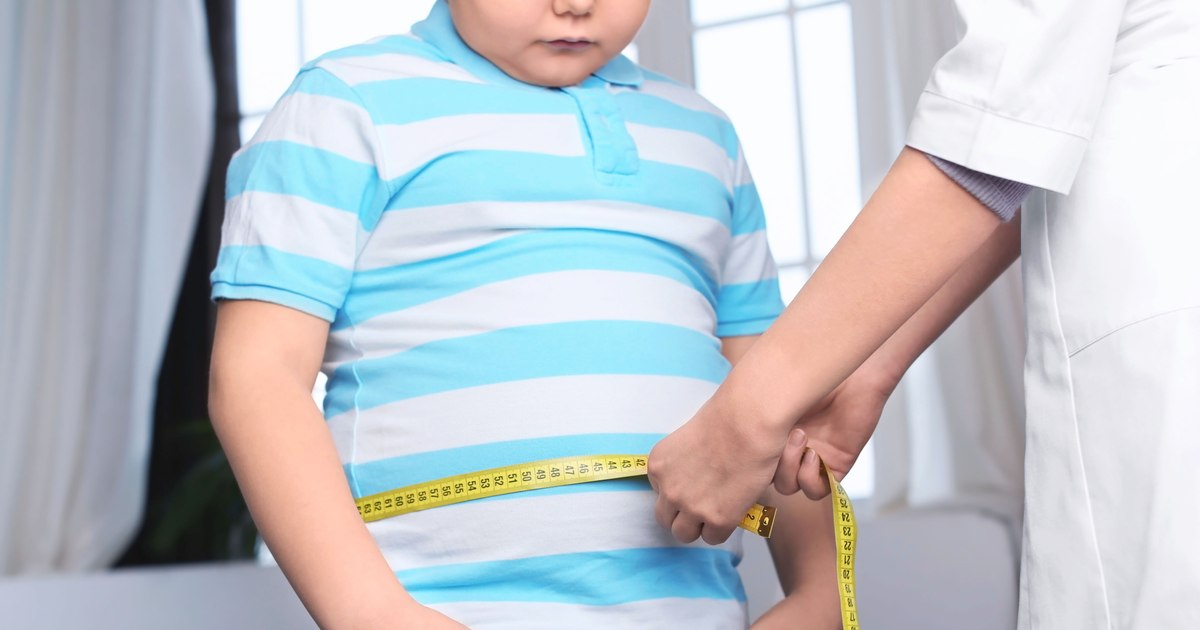
Not all children start out with the same chances in life. For some, childhood weight problems can become a real obstacle to financial success in adulthood. A recent study highlights the economic costs of childhood obesity.
Photo credit: Shutterstock
Published in Journal of Population Economics, research shows that childhood obesity not only leaves traces on health, but also on a person's educational, professional and financial journey. Specifically, children who experience obesity are less likely to reach a higher income level as adults than their parents.
The study was conducted by researchers from Ball State University, Rutgers University and Renmin University of China, who analyzed longitudinal data that followed thousands of American teenagers from the 1990s into adulthood. “Childhood obesity is not only a health problem, but one that directly affects children's chances of having a better financial situation than their parents”, said Yanhong Jin, co-author of the study. “Until now, little research has looked at the link between childhood conditions and the ability to move up the social ladder. We wanted to better understand this link and what can be done about it.”
A gap that deepens over time
According to the authors, cited by Psy Post, teenagers who were obese ended up, on average, lower on the income scale than those who had a weight considered normal. In some cases, the difference is about 20 percentage points in relation to the economic position of the parents. In other words, even when they start from similar backgrounds, children with weight problems are less likely to “advance” economically.
This difference does not appear overnight. But it is built gradually, through a combination of factors that start early and increase with the passing of the years. Among the most important are poorer educational outcomes, health problems that persist into adulthood, and difficulties encountered in the labor market.
According to data from the World Atlas of Obesity 2024, approximately a quarter of Romanian children currently suffer from obesity. The trend is clearly upward, with an annual growth rate estimated at 3.1% for the period 2020-2035, above the level of neighboring countries such as Hungary or Bulgaria.
Less education, less opportunity
One of the clearest conclusions of the study “Weighing down the future: long-term effects of childhood obesity on intergenerational mobility“, is related to education. Overweight children are less likely to finish college and generally spend fewer years in education, the developers note. This limits their access to better-paying jobs and stable professional opportunities from the start.
The illusion of love one swipe away. How the advent of dating apps increased the divorce rate
Then comes health. Childhood weight problems tend to continue into adulthood, and with them come other difficulties: physical limitations, higher risk of associated conditions, and a lower quality of life. All of these can affect a person's ability to work, advance or compete on an equal footing with others.
Discrimination, an ignored factor
The researchers also draw attention to a less discussed but important aspect: discrimination based on weight. “In these individuals, evidence points to lower levels of education, persistent health problems and labor market disadvantage. These include a higher rate of reported discrimination in the workplace”pointed out Maoyong Fan, economist and leader of the research team.
Participants with a history of obesity more frequently reported negative experiences at work and were less likely to be in leadership positions or higher paying fields.
Instead, they ended up working more often in lower-income sectors, where working conditions are also often poorer. Thus, childhood obesity functions not only as a medical problem, but also as a possible factor of social and professional exclusion.
The impact is not evenly distributed. The study shows that the economic effects are more severe for girls, children from low-income families and those growing up in regions that are already economically disadvantaged. In these contexts, lack of access to better health services, quality education or additional support can further accentuate the differences.
In other words, where vulnerability already exists, obesity can add a new layer of difficulty. And in the absence of early interventions, the circle can close: childhood health problems turn into economic obstacles in adulthood.
A problem of public health, but also of equity
The study authors say the results should change the way we look at childhood obesity. It is not just about preventing diseases or reducing costs in the medical system, but also about the real chances a child has later in life.
From this perspective, investments in prevention, nutrition education, access to health services and support for vulnerable families can have effects that go beyond health. They can also influence the level of education, access to better jobs and the ability of a generation to have a better life than their parents.
“Reducing childhood obesity is about much more than cutting medical spending,” concluded co-author Man Zhang. “It means ensuring young people have a better educational path, real opportunities in the labor market and a more prosperous financial future.”