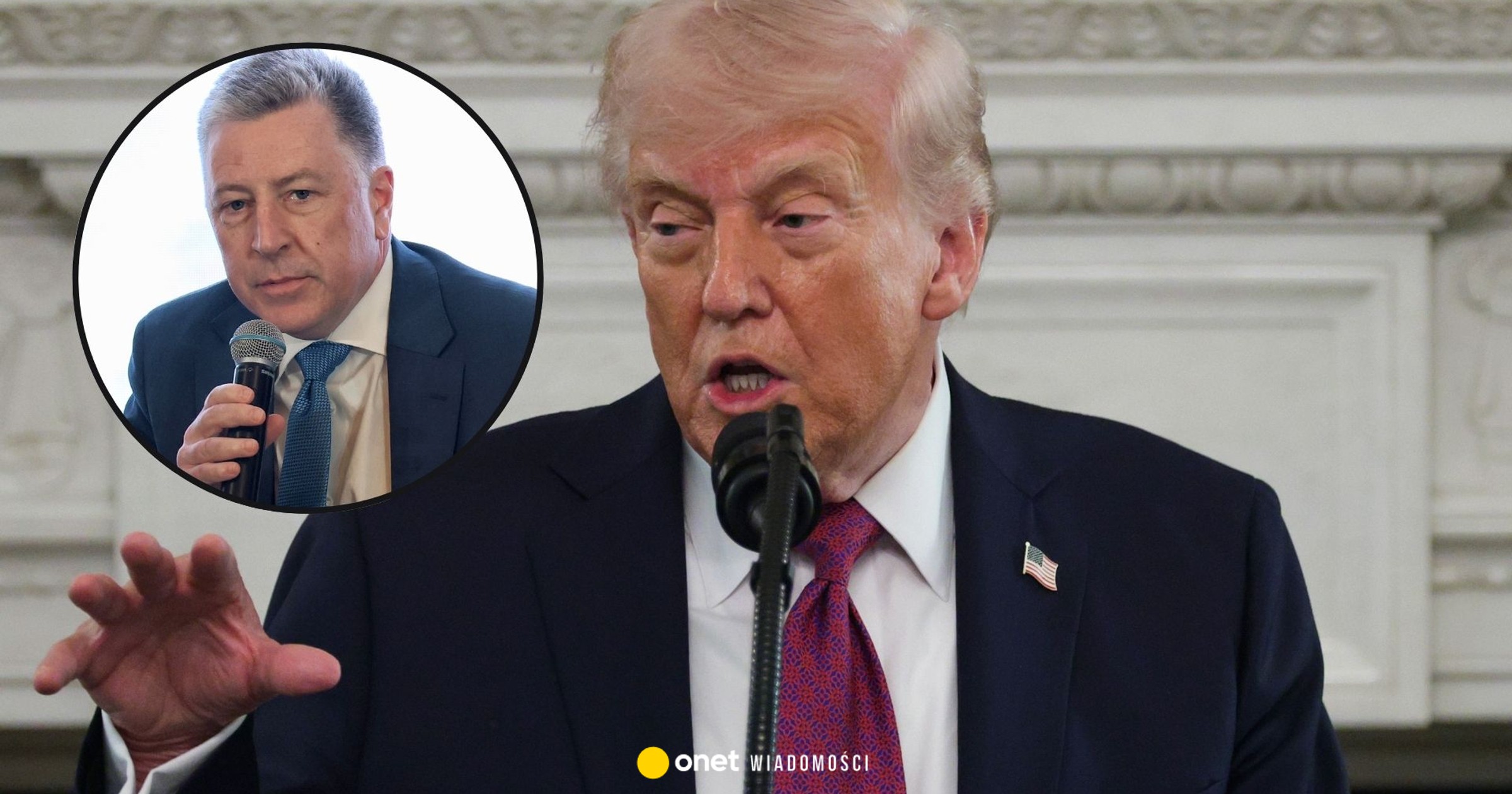
Kurt Volker, the US representative to NATO in 2008-2009 who then served as US special envoy for Ukraine during Trump's first term, warned that European politicians who condemned the US president's approach were “making a very serious mistake”.
“You might think this is a huge stupidity that will have terrible consequences, but it doesn't need to be said,” Volker said in an interview with Anne McElvoy on POLITICO's “EU Confidential” podcast. “By saying this, you alienate Donald Trump and risk that he will then conflate your dissatisfaction with his policies with his dissatisfaction with some of your policies,” he said.
Volker added that This threatens to “disrupt transatlantic relationswhich are still valuable to both sides.” “So I don't think that's a wise approach for the president,” he said.
European leaders have entered into disputes with the American administration over the war in Iran, started by the United States and Israel on February 28. Iran retaliated by attacking US military bases and its regional allies, and then blocked the Strait of Hormuz, a key waterway responsible for about a fifth of global oil demand.
Trump sharply criticized NATO countries that have restricted access to their military bases for the United States — naming Britain and Spain in particular — while praising more accommodating countries.
U.S. allies have repeatedly pledged to help resume shipping at the critical trading point — but only after the fighting has fully ended — a move that irritated Trump.
British Prime Minister Keir Starmer has made it clear that he does not support this war. – This is not our war… I'm not going to change my mind. “I'm not going to step down,” he told the British Parliament earlier this month.
The article continues below the video
Rachel Reeves, the British finance minister, said last week on the eve of her trip to Washington that Trump's decision to go to war without a clear strategy was 'foolish' and added: – I am not convinced that we are safer today than we were a few weeks ago.
Deputy Prime Minister David Lammy called Trump's threats against Starmer “petty and irrelevant”.
French President Emmanuel Macron considered the war started by Trump a violation of international law.
Spanish Prime Minister Pedro Sanchez led the group criticizing the war as “illegal, unjustified and dangerous.”
British Prime Minister Keir Starmer in London, April 1, 2026.Frank Augstein – WPA Pool/Getty Images/Getty Images
Volker defended Trump's justification for going to war, saying he was right to launch the attack to prevent Iran from acquiring a nuclear weapon. Last year, the United States bombed Iran's nuclear facilities in what Trump called a “spectacular military success” that he claimed destroyed the country's ability to produce a bomb.
Iran has denied planning to build a bomb, but Volker rejected the claims. — They really want to build nuclear weapons and have been trying to do so for decades, and even if they agree not to do it, they will probably do it anyway. And the United States will have to face this reality, he said.
He also supported Trump's 2018 decision to withdraw from the 2015 nuclear deal negotiated by former President Barack Obama, which limited Iran's nuclear program and subjected it to inspections by the International Atomic Energy Agency. “I believe it was a flawed agreement and should not have been concluded,” he said.
This contradicts the views of many European countries that were involved in the original nuclear talks with Iran.
Trump administration is increasingly angered by Europe's lack of enthusiasm for the war and — as POLITICO reports — is working on a sort of “nice and naughty” list of NATO countries to punish those that have caused problems.
Volker said European leaders should be more careful in responding to domestic public opinion — which is strongly opposed to the war — by taking positions that could anger Trump.
“There are ways to be proactive… without needlessly attacking President Trump, which actually doesn't help,” he said.
Cooperation, praise, enthusiasm
European leaders should – in his opinion – follow the example of NATO Secretary General Mark Rutte, who tried not to anger Trump by supporting the war with Iran. “Working with President Trump, the praise, the enthusiasm, because… he's doing them a favor,” Volker said of the approach they should take.
He also called on German Chancellor Friedrich Merz to show Trump more courtesy. Germany did not restrict access to its key air base in Ramstein, and Merz did not enter into a conflict with the US president, although he noted that relations with the US are currently “simply difficult”.
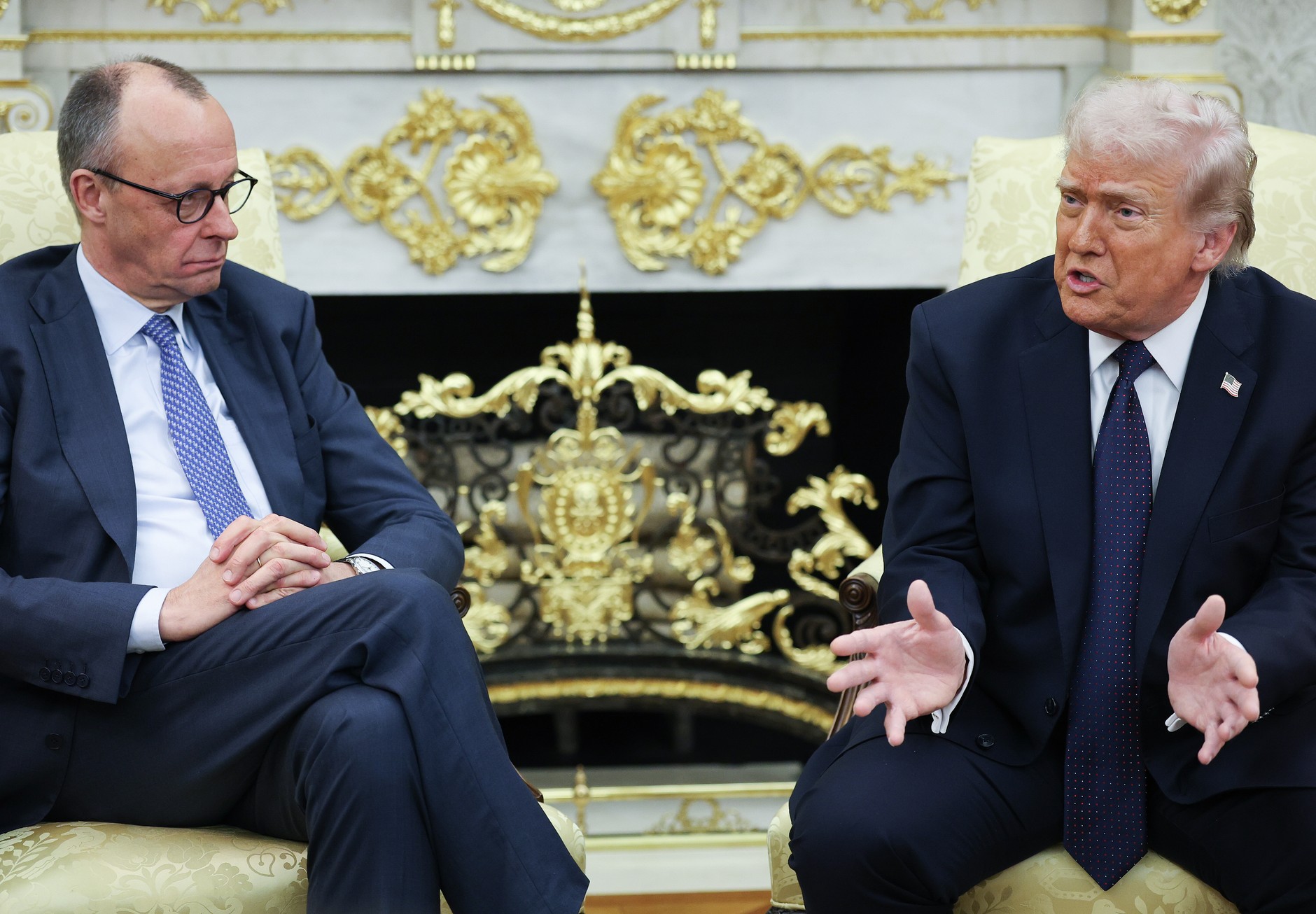
German Chancellor Friedrich Merz and US President Donald Trump in the White Oval Office, March 3, 2026.Win McNamee/Getty Images/Getty Images
Merz was more cautious towards the US president than Starmer, and Trump did not retaliate against him as he did against the British prime minister. “Unlike Keir Starmer, whom President Trump likes to poke and prod a little bit, he doesn't do that with Merz,” the diplomat said.
The German chancellor invited Trump to visit his grandfather's birthplace in western Germany. If that happens, “I would just make sure that President Trump comes out of this feeling like he's being respected because that's what he wants,” he added.
Volker also defended Trump's position on Iran, which has alarmed many European leaders. The president changed his mind drastically – from announcing an end to the fighting to threatening to “destroy” Iranian civilization and destroy the country's civilian infrastructure.
“He is trying to use harsh rhetoric and extreme positions to demonstrate macho strength and toughness and to get Iranians to pay attention to him,” Volker said.
I’m Ashley Davis as an editor, I’m committed to upholding the highest standards of integrity and accuracy in every piece we publish. My work is driven by curiosity, a passion for truth, and a belief that journalism plays a crucial role in shaping public discourse. I strive to tell stories that not only inform but also inspire action and conversation.