“Inevitable”. The scenario where commercial planes will stay on the ground is approaching. When can the shortage of kerosene become a systemic one

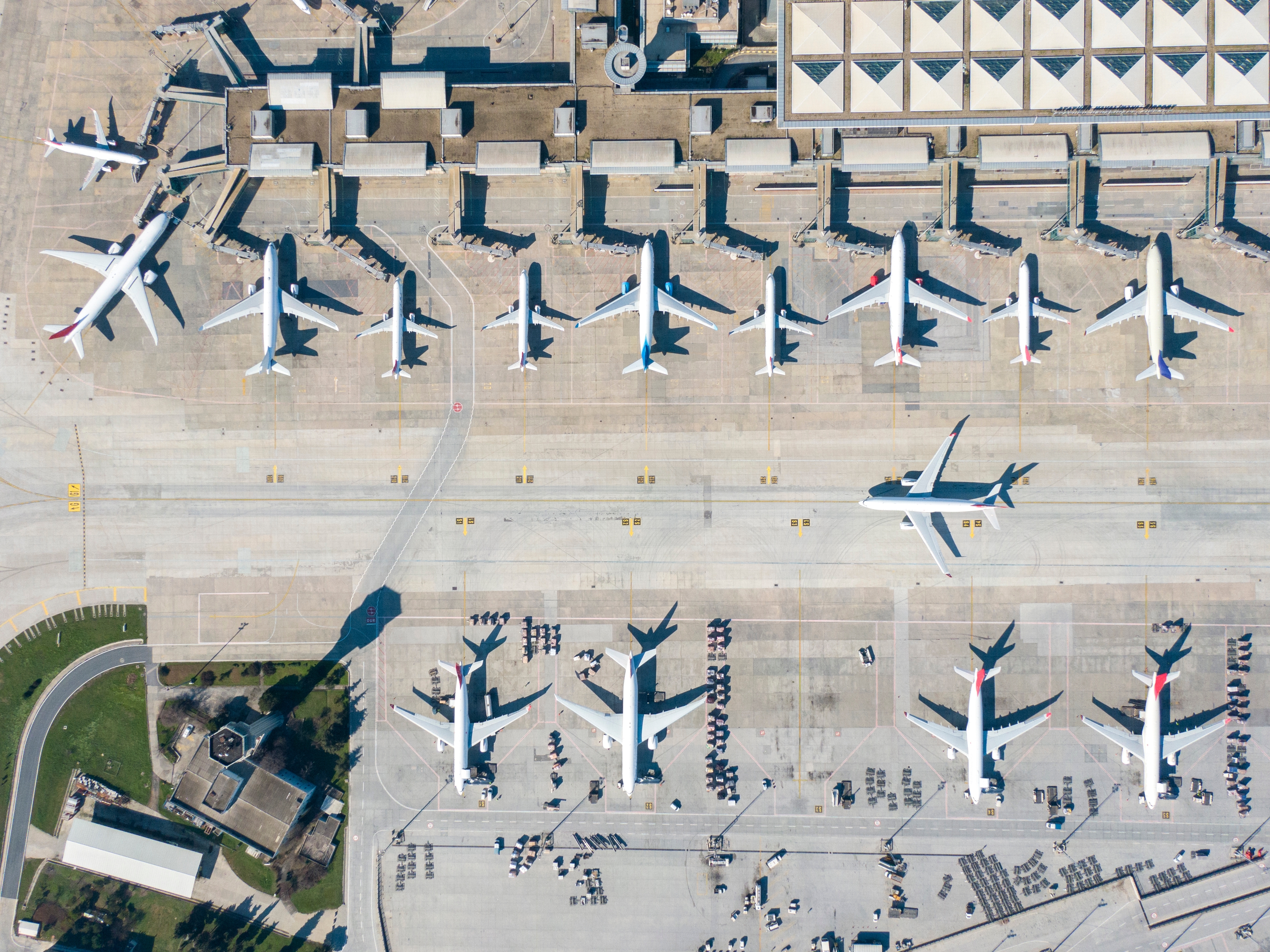
Could planes stop taking off due to lack of fuel? The risk of a kerosene shortage is increasing day by day due to the closure of the Strait of Hormuz, without knowing exactly when and where aviation will run out of tanks, France Presse and Reuters write.
Asia in particular, but also Europe to a lesser extent, are two continents that depend heavily on Middle Eastern oil and refineries for supply. Europe normally imports half of its kerosene from the Gulf countries.
And on the Old Continent there are big differences between countries. Spain has eight refineries and is a net exporter of jet fuel, while imports cover more than 60% of Britain's needs.
Even within a well-supplied country like Spain, problems can arise, an example being the low-cost airline Volotea which introduced an additional cost after the increase in the price of kerosene.
Lufthansa CEO Carsten Spohr warned on Tuesday that grounding aircraft “may be inevitable” as the fuel crisis hits major airports.
- A problem is also the high costs, Marius Popescu, president of the Association of Romanian Airlines – Carpathia, citing “pecuniary support”. “The price of a ton of kerosene in Otopeni before this situation was 800 euros, now it is 1,900 euros. From the base airport, Otopeni, we are already filling the tanks more with kerosene (…) because we do not have a certainty that we will find kerosene in time at the destination airport”, he said at the beginning of this week, according to TVR Info.
When will the shortage become “systemic”?
When will fuel stocks be so low that it will be necessary to cancel flights? Opinions differ.
“The situation may become systemic in the next three to four weeks. So we may have drastic reductions in flights in Europe starting in May and June,” Claudio Galimberti, an economist at Rystad Energy, told CNBC on Tuesday.
He mentioned flights already canceled for this reason, but the European Commission, also on Tuesday, tried to calm fears.
“There is no evidence of fuel shortages in the European Union at the moment,” Commission spokeswoman Anna-Kaisa Itkonen said in Brussels.
As for the possibility of a shortage and when it might occur, she replied in vague terms: “There could be supply problems in the near future, particularly with regard to jet fuel.”
“Maybe early May”
On April 9, the Airports Council International (ACI) Europe wrote to the European Commission that the shortage would begin in “three weeks”, i.e. at the beginning of May, if tanker traffic in the Strait of Hormuz was not resumed by then.
International Energy Agency (IEA) President Fatih Birol also predicted shortages in Europe “maybe as early as May”.
In its April monthly oil report, however, the IEA advanced a more distant date. “If the global kerosene market shrinks further and European markets fail to find solutions for the more than 50% of Middle Eastern volumes they no longer have, then stocks will fall below the critical 23-day threshold in June,” the Agency estimated.
The IEA said this month that many European refineries are already operating at full capacity for jet fuel production.
Different situations not only between countries but also between airports
The situations are hard to compare. Japan, heavily dependent on imports of basic necessities, has very large stocks of kerosene.
European countries such as Austria, Bulgaria or Poland have comfortable reserves. Others do not, such as Iceland, the Netherlands or the United Kingdom. France's situation is neither good nor critical,
In addition, “smaller airports, inside the country, will be in a worse position than the big platforms”, which are refueled more quickly, Rico Luman, economist at the ING bank, transport specialist, explained to AFP.
“It won't be a complete shutdown, but partial cancellations for certain companies and certain airports,” he said could happen.
Companies would like to know the stocks in the airports
Airlines, in order to set their flight schedules, need information on fuel reserves.
Their professional organization, Airlines for Europe (A4E), which brings together 14 large groups, including Air France-KLM, Lufthansa or Ryanair, is campaigning from Brussels for the European Union to equip itself with a real-time information system on airport stocks.
Data must come from providers. However, they are not at all enthusiastic about the idea of making strategic business information available to large customers such as airlines.
TotalEnergies has warned that if Middle Eastern oil remains stuck in June, it will not be able to supply fuel to everyone.
“If this war and this blockade lasts more than three months, we will start to face serious supply problems for certain products, such as kerosene,” the company's chief executive, Patrick Pouyanné, said in Washington on Monday.
“Our (jet fuel) suppliers are changing their forecast ranges and are no longer willing to provide an outlook beyond a month,” Grazia Vittadini, Lufthansa's chief technical officer, said in Frankfurt on Wednesday.
The EU is making plans
The European Union is drawing up plans to deal with a looming jet fuel supply crisis and to maximize refinery output, several officials said, cited by Reuters.
Europe depends more on imports of jet fuel than on imports of any other type of transport fuel.
Starting next month, the European Commission will introduce an EU-wide mapping of oil refining capacity and introduce measures “to ensure that existing refining capacity is used and maintained to the maximum”, according to a draft proposal seen by Reuters.
The EU is also working on measures to target jet fuel supplies, but those are still being drawn up, officials familiar with the proposals said. The commission declined to comment on the draft plans, which are due to be published on April 22.
The EU requires member states to maintain emergency oil reserves for 90 days as a safeguard against supply shocks. The obligation does not include a specific jet fuel requirement, but each country can include it, along with other petroleum products, in their stockpiles.